Ultrasonographic detection of cranial cruciate ligament pathology in canine stifles without cranio-caudal instability
Helen Tsoi+, Debra Canapp+, Sherman Canapp Jr.+

TL;DR
This study shows that ultrasound can detect partial tears in dogs' knee ligaments without needing surgery, though further tests are still needed for confirmation.
Contribution
The study is the first to evaluate musculoskeletal ultrasound for detecting partial cranial cruciate ligament tears in dogs without stifle instability.
Findings
Ultrasound had 100% sensitivity and 81.5% positive predictive value for detecting CCL pathology.
Ultrasound is less specific (58.3%) and requires surgical confirmation for definitive diagnosis.
MSK-US is non-invasive and can guide treatment decisions before surgery.
Abstract
Explore the value of musculoskeletal ultrasound in detecting canine cruciate ligament pathology. Partial tears of the cranial cruciate ligament (CCL) can be difficult to diagnose due to the lack of instability present on orthopaedic examination. Advanced diagnostics would be required for further evaluation. While a common tool in human medicine, magnetic resonance imaging (MRI) is of limited use in canines due to cost and the need for general anaesthesia. Musculoskeletal ultrasound (MSK-US) can be performed without anaesthesia but there are no current studies to date evaluating its usefulness in detecting partial tears of the cranial cruciate ligament. This is a retrospective case series of 32 dogs that underwent diagnostic MSK-US of the stifle who later had a surgical procedure (stifle arthroscopy / arthrotomy) to evaluate the intra-articular space. Medical records were evaluated…
Genes, proteins, chemicals, diseases, species, mutations and cell lines named across the full text — each resolved to its canonical identifier and authoritative record.
Click any figure to enlarge with its caption.
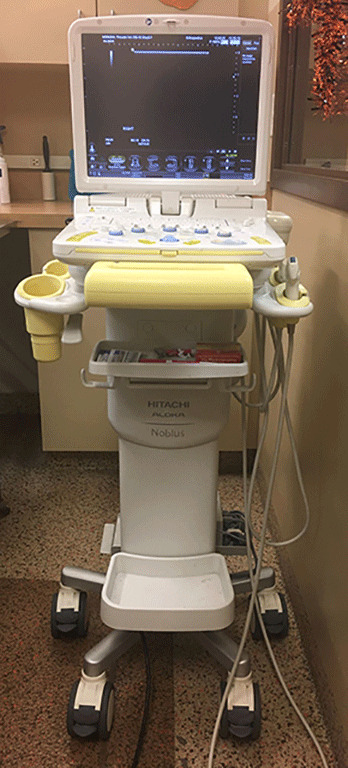 Figure 1
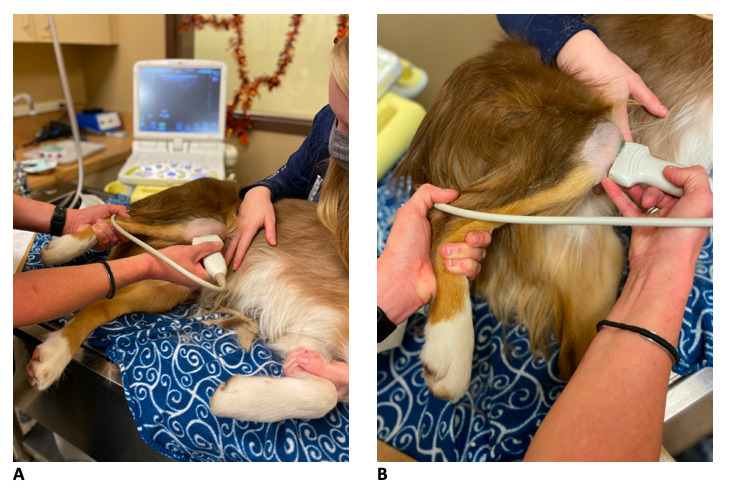 Figure 2
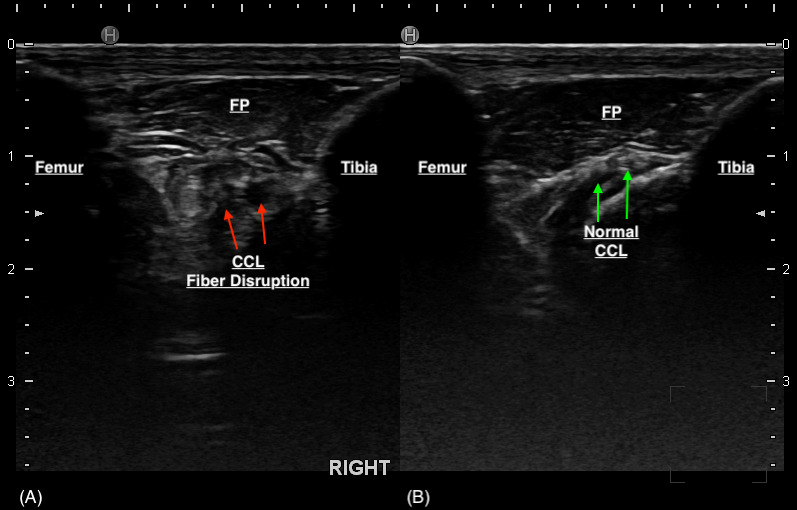 Figure 3
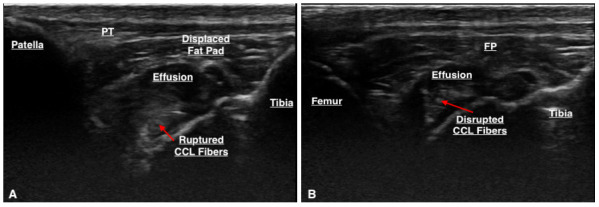 Figure 4
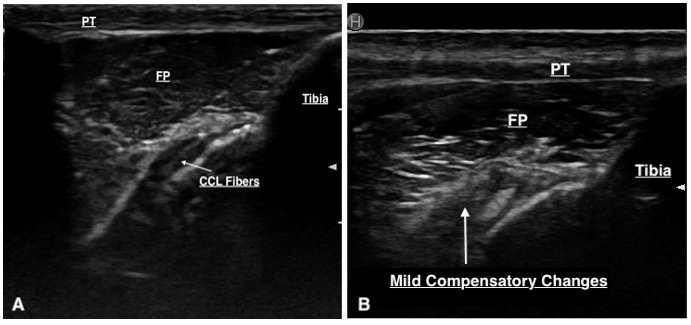 Figure 5
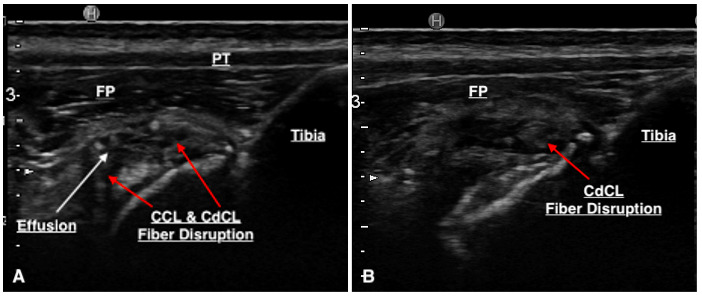 Figure 6
Peer Reviews
No public reviews on file for this paper yet. If you reviewed it on a platform where reviews are public (OpenReview, ICLR, NeurIPS, ICML), you can paste yours below so the community can read it here.
Videos
No videos yet. Explain this paper in a talk, walkthrough, or lecture? Add one.
Taxonomy
TopicsVeterinary Orthopedics and Neurology · Orthopedic Surgery and Rehabilitation · Elbow and Forearm Trauma Treatment