Intermediate Term Results of a Novel Minimally Invasive Keratoprosthesis
Jyoti Sharma, Thomas H. Dohlman, Chengxin Zhou, Elise Taniguchi, Ali Albalakhi, Tharun Somasunder, Peter York, Fengyang Lei, Jie Liu, Robert J. Wood, James Chodosh, Roberto Pineda, Eleftherios I. Paschalis

TL;DR
A new minimally invasive corneal implant shows better long-term results than existing options in rabbits with severe eye injuries.
Contribution
A novel minimally invasive keratoprosthesis with a nitinol backplate and DALK implantation technique is introduced.
Findings
mi-KPro maintained clear optics and stable IOP without RPM or neovascularization for up to 12 months.
PKP grafts failed within 2.2 months with corneal edema and IOP elevation.
mi-KPro preserved retinal thickness and optic nerve axons compared to PKP and B-KPro.
Abstract
Keratoprosthesis implantation remains a sight-restoring option in high-risk corneal transplantation where conventional keratoplasty is unlikely to succeed. Existing devices, such as the Boston keratoprosthesis (B-KPro), are very effective but long-term results are limited by glaucoma, infections, retroprosthetic membrane (RPM) formation, and retinal complications. We developed a minimally invasive keratoprosthesis (mi-KPro) that couples an ultrathin nitinol backplate with a poly(methyl methacrylate) optic and is implanted with a modified deep anterior lamellar keratoplasty (DALK) technique. An experimental study in rabbits. Thirty New Zealand white rabbits. Rabbits received severe alkali or acid corneal burns and 1-month later treated with mi-KPro or penetrating keratoplasty (PKP); an additional cohort underwent B-KPro implantation in naïve eyes. Animals were followed for up to 12…
Genes, proteins, chemicals, diseases, species, mutations and cell lines named across the full text — each resolved to its canonical identifier and authoritative record.
Click any figure to enlarge with its caption.
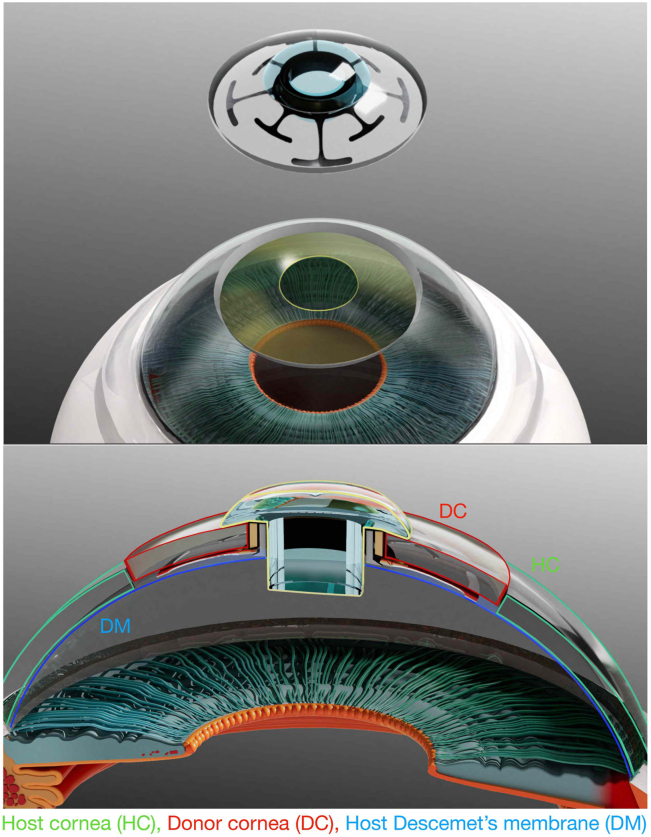 Figure 1
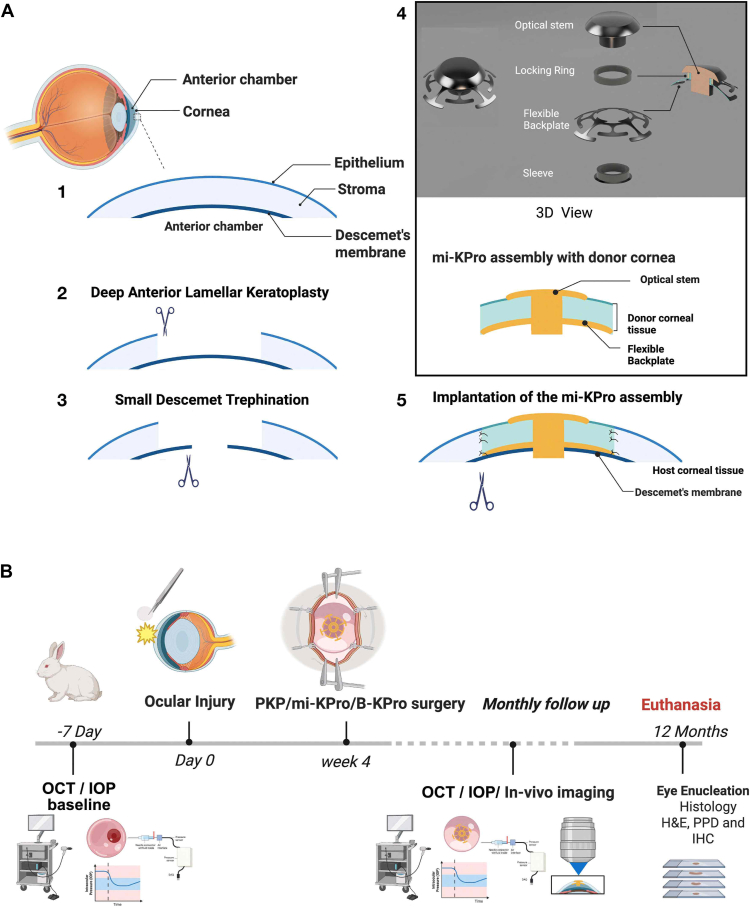 Figure 2
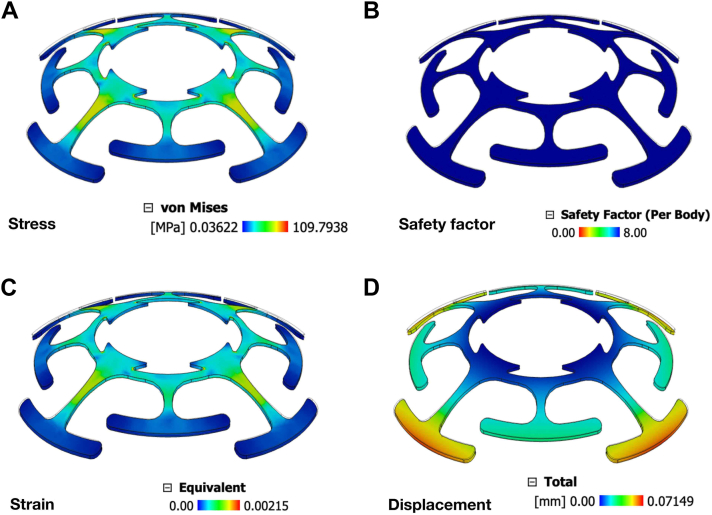 Figure 3
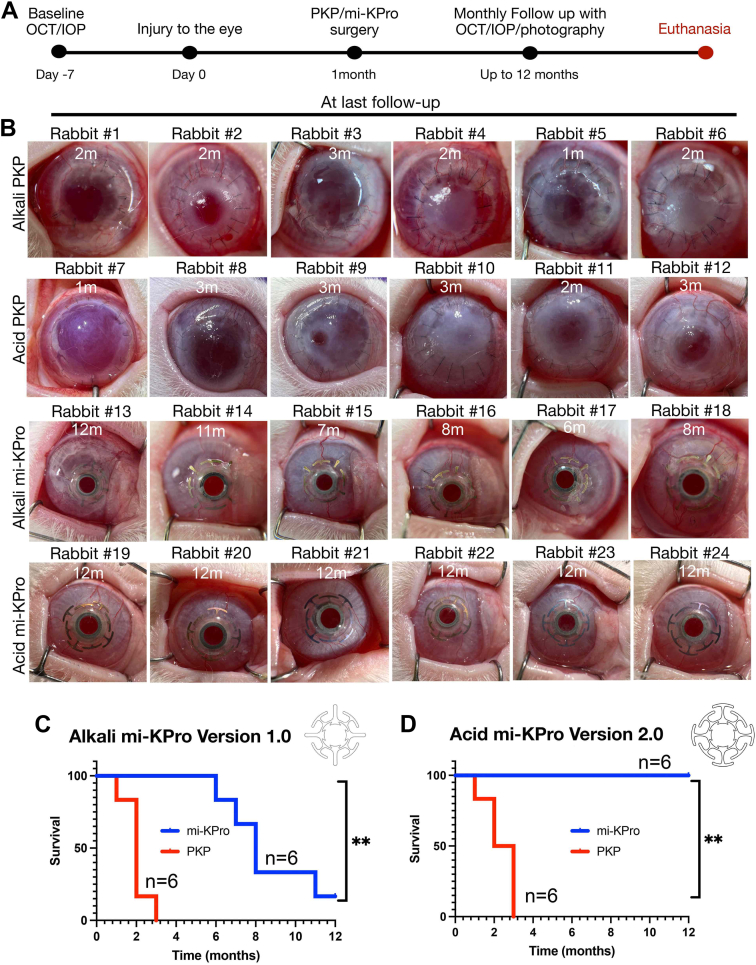 Figure 4
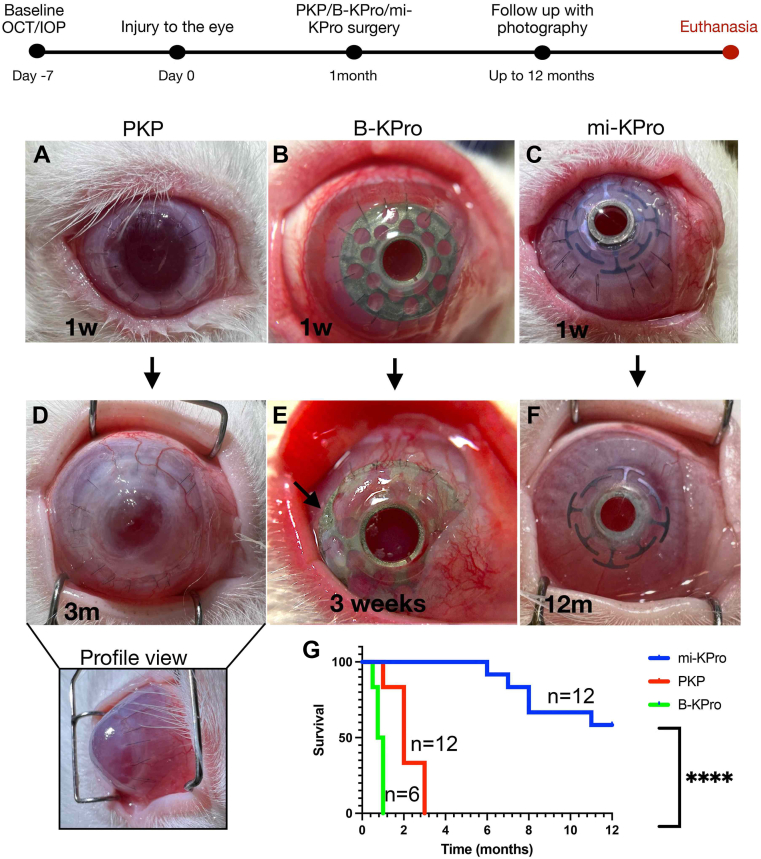 Figure 5
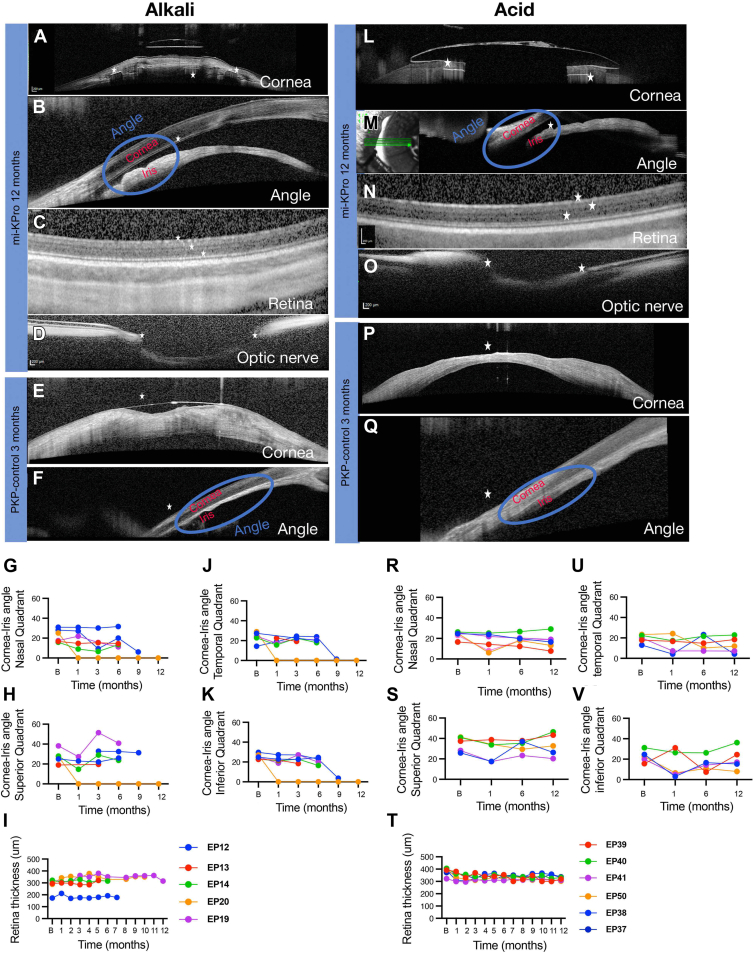 Figure 6
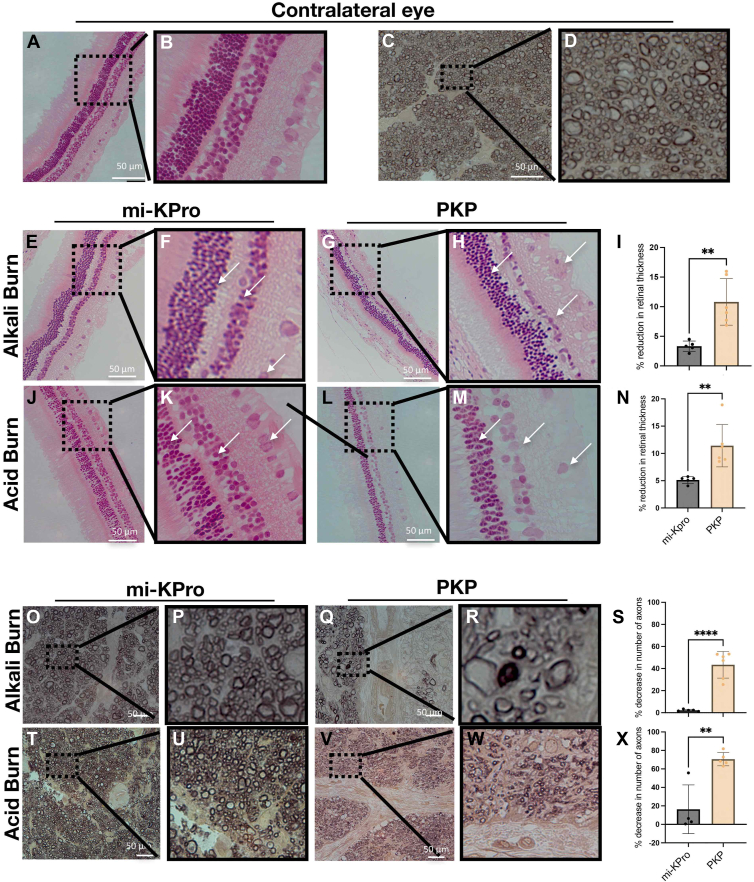 Figure 7
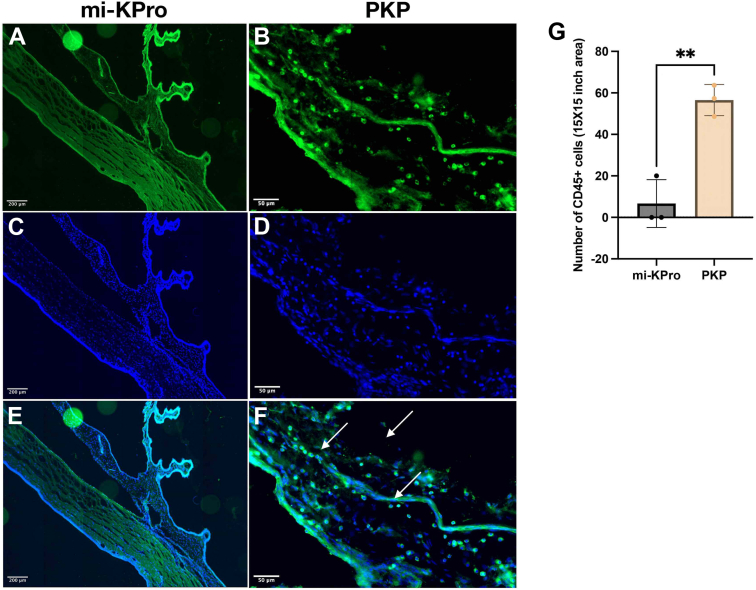 Figure 8
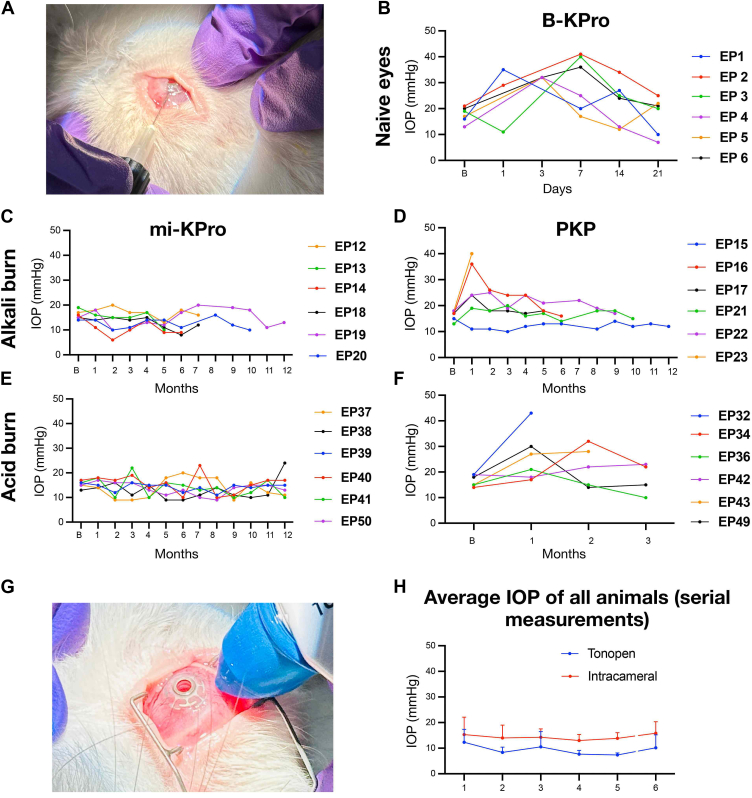 Figure 9
Peer Reviews
No public reviews on file for this paper yet. If you reviewed it on a platform where reviews are public (OpenReview, ICLR, NeurIPS, ICML), you can paste yours below so the community can read it here.
Videos
No videos yet. Explain this paper in a talk, walkthrough, or lecture? Add one.
Taxonomy
TopicsCorneal Surgery and Treatments · Ocular Disorders and Treatments · Wound Healing and Treatments