18F-Fluorodeoxyglucose positron emission tomography for detection of acute cellular rejection after heart transplantation: A single–center retrospective study
Tomoaki Yoshitake, Takeo Fujino, Toru Hashimoto, Shoei Yamamoto, Kei Ikuta, Tomoyasu Suenaga, Kayo Misumi, Keisuke Shinohara, Shouji Matsushima, Yoshiyuki Kitamura, Takuro Isoda, Shingo Baba, Shintaro Kinugawa, Kousei Ishigami, Akira Shiose, Kohtaro Abe

TL;DR
This study explores whether 18F-FDG PET/CT can detect heart transplant rejection without invasive biopsies.
Contribution
The study demonstrates that FDG uptake metrics can detect acute cellular rejection after heart transplantation.
Findings
FDG uptake metrics (CMV, SUVmax, TLG) were significantly higher during acute cellular rejection.
18F-FDG PET/CT showed significant increases in metabolic parameters at the time of rejection.
No cases of antibody-mediated rejection were observed in the study population.
Abstract
Although histopathological evaluation of myocardium is essential for detecting both acute cellular rejection (ACR) and antibody-mediated rejection (AMR) following heart transplantation, indeterminate results and complication risks associated with repeated endomyocardial biopsies remain serious problems. We investigated the clinical utility of 18F-fluorodeoxyglucose positron emission tomography/computed tomography (18F-FDG PET/CT) to detect rejection. This retrospective single–center study reviewed the clinical data of heart-transplant recipients at our institution between 2008 and 2022. Patients who underwent 18F-FDG PET/CT scans post-transplant were enrolled. Scans were performed following a high-fat, low-carbohydrate diet initiated 24 hours before imaging and an 18-hour fasting period. FDG uptake was represented as cardiac metabolic volume (CMV), maximum standard uptake value…
Genes, proteins, chemicals, diseases, species, mutations and cell lines named across the full text — each resolved to its canonical identifier and authoritative record.
Click any figure to enlarge with its caption.
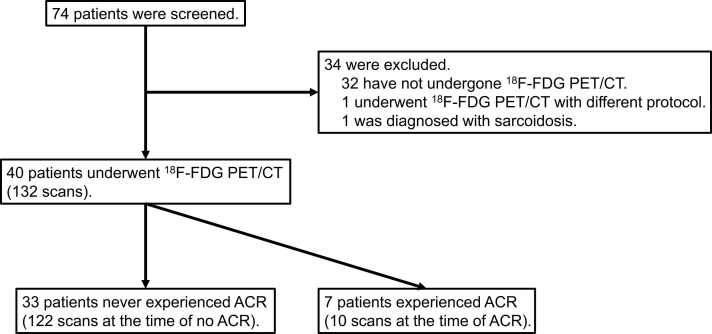 Figure 1
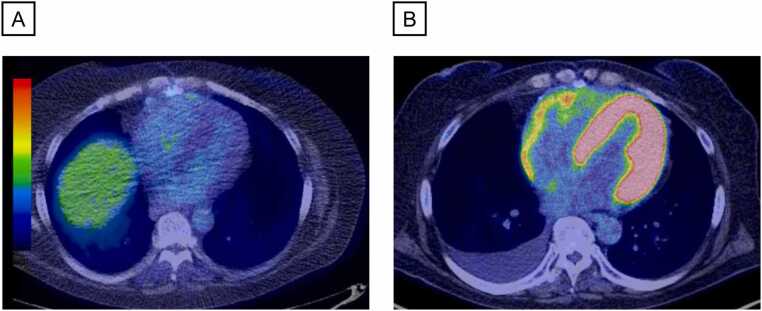 Figure 2
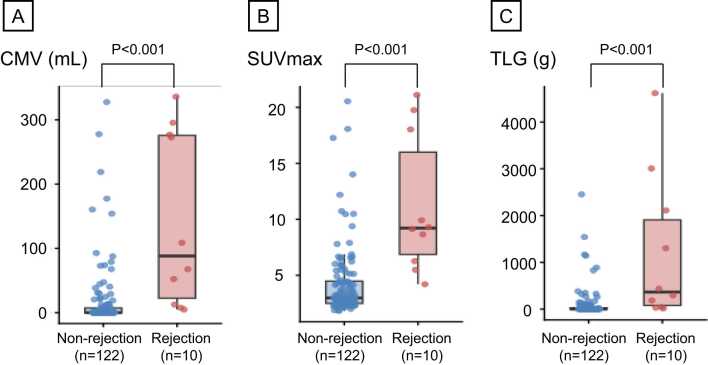 Figure 3
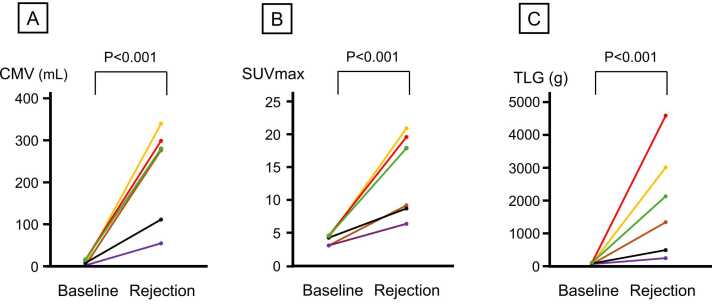 Figure 4
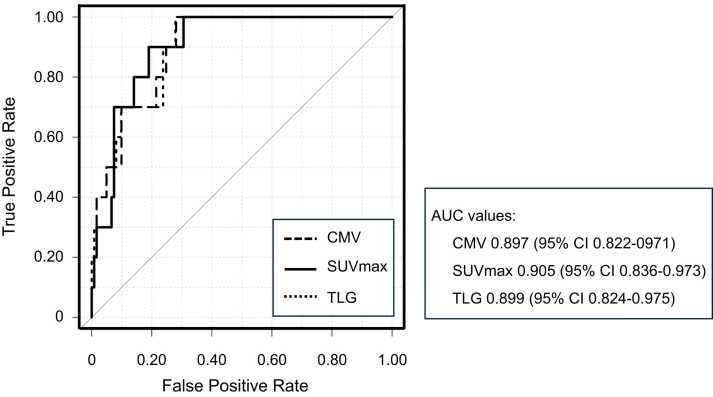 Figure 5
Peer Reviews
No public reviews on file for this paper yet. If you reviewed it on a platform where reviews are public (OpenReview, ICLR, NeurIPS, ICML), you can paste yours below so the community can read it here.
Videos
No videos yet. Explain this paper in a talk, walkthrough, or lecture? Add one.
Taxonomy
TopicsTransplantation: Methods and Outcomes · Renal Transplantation Outcomes and Treatments · Organ Transplantation Techniques and Outcomes