Cosolute effects reveal the nature of weak forces governing GLP-1 oligomer stability
Anyah Settle, Rahul Mishra, Ramesh Kumar Shanmugam, Viv Lindo, Nathan BP. Adams, Thomas A. Jowitt, Tuck Seng Wong, Barbara Ciani

TL;DR
This study explores how GLP-1 hormone forms stable oligomers and how cosolutes affect their aggregation into fibrils, which is important for drug development.
Contribution
The study reveals the role of weak forces and cosolutes in GLP-1 oligomer stability and aggregation mechanisms under pH 5 conditions.
Findings
GLP-1am forms soluble oligomers that assemble into nanosheets over hours in quiescent conditions.
Aggregation of GLP-1am is nucleation-dependent and accelerated by ionic cosolutes due to electrostatic screening.
Proline delays aggregation of GLP-1am in a pH-dependent manner.
Abstract
Glucagon-like peptide-1 (GLP-1) is an incretin hormone widely used to manage diabetes and obesity through its ability to regulate glucose homeostasis. Clinically relevant GLP-1 sequences form oligomeric states. Uncontrolled oligomer formation can drive fibril formation, posing challenges, such as difficulty in controlling drug dosage, loss of activity, or toxicity, as the aggregates can be immunogenic and/or can form amyloids. Here, we used combined measurements of colloidal and conformational stability to characterize the intermolecular interactions underpinning the physical status of the GLP-1(7–37) amide (GLP-1am), at pharmaceutically relevant high concentrations. We focus on less explored conditions, around pH 5, mimicking the environment within native cellular secretory granules, where the hormone is also densely packed. Cosolutes allowed us to interfere with weak interactions…
Genes, proteins, chemicals, diseases, species, mutations and cell lines named across the full text — each resolved to its canonical identifier and authoritative record.
Click any figure to enlarge with its caption.
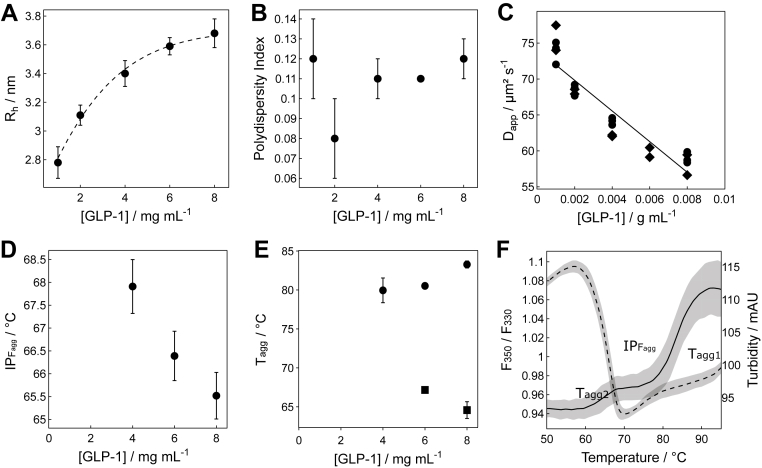 Figure 1
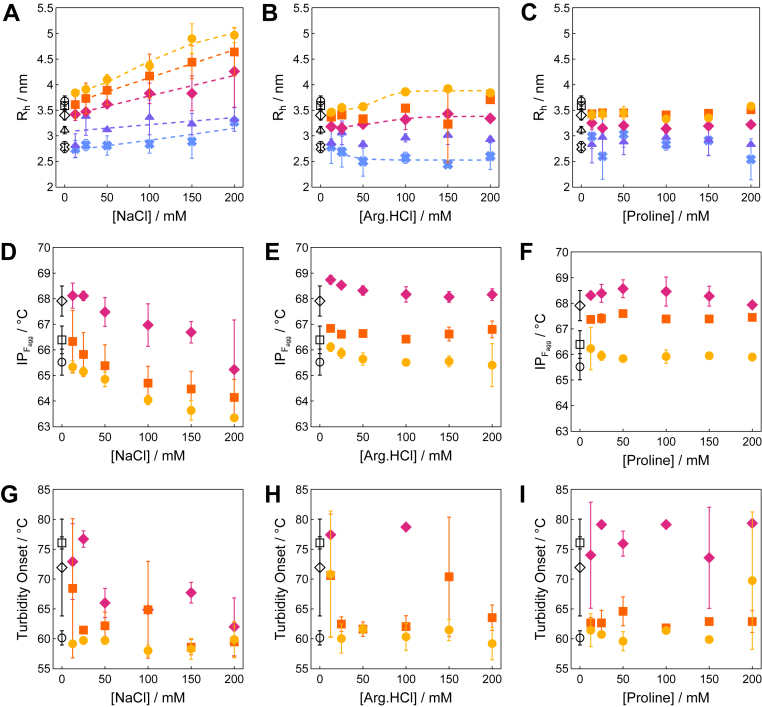 Figure 2
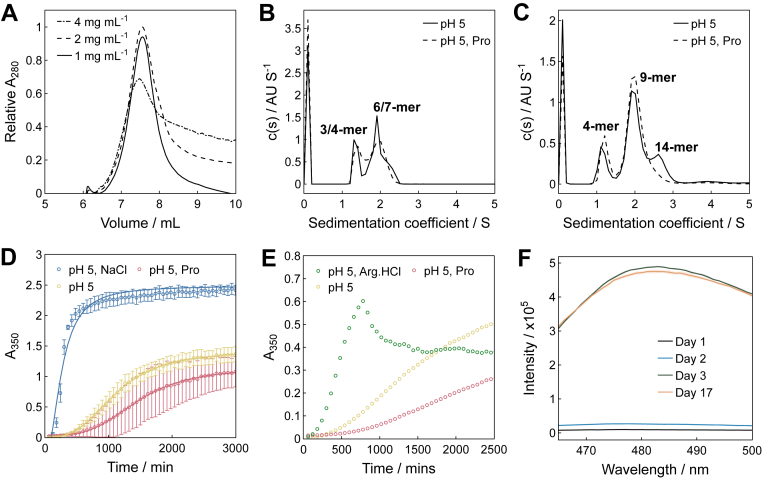 Figure 3
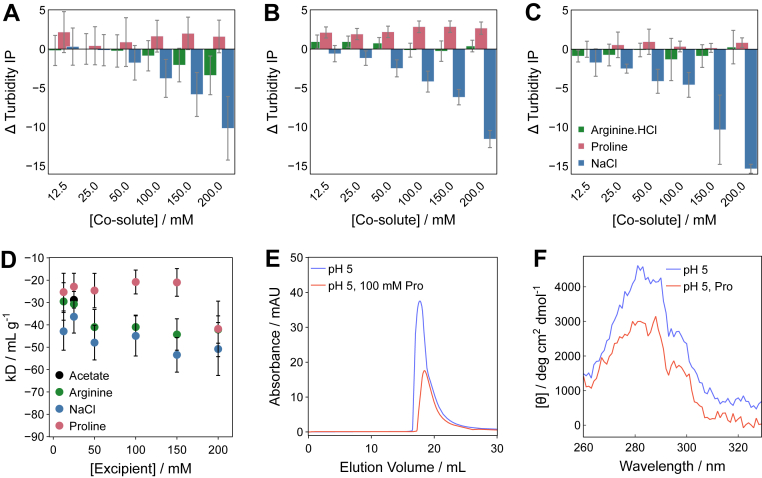 Figure 4
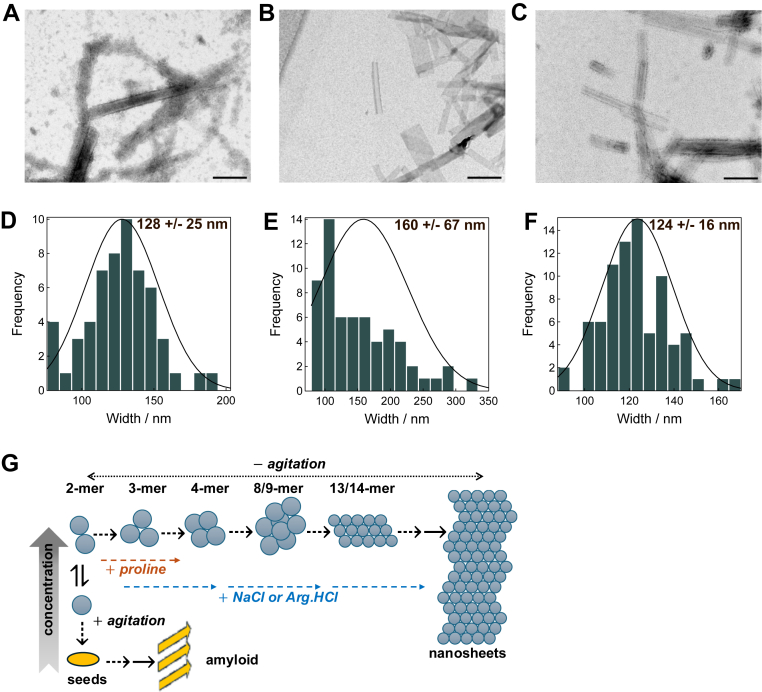 Figure 5
Peer Reviews
No public reviews on file for this paper yet. If you reviewed it on a platform where reviews are public (OpenReview, ICLR, NeurIPS, ICML), you can paste yours below so the community can read it here.
Videos
No videos yet. Explain this paper in a talk, walkthrough, or lecture? Add one.
Taxonomy
TopicsSupramolecular Self-Assembly in Materials · Alzheimer's disease research and treatments · Lipid Membrane Structure and Behavior