Functionalisation of homopropargyl boronic esters via hydrozirconation followed by Pd-catalysed cross coupling reaction
Patrick Schäfer, Uli Kazmaier

TL;DR
This paper describes a new method to selectively modify boronic esters using hydrozirconation and Pd-catalyzed reactions.
Contribution
A novel approach for functionalizing homopropargyl boronic esters while preserving their boronic ester group is introduced.
Findings
Hydrozirconation of homopropargyl boronic esters enables selective functionalization.
Negishi coupling with benzyl halides and aryl iodides was successfully demonstrated.
Different routes for stereoselective assembly of (E)- and (Z)-alkenes were explored.
Abstract
Hydrozirconation of homopropargyl boronic esters accessible via Matteson homologation allows their selective functionalisation while retaining the boronic ester functionality. In this study, reactions of vinyl zirconium reagents derived from boronic esters in Negishi coupling, in particular with benzyl halides and aryl iodides, are presented. Different synthesis routes for the stereoselective assembly of (E)- and (Z)-alkenes are discussed. Hydrozirconation of homopropargyl boronic esters accessible via Matteson homologation allows their selective functionalisation while retaining the boronic ester functionality.
Genes, proteins, chemicals, diseases, species, mutations and cell lines named across the full text — each resolved to its canonical identifier and authoritative record.
Click any figure to enlarge with its caption.
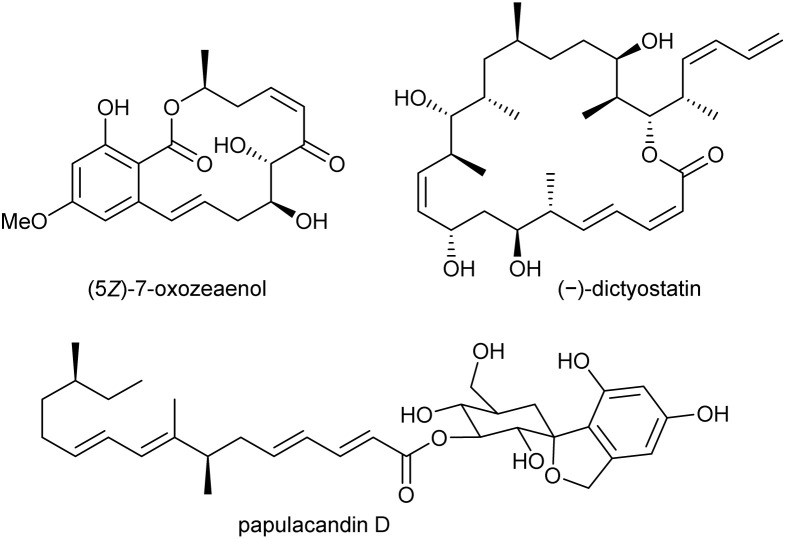 Figure 1
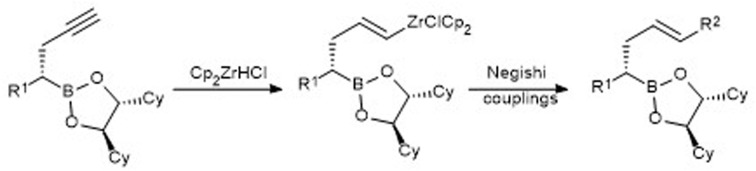 Figure 2
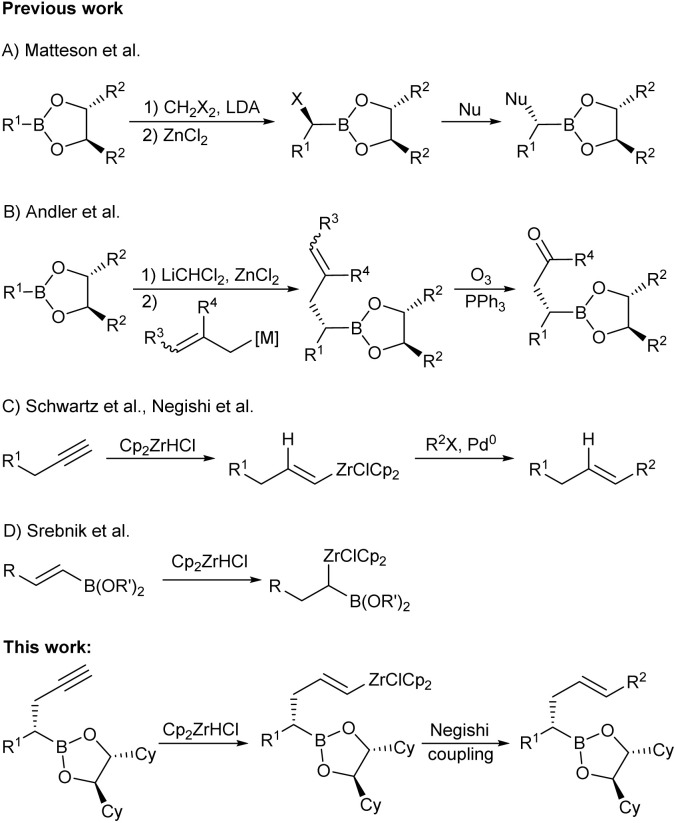 Figure 3
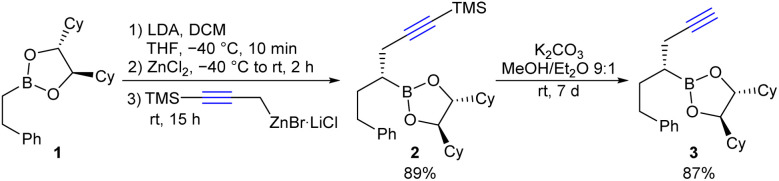 Figure 4
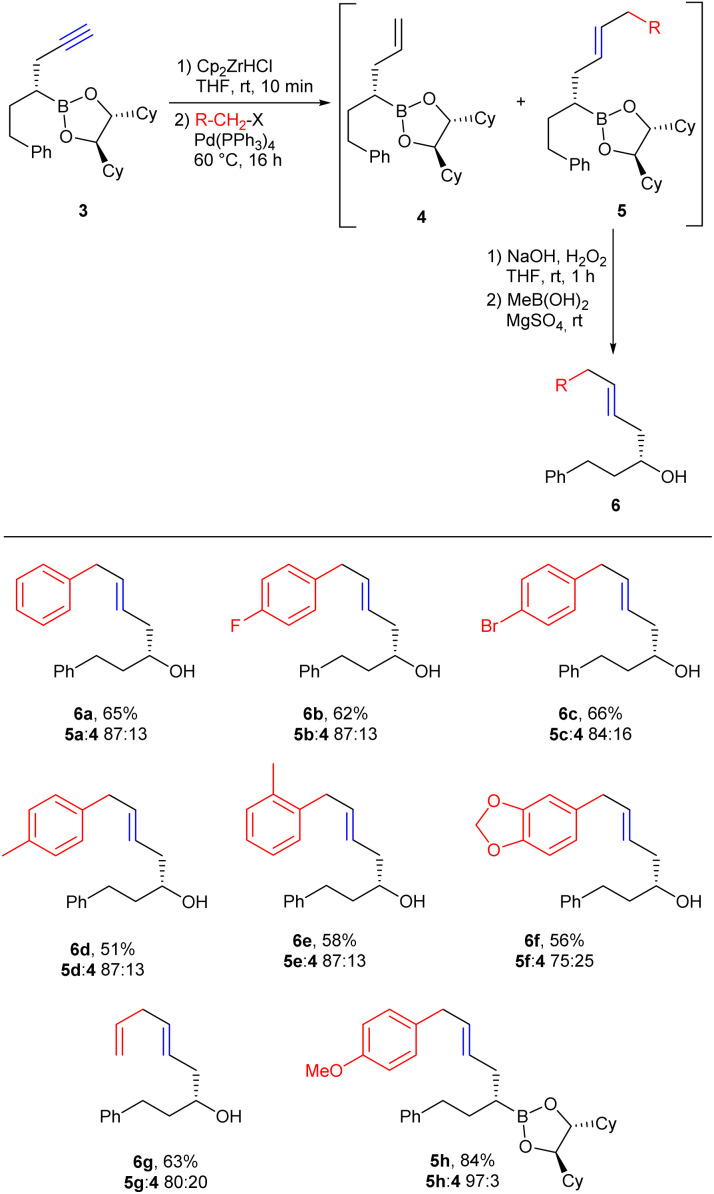 Figure 5
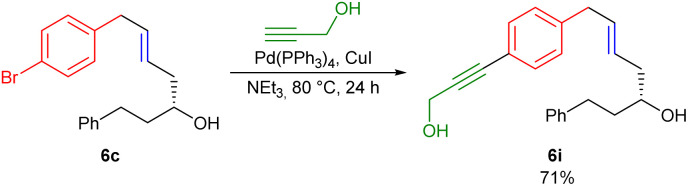 Figure 6
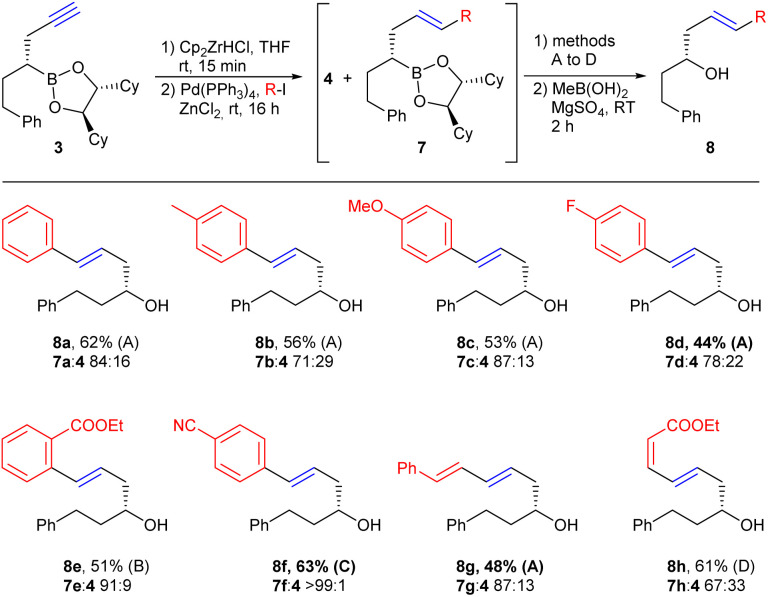 Figure 7
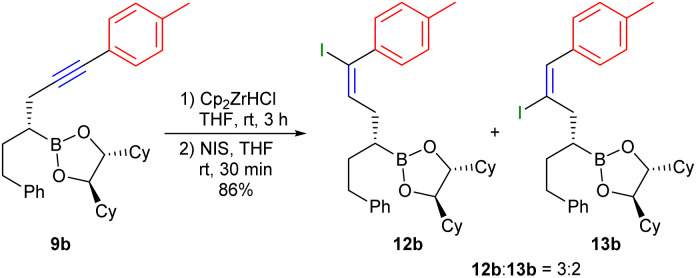 Figure 8
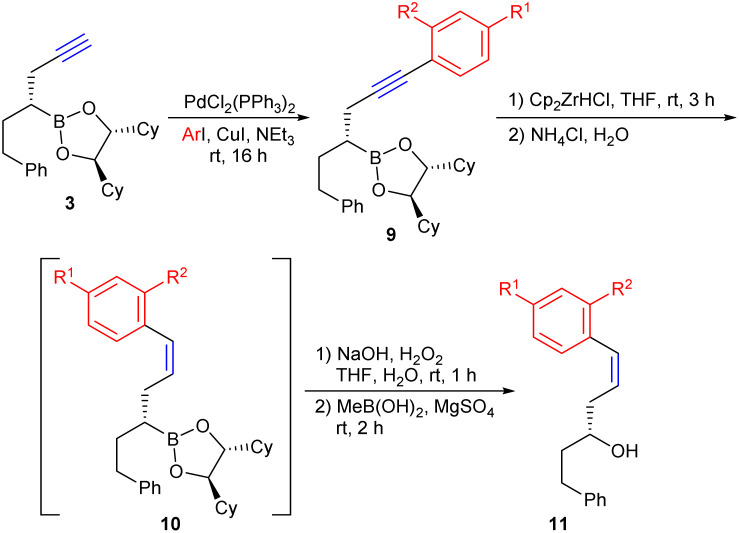 Figure 9
Peer Reviews
No public reviews on file for this paper yet. If you reviewed it on a platform where reviews are public (OpenReview, ICLR, NeurIPS, ICML), you can paste yours below so the community can read it here.
Videos
No videos yet. Explain this paper in a talk, walkthrough, or lecture? Add one.
Taxonomy
TopicsOrganoboron and organosilicon chemistry · Catalytic Cross-Coupling Reactions · Catalytic C–H Functionalization Methods