Mild and efficient synthesis of carbamates using dioxazolones as bench-stable isocyanate surrogates: application in AChE-inhibiting agent development
Yinxin Wu, Xiaodan Liu, Fangfang Zuo, Yulu Ding, Jiasheng Kang, Jianping Wu, Wenjian Tang, Jing Zhang

TL;DR
A new method for making carbamates using stable dioxazolones was developed, offering a safer and efficient way to create insecticides and AChE inhibitors.
Contribution
The use of dioxazolones as bench-stable isocyanate surrogates for carbamate synthesis is novel and avoids handling volatile isocyanates.
Findings
The method enabled rapid and high-yield synthesis of diverse carbamates, including insecticides like propoxur and carbofuran.
A 30-compound library was created, with several compounds showing potent nanomolar acetylcholinesterase (AChE) inhibition.
Molecular docking revealed insights into structure–activity relationships and selectivity between insect and mammalian AChE.
Abstract
A practical method for carbamate synthesis was developed using 3-substituted dioxazolones as bench-stable isocyanate surrogates. Prepared from hydroxamic acids using triphosgene, these dioxazolones underwent base-promoted decarboxylation to generate isocyanates in situ. The optimized protocol (MeCN, Cs2CO3, 70 °C) enabled rapid (20 min), high-yielding access to diverse carbamates, including commercial insecticides propoxur and carbofuran in both milligram and gram scales. The carbamate-forming step avoided direct handling of volatile isocyanates, generates CO2 as the only byproduct, and exhibited broad substrate scope, affording a 30-compound library. Biological evaluation identified several potent acetylcholinesterase (AChE) inhibitors, with series-5 demonstrating nanomolar-level activity. Molecular docking provided structural insights into structure–activity relationships and…
Genes, proteins, chemicals, diseases, species, mutations and cell lines named across the full text — each resolved to its canonical identifier and authoritative record.
Click any figure to enlarge with its caption.
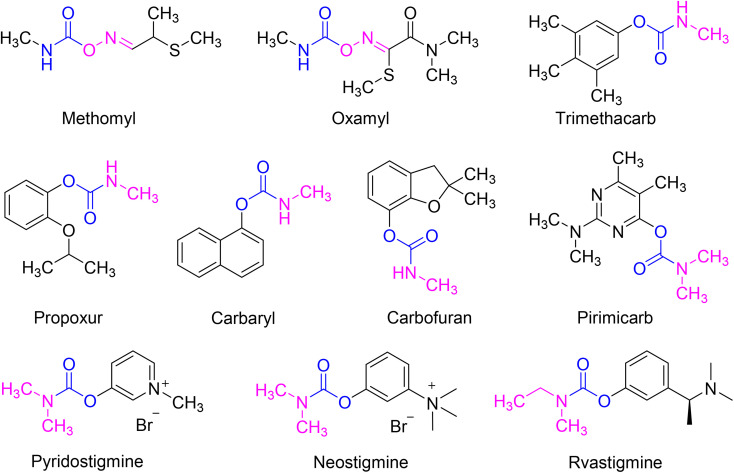 Figure 1
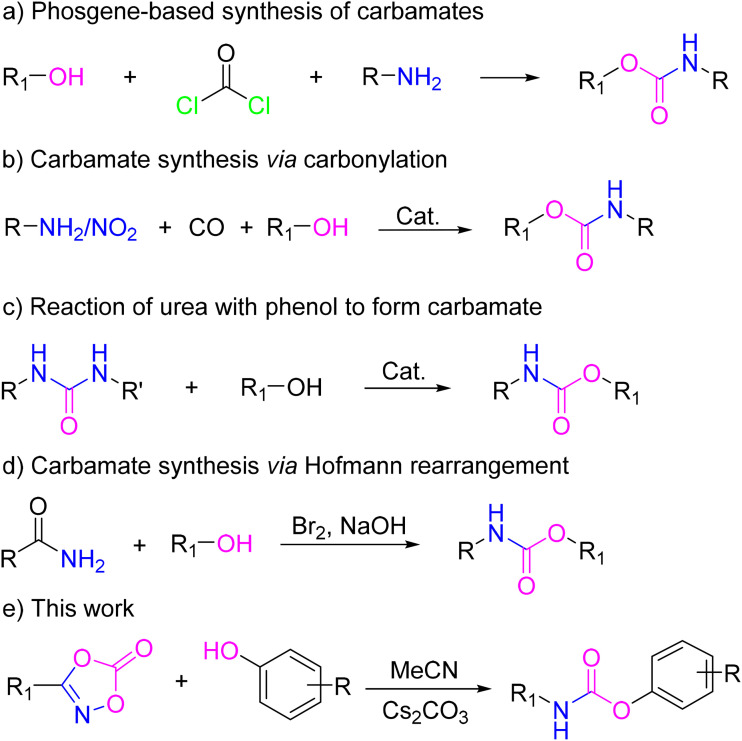 Figure 2
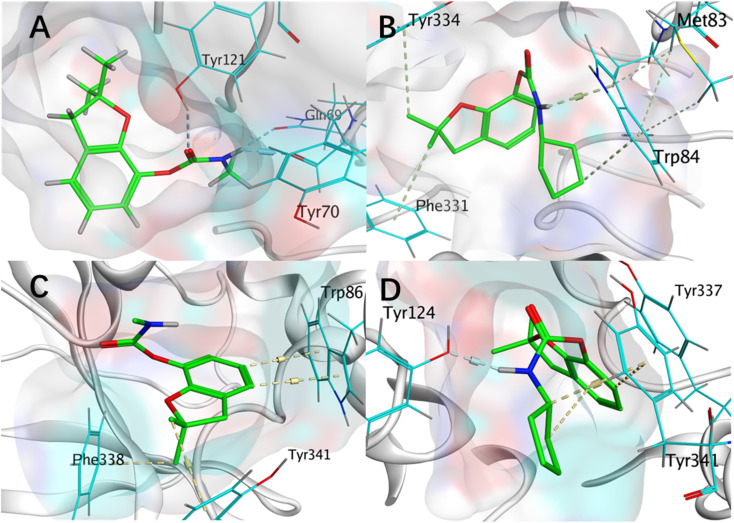 Figure 3
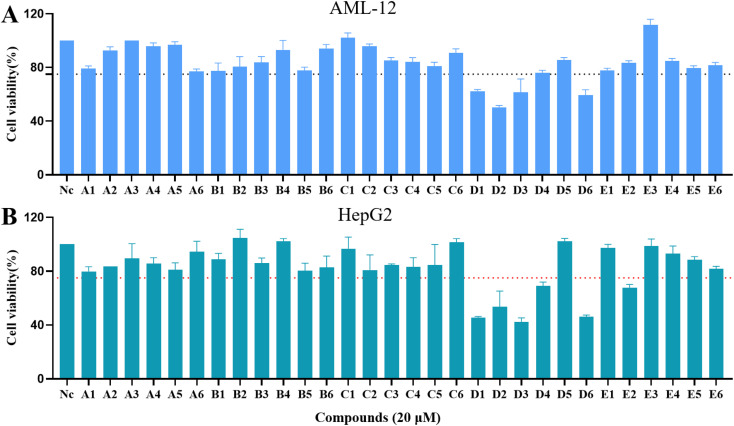 Figure 4
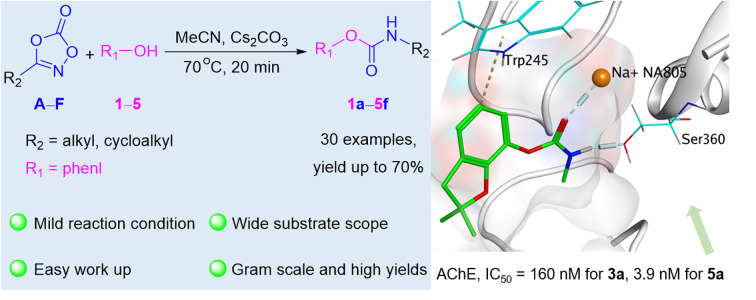 Figure 5
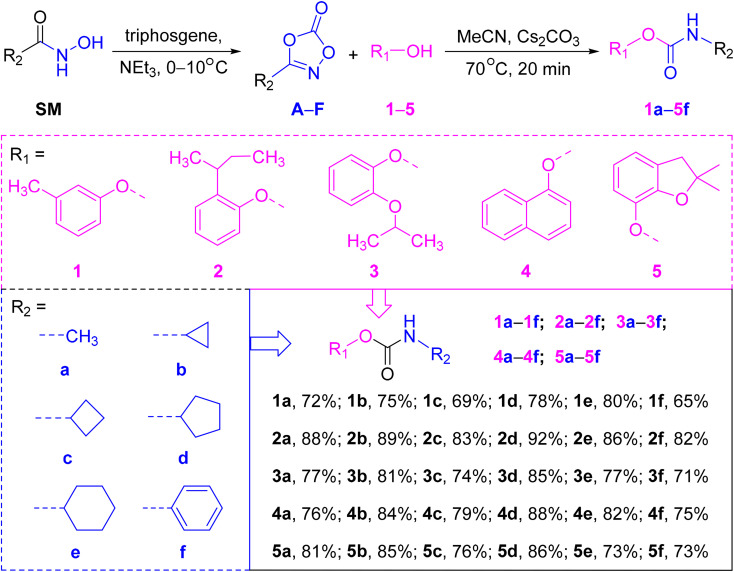 Figure 6
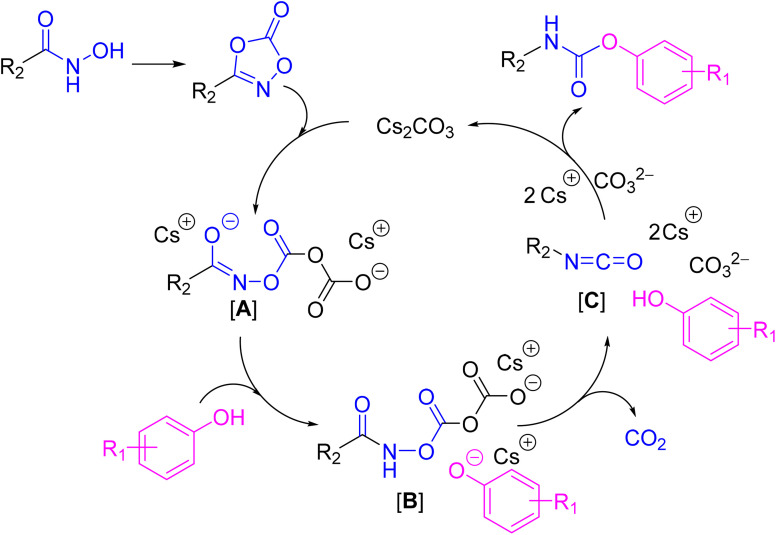 Figure 7
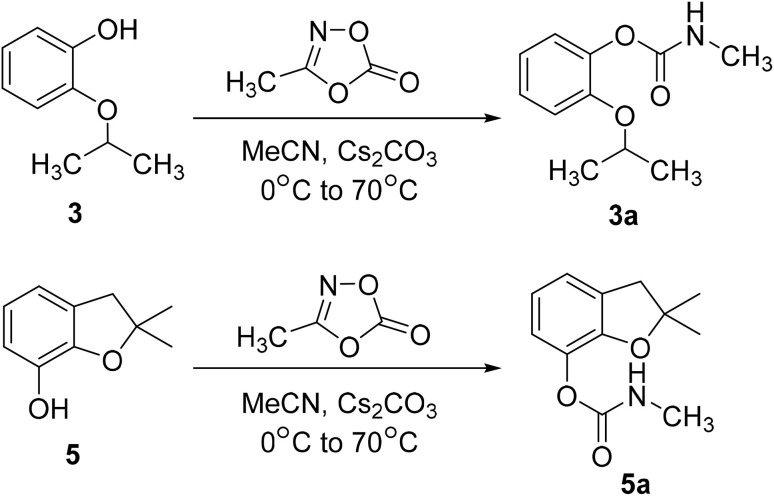 Figure 8
Peer Reviews
No public reviews on file for this paper yet. If you reviewed it on a platform where reviews are public (OpenReview, ICLR, NeurIPS, ICML), you can paste yours below so the community can read it here.
Videos
No videos yet. Explain this paper in a talk, walkthrough, or lecture? Add one.
Taxonomy
TopicsCarbon dioxide utilization in catalysis · Synthesis of heterocyclic compounds · Chemical Synthesis and Analysis