Retrotransposition Events Shape the Evolution of the Ataxin-3 Gene Family in Primates
Daniela Felício, Inês M Martins, Andreia Pinto, Jorge Sequeiros, António Amorim, Alexandra M Lopes, Susana Seixas, Sandra Martins

TL;DR
This study explores how retrotransposition events have shaped the evolution of the ataxin-3 gene family in primates, potentially offering insights into neurodegenerative diseases like Machado–Joseph disease.
Contribution
The study identifies new retrotransposition events of the ATXN3 gene and explores their evolutionary and functional implications.
Findings
Three new retrotransposition events of ATXN3 were identified in different primate lineages.
ATXN3L1 is highly conserved and may have functional redundancy with ATXN3.
Phylogenetic analysis reveals insights into CAG repeat expansion patterns in human ATXN3.
Abstract
Evolutionary studies of disease-associated genes provide crucial insights into pathological mechanisms and potential therapeutic targets. Polyglutamine spinocerebellar ataxias (SCAs) are human neurodegenerative diseases caused by toxic expanded CAG repeats. Studies on SCA1 have shown that a paralog of the causing-gene can partially rescue protein function and alleviate the neuropathology. The most common SCA, Machado–Joseph disease (MJD/SCA3), caused by mutated ataxin-3 gene (ATXN3), has no treatment currently available. Its paralog ataxin-3 like (ATXN3L) remains largely unexplored. Here, we identify three new retrotransposition events of ATXN3: ATXN3L0 in Euarchontoglires, ATXN3L2 in Simiformes, and ATXN3L3 in Cercopithecidae, in addition to ATXN3L (herein called ATXN3L1) originated in Haplorrhini. ATXN3 and ATXN3L1 are both under purifying selection throughout primate evolution,…
Genes, proteins, chemicals, diseases, species, mutations and cell lines named across the full text — each resolved to its canonical identifier and authoritative record.
Click any figure to enlarge with its caption.
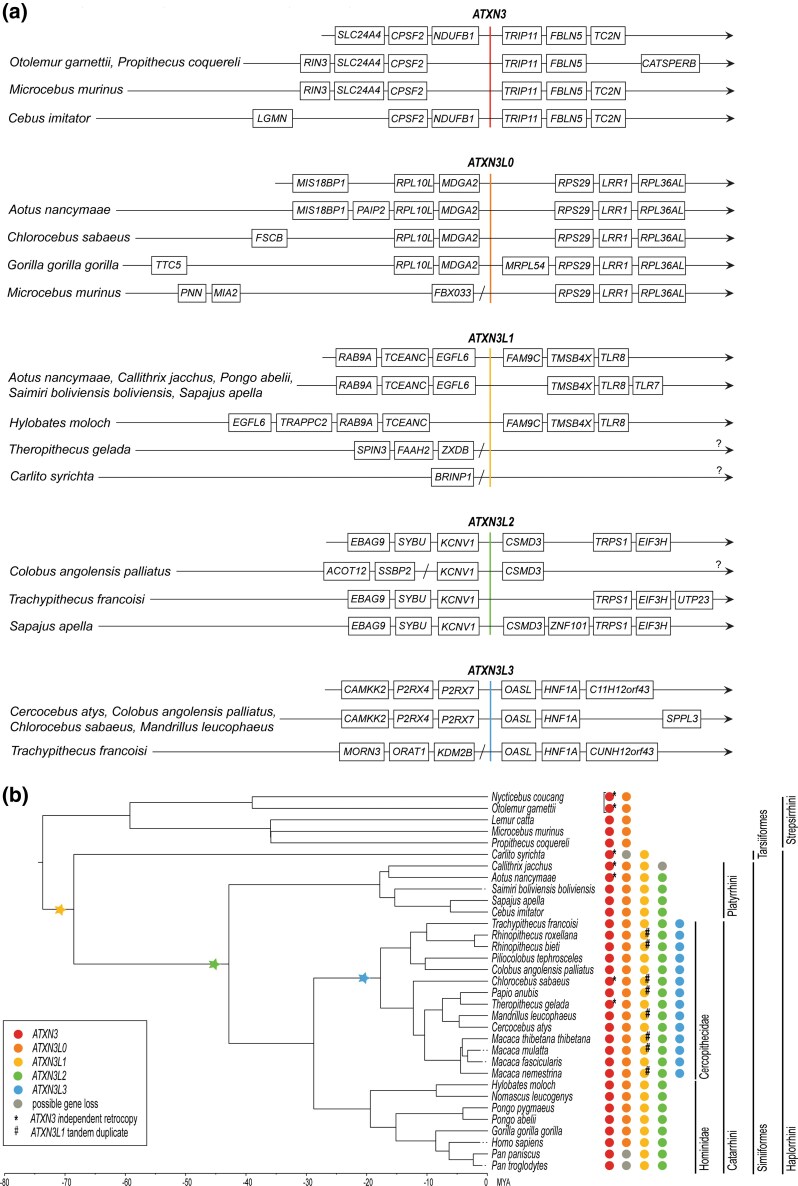 Figure 1
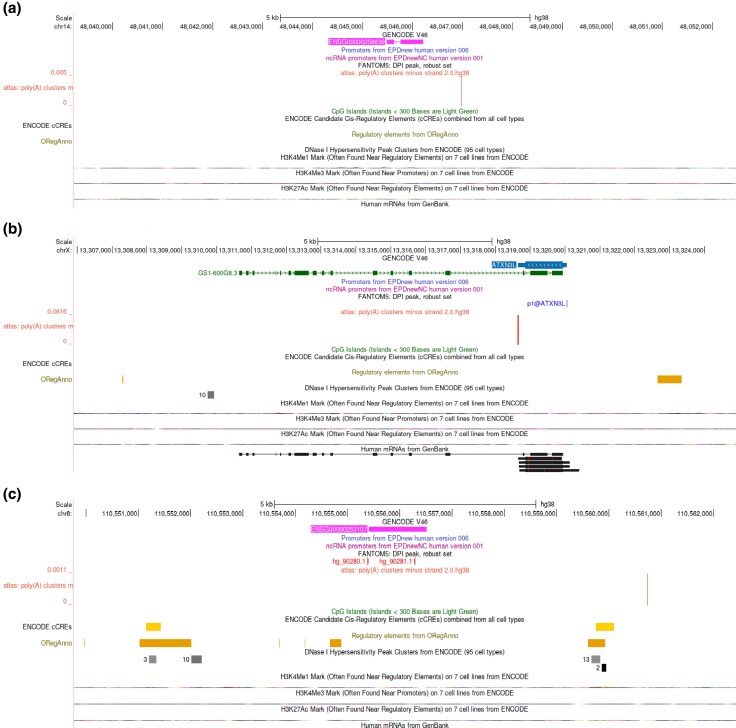 Figure 2
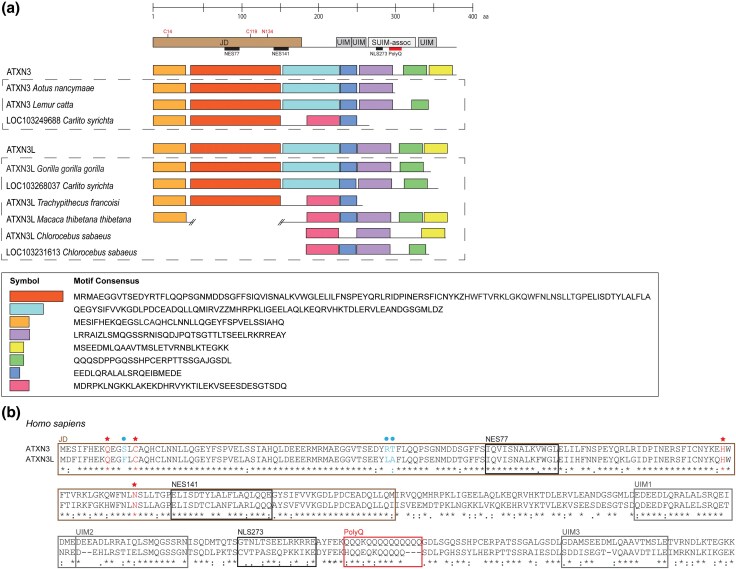 Figure 3
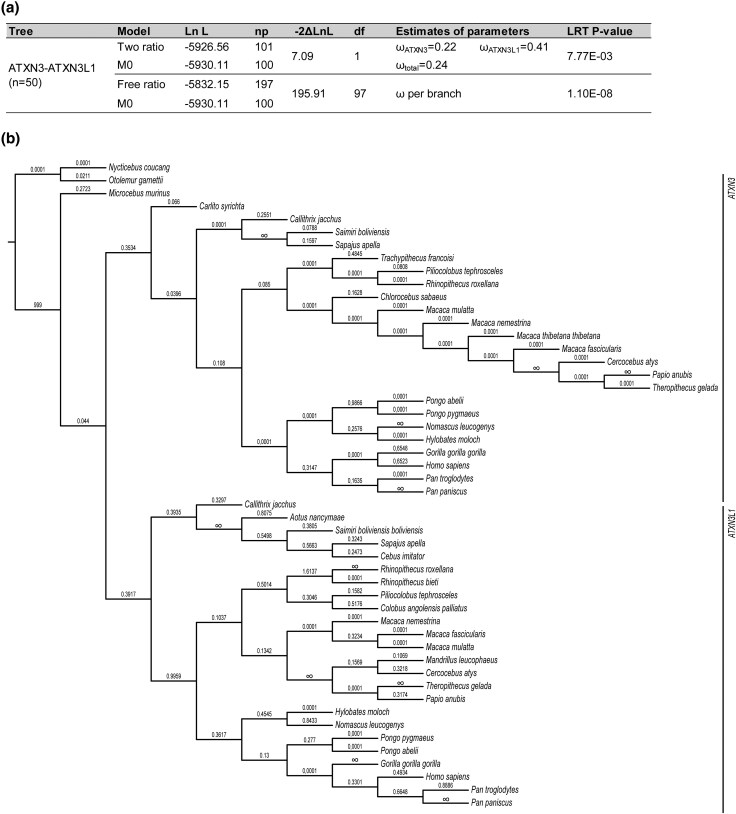 Figure 4
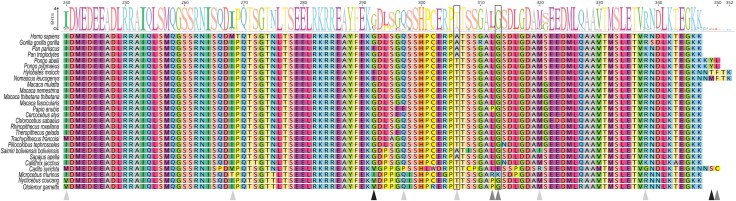 Figure 5
Peer Reviews
No public reviews on file for this paper yet. If you reviewed it on a platform where reviews are public (OpenReview, ICLR, NeurIPS, ICML), you can paste yours below so the community can read it here.
Videos
No videos yet. Explain this paper in a talk, walkthrough, or lecture? Add one.
Taxonomy
TopicsGenetic Neurodegenerative Diseases · Amyotrophic Lateral Sclerosis Research · Genomics and Rare Diseases