Using Risk–Benefit Analysis and the Analytical Hierarchy Process to Decide on the Implementation of Rapid Salmonella Detection Methods in Large Poultry Industries
Cris Rocha Pinto Magalhães, Nathanyelle Soraya Martins de Aquino, Eduardo Cesar Tondo

TL;DR
This paper uses risk-benefit analysis and the analytical hierarchy process to evaluate rapid Salmonella detection methods in large poultry industries.
Contribution
The study combines RBA and AHP to provide a structured decision-making framework for adopting or changing rapid Salmonella detection methods.
Findings
Rapid assays are recommended for large poultry companies due to high benefits despite varying costs.
Changing one rapid method for another offers minimal benefit as existing methods are similar.
Key criteria for method selection include supply capacity, technical support, and time to results.
Abstract
Tools based on multi‐criteria decision analysis (MCDA) can be used in decision‐making processes related to food safety issues (FSI). We used risk–benefit analysis (RBA) and the analytic hierarchy process (AHP) to answer the following questions: What are the benefits and risks of using rapid Salmonella assays in large‐scale poultry industries? What are the benefits and risks of changing one implemented rapid method by another? In the RBA, we described the FSI, ranked Salmonella risk, and analyzed the benefits and costs of assays by considering seven criteria: supply capacity, international validation, cost of equipment, ease to perform, technical support, cost per sample, and time to obtain results. AHP, a mathematical framework based on pairwise comparisons, was used to confirm RBA findings. As a result, the RBA recommended the use of rapid assays in large poultry companies because they…
Genes, proteins, chemicals, diseases, species, mutations and cell lines named across the full text — each resolved to its canonical identifier and authoritative record.
Click any figure to enlarge with its caption.
 Figure 1
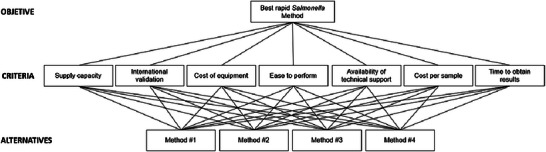 Figure 2
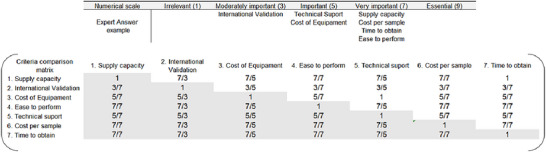 Figure 3
 Figure 4
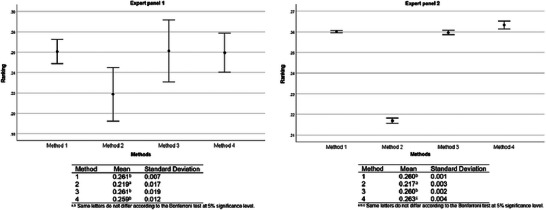 Figure 5
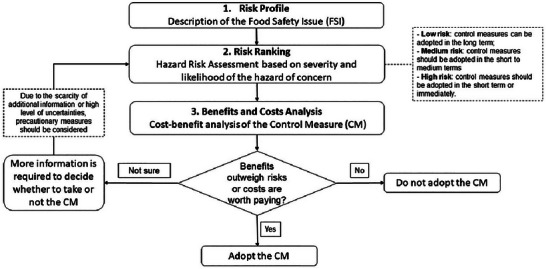 Figure 6
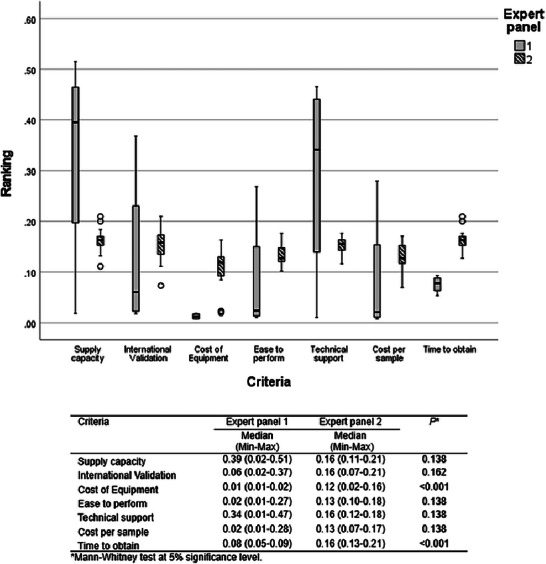 Figure 7
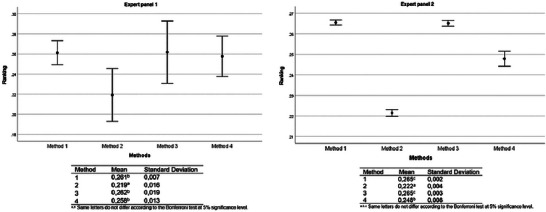 Figure 8
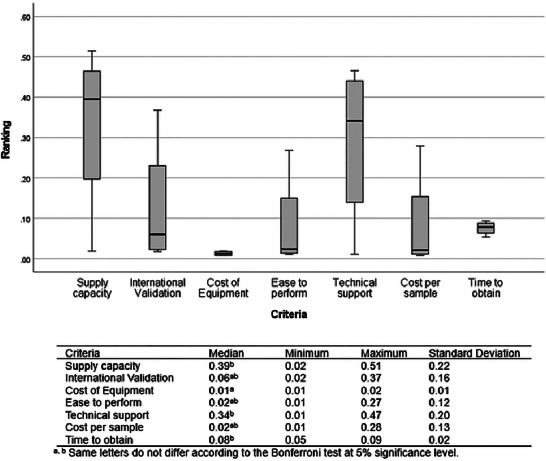 Figure 9
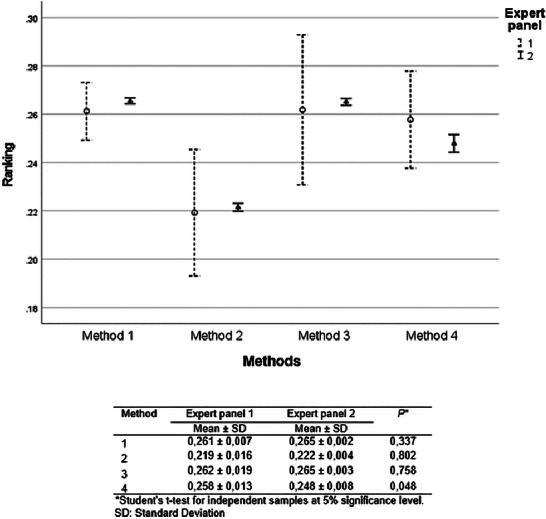 Figure 10
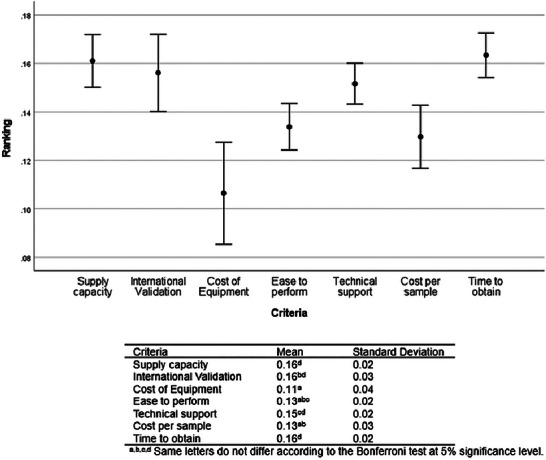 Figure 11
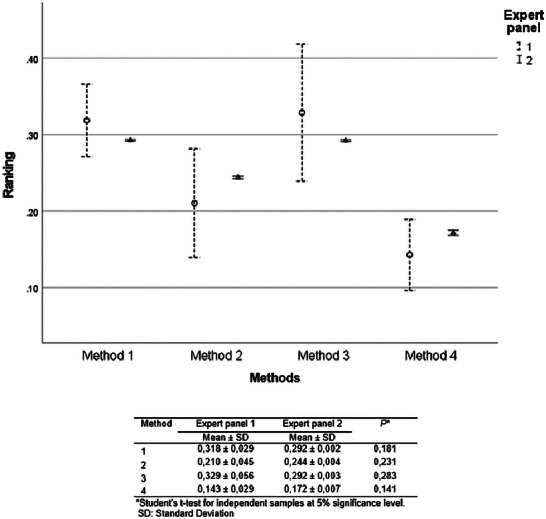 Figure 12
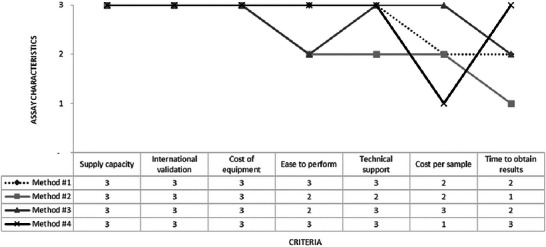 Figure 13
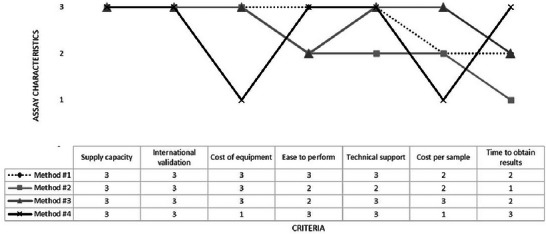 Figure 14
Peer Reviews
No public reviews on file for this paper yet. If you reviewed it on a platform where reviews are public (OpenReview, ICLR, NeurIPS, ICML), you can paste yours below so the community can read it here.
Videos
No videos yet. Explain this paper in a talk, walkthrough, or lecture? Add one.
Taxonomy
TopicsSalmonella and Campylobacter epidemiology · Food Safety and Hygiene · Listeria monocytogenes in Food Safety