A Data-Driven Approach for Comparing Gaze Allocation Across Conditions
Jack Prosser, Anna Metzger, Matteo Toscani

TL;DR
This paper introduces a data-driven method using deep neural networks to analyze how gaze allocation changes with sound, revealing new insights into visual attention strategies.
Contribution
The novel approach uses DNNs and reverse correlation to objectively compare gaze patterns across conditions, uncovering non-trivial fixation strategies.
Findings
DNNs classified gaze conditions with accuracy significantly higher than chance for some scenes.
Sound influences gaze allocation, with fixations sometimes avoiding sound sources and salient features.
Traditional ROI and heatmap methods failed to detect significant differences after correction.
Abstract
Gaze analysis often relies on hypothesised, subjectively defined regions of interest (ROIs) or heatmaps: ROIs enable condition comparisons but reduce objectivity and exploration; while heatmaps avoid this, they require many pixel-wise comparisons, making differences hard to detect. Here, we propose an advanced data-driven approach for analysing gaze behaviour. We use DNNs (adapted versions of AlexNet) to classify conditions from gaze patterns, paired with reverse correlation to show where and how gaze differs between conditions. We test our approach on data from an experiment investigating the effects of object-specific sounds (e.g., church bell ringing) on gaze allocation. ROI-based analysis shows a significant difference between conditions (congruent sound, no sound, phase-scrambled sound and pink noise), with more gaze allocation on sound-associated objects in the congruent sound…
Genes, proteins, chemicals, diseases, species, mutations and cell lines named across the full text — each resolved to its canonical identifier and authoritative record.
Click any figure to enlarge with its caption.
 Figure 1
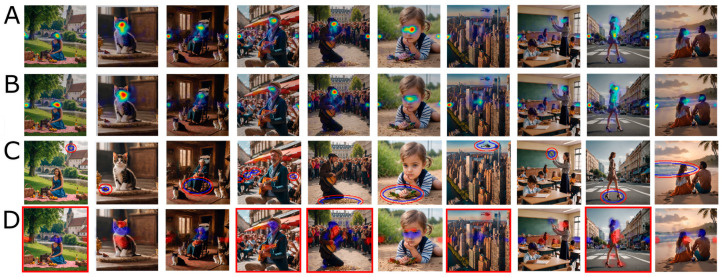 Figure 2
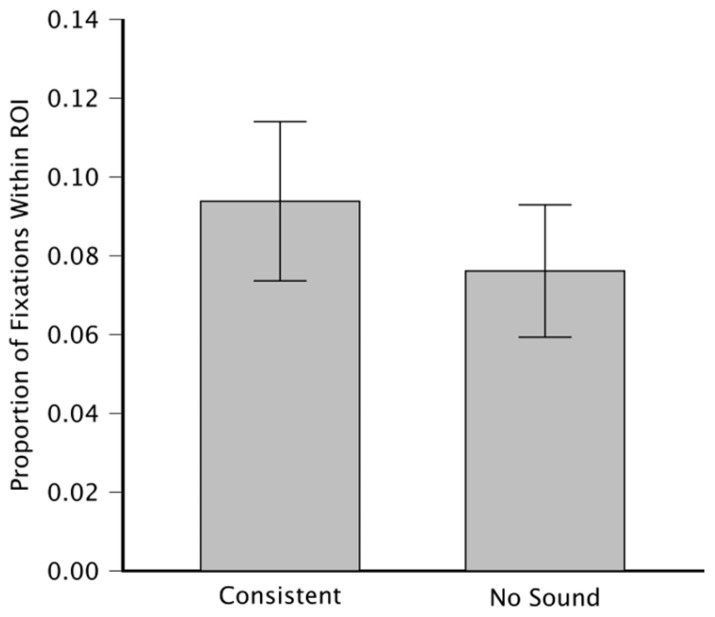 Figure 3
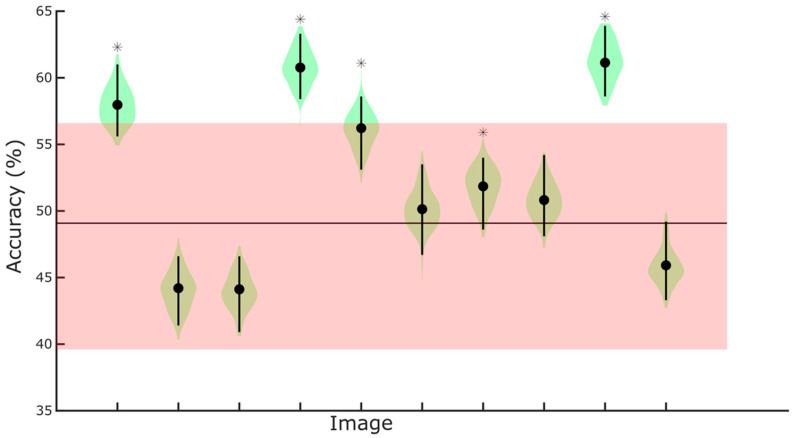 Figure 4
Peer Reviews
No public reviews on file for this paper yet. If you reviewed it on a platform where reviews are public (OpenReview, ICLR, NeurIPS, ICML), you can paste yours below so the community can read it here.
Videos
No videos yet. Explain this paper in a talk, walkthrough, or lecture? Add one.
Taxonomy
TopicsGaze Tracking and Assistive Technology · Visual Attention and Saliency Detection · Face Recognition and Perception