Personalized Hearing Loss Care Using SNOMED CT-Aligned Ontology and Random Forest Machine Learning: A Hybrid Decision-Support Framework
Darine Kebsi, Chamseddine Barki, Ismail Dergaa, Riadh Gouider, Halil İbrahim Ceylan, Amina Maddouri, Abderrazak Jemai, Mourad Elloumi, Nicola Luigi Bragazzi, Hanene Boussi Rahmouni

TL;DR
This study creates a system combining medical knowledge and machine learning to better diagnose and treat hearing loss with personalized care.
Contribution
A hybrid framework integrating SNOMED CT-aligned ontology with Random Forest ML for personalized hearing loss classification and treatment prediction.
Findings
The ontology-based Random Forest model achieved 92.48% test accuracy for hearing loss classification.
Semantic enrichment improved cross-validation accuracy to 92.80% with reduced standard deviation.
Audiometric thresholds and ontology-derived severity labels were top predictors for accurate classification.
Abstract
Background: Hearing loss affects over 466 million individuals globally and is recognized as a major risk factor for Alzheimer’s disease, yet treatment personalization remains limited due to the complexity and diversity of underlying causes. Current diagnostic and therapeutic approaches lack standardized methods to accurately predict the most appropriate intervention for individual patients. The integration of medical ontologies with machine learning offers a promising solution for enhancing diagnostic accuracy and treatment personalization. Aim: Our study aimed to (i) develop a Systematized Nomenclature of Medicine—Clinical Terms (SNOMED CT)-aligned clinical ontology for hearing loss using Semantic Web Rule Language for automated reasoning; (ii) implement a Random Forest classifier trained on ontology-enriched patient data to classify hearing loss types (conductive, sensorineural,…
Genes, proteins, chemicals, diseases, species, mutations and cell lines named across the full text — each resolved to its canonical identifier and authoritative record.
Click any figure to enlarge with its caption.
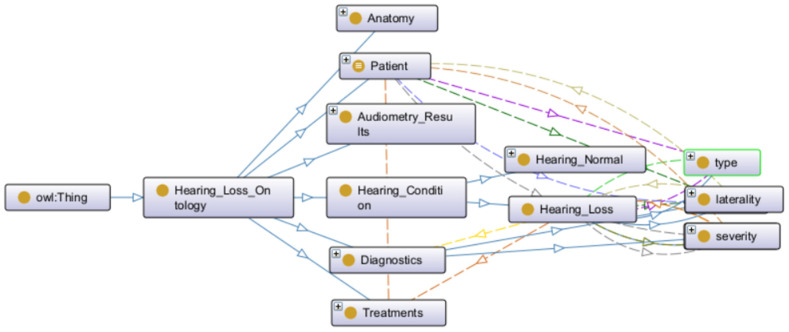 Figure 1
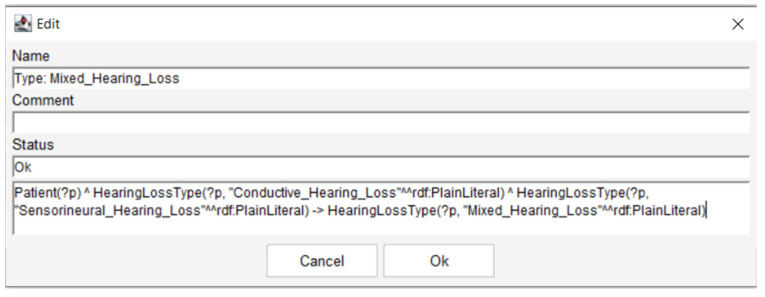 Figure 2
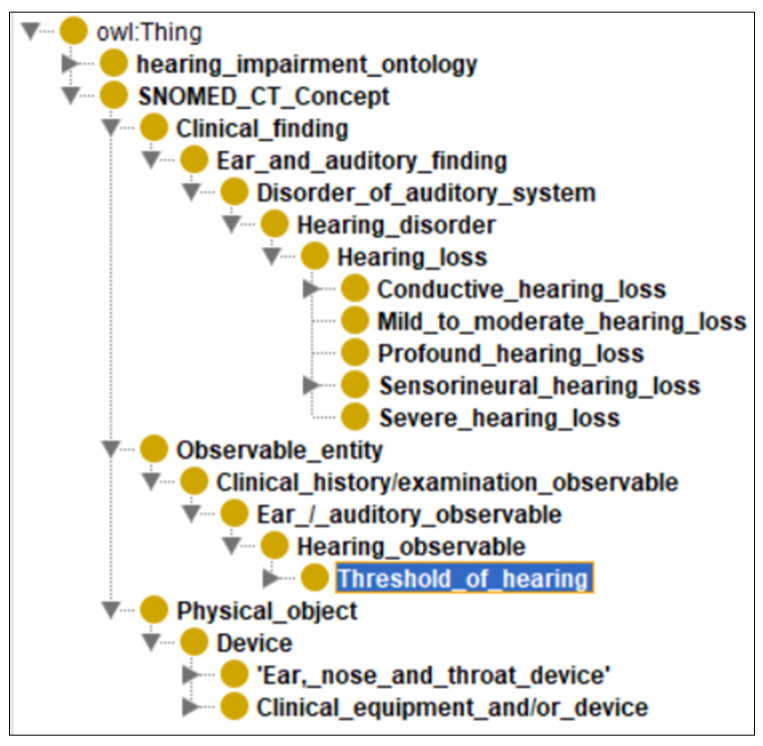 Figure 3
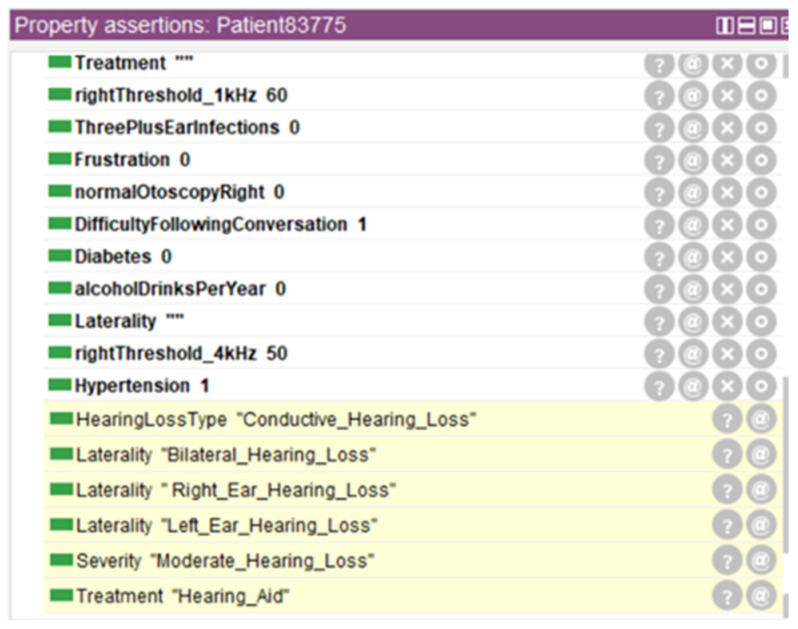 Figure 4
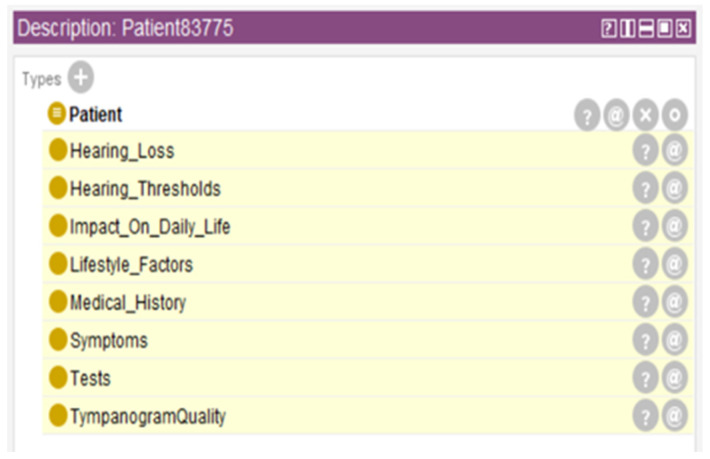 Figure 5
Peer Reviews
No public reviews on file for this paper yet. If you reviewed it on a platform where reviews are public (OpenReview, ICLR, NeurIPS, ICML), you can paste yours below so the community can read it here.
Videos
No videos yet. Explain this paper in a talk, walkthrough, or lecture? Add one.
Taxonomy
TopicsBiomedical Text Mining and Ontologies · Machine Learning in Healthcare · Genomics and Rare Diseases