Integrating Multi-Task Eye Tracking and Interpretable Machine Learning for High-Accuracy Screening of Amblyopia in Pediatric Populations
Xiumei Song, Yunhan Zhang, Hongyu Chen, Chenyu Tang, Bohan Yao, Hubin Zhao, Luigi G. Occhipinti, Arokia Nathan, Changbin Zhai, Shuo Gao

TL;DR
This paper introduces a quick and child-friendly eye-tracking method to accurately screen for amblyopia in children.
Contribution
The study introduces a novel eye-tracking protocol with interpretable machine learning for amblyopia screening.
Findings
The eye-tracking protocol effectively distinguishes children with amblyopia from controls.
Pursuit- and orientation-dependent eye movement markers were most important for classification.
The method is quick, noninvasive, and well-tolerated in pediatric settings.
Abstract
Amblyopia is a developmental disorder of spatial vision in which abnormal visual experience leads to persistent reductions in acuity and contrast sensitivity, even after optimal optical correction. We introduce a brief, child-friendly battery of task-evoked eye tracking that probes fixation stability, fine pattern processing, and smooth pursuit control across three simple paradigms. Oculomotor traces are transformed into physiologically interpretable markers—fixation dispersion and saccadic strategy, orientation-dependent drift and stability, pursuit gain, and tracking error—and used to train a compact classifier with subject-wise validation and probability calibration. In a cohort of school-aged participants with clinically diagnosed unilateral amblyopia and age-matched visually normal controls tested under best-corrected viewing conditions, the approach consistently separated groups…
Genes, proteins, chemicals, diseases, species, mutations and cell lines named across the full text — each resolved to its canonical identifier and authoritative record.
Click any figure to enlarge with its caption.
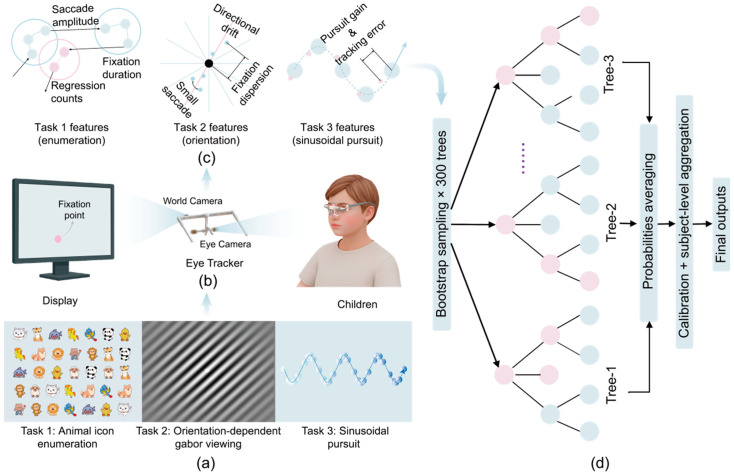 Figure 1
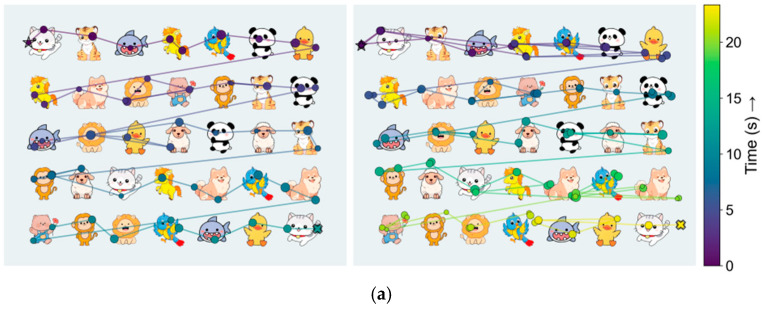 Figure 2
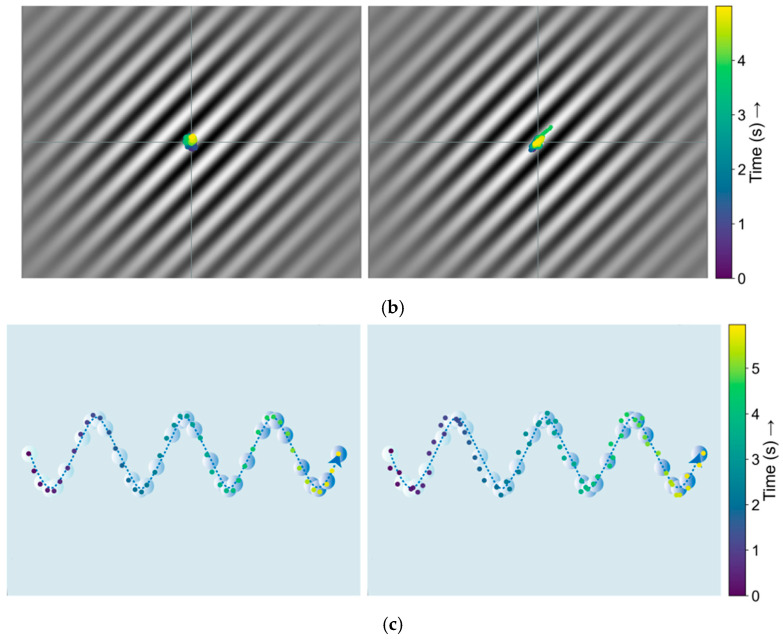 Figure 3
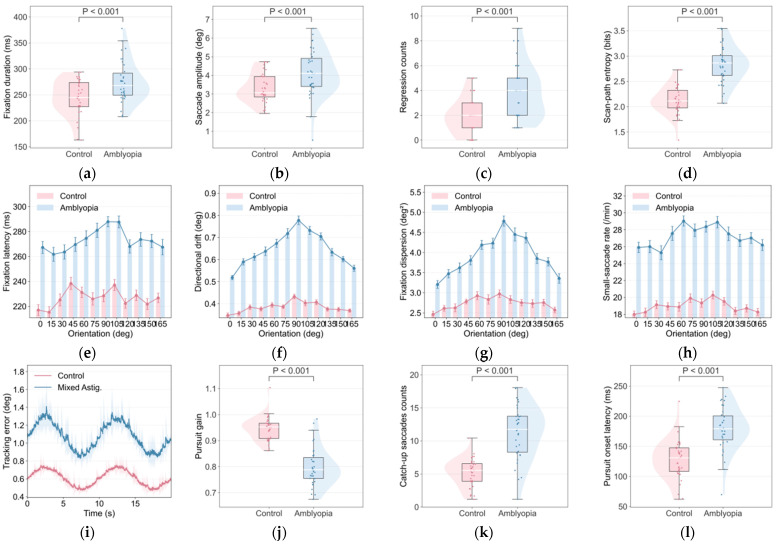 Figure 4
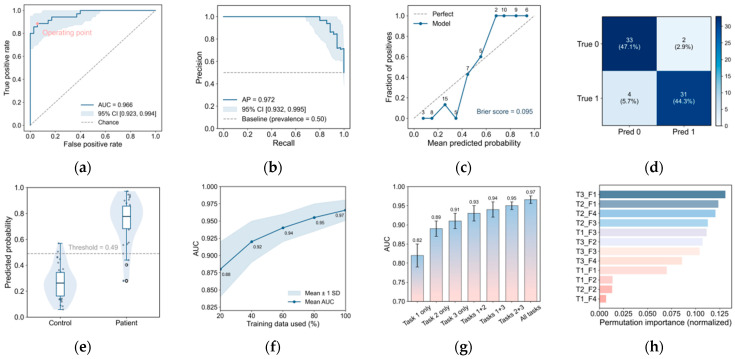 Figure 5
Peer Reviews
No public reviews on file for this paper yet. If you reviewed it on a platform where reviews are public (OpenReview, ICLR, NeurIPS, ICML), you can paste yours below so the community can read it here.
Videos
No videos yet. Explain this paper in a talk, walkthrough, or lecture? Add one.
Taxonomy
TopicsOphthalmology and Visual Impairment Studies · Visual perception and processing mechanisms · Spatial Neglect and Hemispheric Dysfunction