Ecologic and Sociodemographic Factors Associated with Seroprevalence of Rickettsia in Yucatan, Mexico
Edgar Villarreal-Jimenez, Karla Dzul-Rosado, Fernando Puerto-Manzano, Jorge C. Guillermo-Herrera, Henry Pech-Noh, Nina Mendez-Dominguez

TL;DR
This study found that Rickettsia seroprevalence in Yucatan, Mexico, is influenced by environmental and demographic factors, with higher temperatures increasing risk.
Contribution
The study provides updated seroprevalence data and identifies ecologic and sociodemographic factors linked to Rickettsia in Yucatan.
Findings
The overall seroprevalence of Rickettsia in Yucatan was 31.2%.
Higher maximum temperatures were associated with increased Rickettsia seroprevalence.
Higher population density was linked to decreased Rickettsia seroprevalence.
Abstract
Background: Rickettsioses disproportionately affect vulnerable populations and are frequently misdiagnosed as other febrile illnesses in Yucatan, the Mexican state with the greatest diversity of Rickettsia spp. Although significant seroprevalence has been reported in rural communities, the last population-based study was conducted over two decades ago, despite environmental and social changes that have likely increased transmission risk. This study aimed to estimate the seroprevalence of spotted fever group (SFG) and typhus group (TG) of Rickettsia in an endemic area of southeastern Mexico. Methods: A cross-sectional analytical study was conducted among 390 participants. Indirect immunofluorescence was used to detect IgG antibodies against SFG and TG of Rickettsia. Sociodemographic characteristics of participants, along with environmental and community-level variables from their regions…
Genes, proteins, chemicals, diseases, species, mutations and cell lines named across the full text — each resolved to its canonical identifier and authoritative record.
Click any figure to enlarge with its caption.
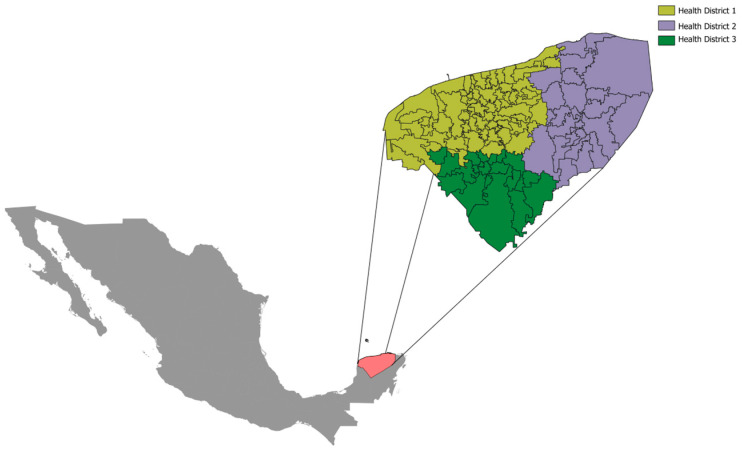 Figure 1
Peer Reviews
No public reviews on file for this paper yet. If you reviewed it on a platform where reviews are public (OpenReview, ICLR, NeurIPS, ICML), you can paste yours below so the community can read it here.
Videos
No videos yet. Explain this paper in a talk, walkthrough, or lecture? Add one.
Taxonomy
TopicsVector-borne infectious diseases · Yersinia bacterium, plague, ectoparasites research · Rabies epidemiology and control