Stage-Specific Processing in Numerosity Working Memory: ERP Evidence for Load and Mismatch Effects in a Delayed Match-to-Sample Task
Mengyu Duan, Zhuorui Liu, Li Sui

TL;DR
This study uses brainwave measurements to show how the brain processes different numbers in working memory, revealing distinct effects during encoding, maintenance, and comparison stages.
Contribution
The paper provides ERP evidence for stage-specific effects of numerosity load and mismatch in a single working memory paradigm.
Findings
Higher numerosity increases perceptual demands during encoding, as shown by reduced P1 and N1 amplitudes.
Numerosity load modulates maintenance processes in a specific 450–650 ms posterior window during the delay.
Mismatch effects during test-stage comparison are reflected in a more negative N2, especially in dot–dot comparisons.
Abstract
Numerosity can be represented in symbolic formats and non-symbolic dot arrays. How numerosity load unfolds across WM encoding/maintenance and test-stage comparison within a single paradigm remains unclear, especially within the tested 4–6 range. We used a delayed match-to-sample task manipulating numerosity (4–6) and match status, with two test blocks (dot–digit and dot–dot). Behaviorally, a higher numerosity reduced accuracy and increased RTs in both blocks, with larger costs in dot–dot; the mismatch reliably slowed RTs. At sample onset, occipital P1 and N1 amplitudes decreased with increasing numerosity, consistent with greater perceptual/processing demands at higher load, with the strongest differences at the high end of the range. During the delay, numerosity modulation was temporally specific, emerging in the 450–650 ms posterior window and remaining significant after FDR…
Genes, proteins, chemicals, diseases, species, mutations and cell lines named across the full text — each resolved to its canonical identifier and authoritative record.
Click any figure to enlarge with its caption.
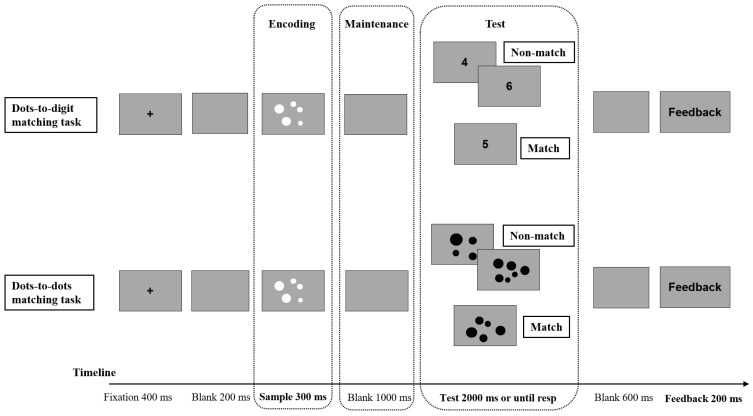 Figure 1
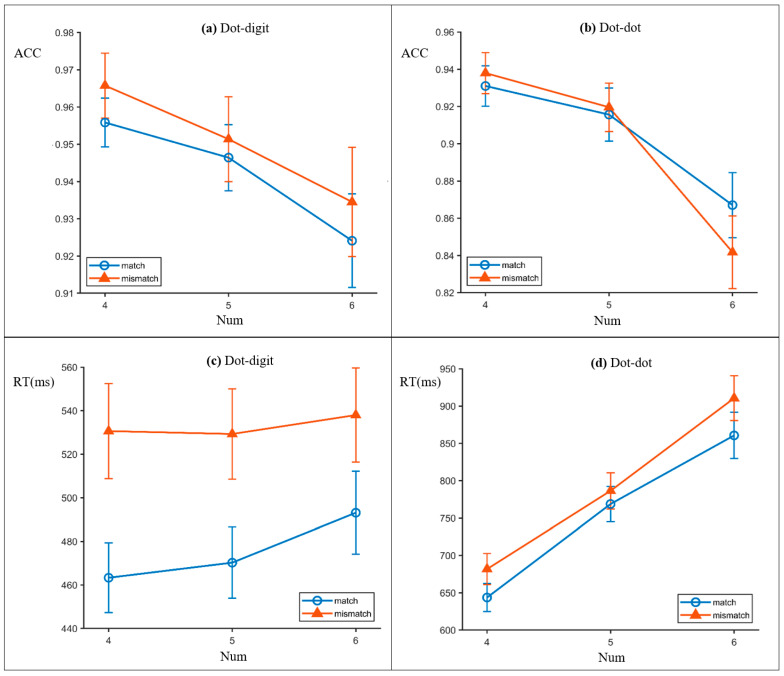 Figure 2
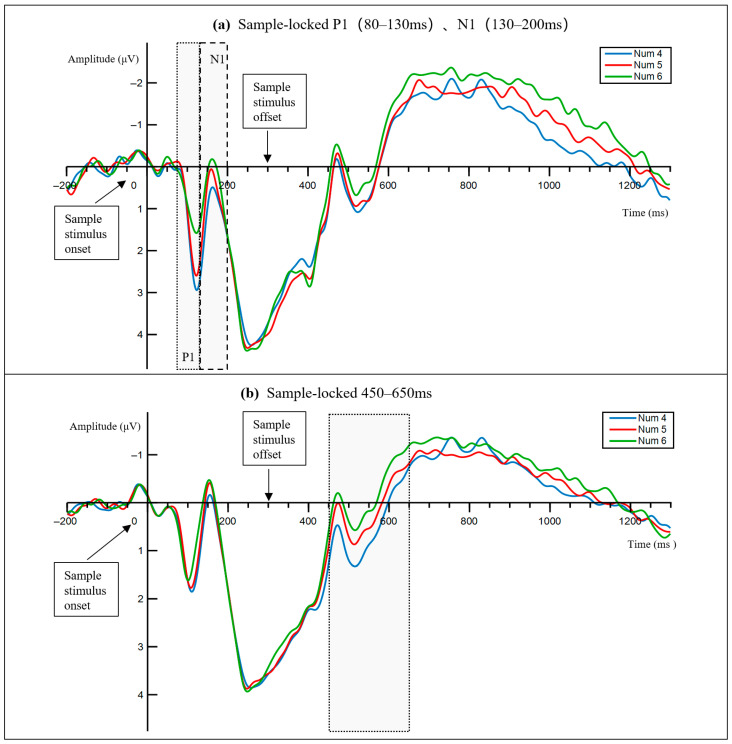 Figure 3
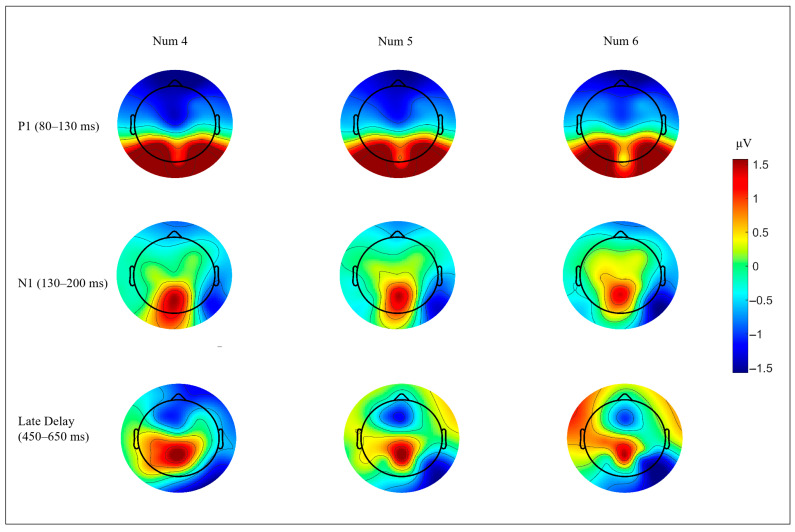 Figure 4
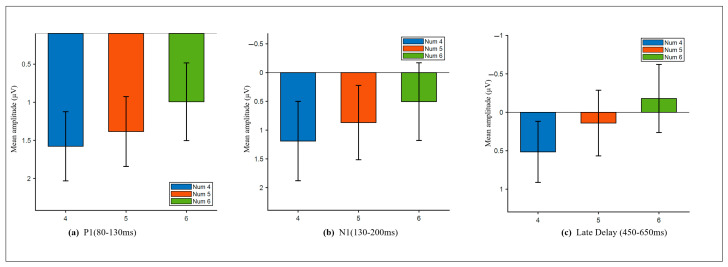 Figure 5
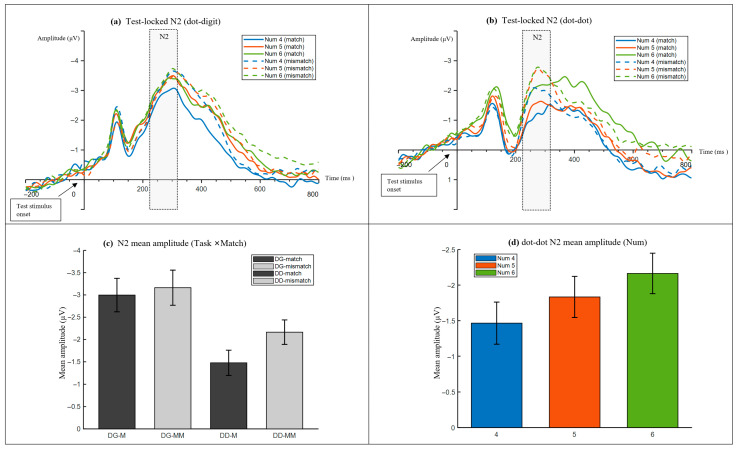 Figure 6
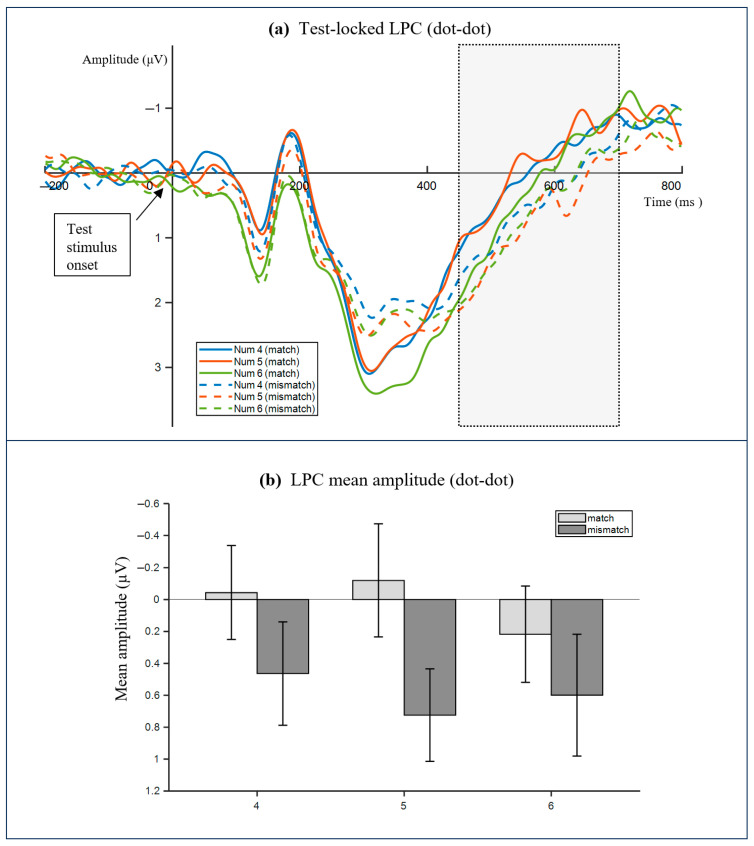 Figure 7
Peer Reviews
No public reviews on file for this paper yet. If you reviewed it on a platform where reviews are public (OpenReview, ICLR, NeurIPS, ICML), you can paste yours below so the community can read it here.
Videos
No videos yet. Explain this paper in a talk, walkthrough, or lecture? Add one.
Taxonomy
TopicsCognitive and developmental aspects of mathematical skills · Neuroscience and Music Perception · Reading and Literacy Development