Direct Methamphetamine Sensing in Flowing Wastewater via a 3D-Printed Flow-Through Cell
Veronika Svitková, Ivana Horáková, Viliam Kolivoška, Eva Vaněčková, Olívia Dakošová, Eva Melníková, Dušan Žabka, Zuzana Imreová, Alexandra Tulipánová, Alexandra Paulína Drdanová, Marek Haššo, Peter Nemeček, Michal Hatala, Tomáš Mackuľak, Miroslav Gál

TL;DR
A 3D-printed device was developed to detect methamphetamine in flowing wastewater, offering a portable solution for public health and law enforcement.
Contribution
The first demonstration of direct electrochemical sensing of methamphetamine in flowing wastewater using a 3D-printed flow-through platform.
Findings
The device achieved a detection limit of 15.9 µg L−1 in non-flow and 211.2 µg L−1 in flow conditions.
The system enabled discrimination between methamphetamine and its precursor APAAN in a single run.
The design supports portable, near-real-time sewer surveillance for methamphetamine.
Abstract
The rapid, field-ready detection of methamphetamine (MET) directly in sewage under flow remains a bottleneck for public health and law enforcement surveillance. We engineered a low-cost, 3D-printed flow-through electrochemical cell that houses a commercial screen-printed carbon electrode and operates in both non-flow and flow regimes. The platform was validated using the [Ru(NH3)6]3+/2+ couple, confirming negligible kinetic hindrance and suitability for voltammetric sensing under convective transport. Using square wave voltammetry and chronoamperometry, MET was quantified in filtered wastewater, with limits of detection of 15.9 µg L−1 in non-flow and 211.2 µg L−1 in flow conditions. Specificity tests yielded well-separated faradaic responses for the pre precursor α-phenylacetoacetonitrile (APAAN) and for MET, while amphetamine produced only a weak signal, enabling side-by-side…
Genes, proteins, chemicals, diseases, species, mutations and cell lines named across the full text — each resolved to its canonical identifier and authoritative record.
Click any figure to enlarge with its caption.
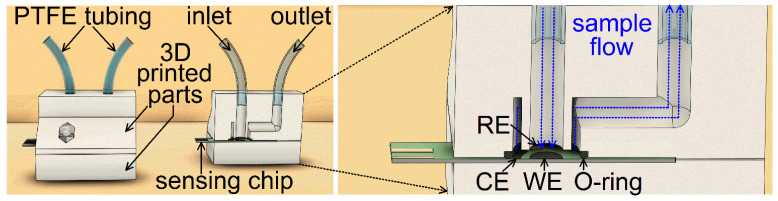 Figure 1
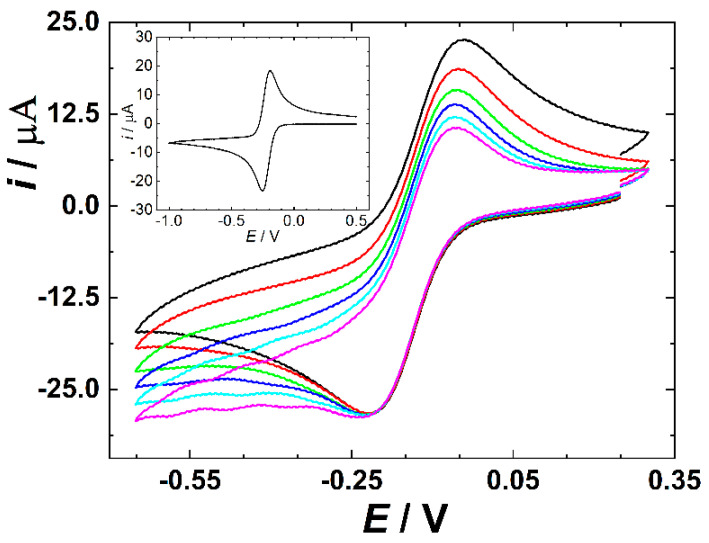 Figure 2
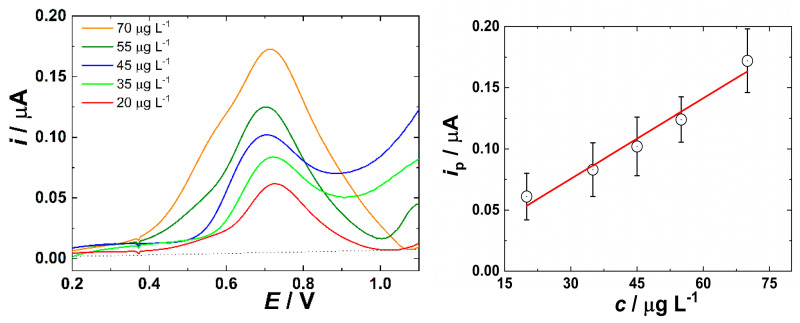 Figure 3
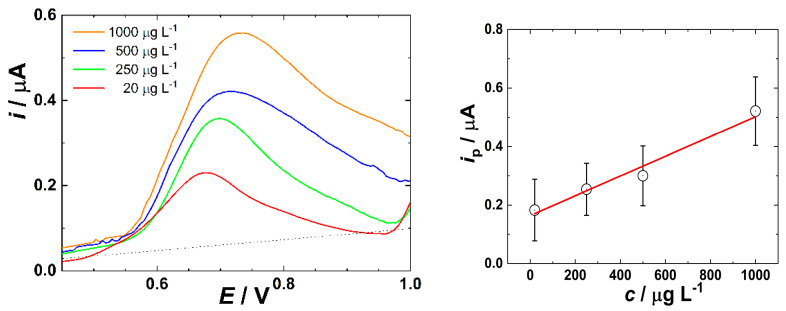 Figure 4
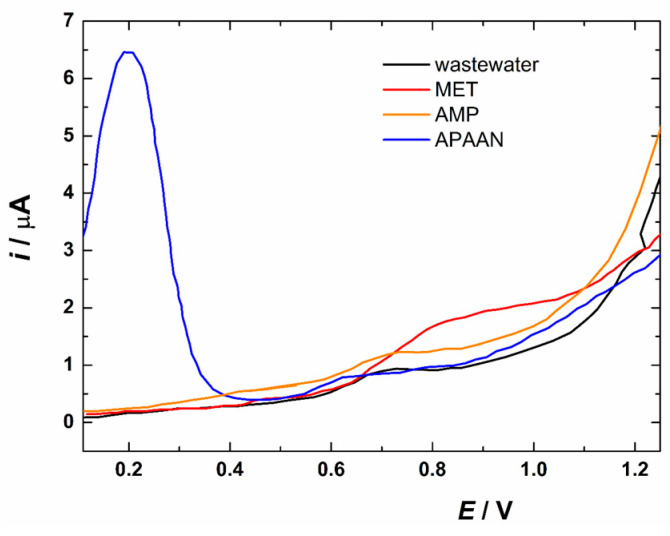 Figure 5
Peer Reviews
No public reviews on file for this paper yet. If you reviewed it on a platform where reviews are public (OpenReview, ICLR, NeurIPS, ICML), you can paste yours below so the community can read it here.
Videos
No videos yet. Explain this paper in a talk, walkthrough, or lecture? Add one.
Taxonomy
TopicsForensic Toxicology and Drug Analysis · Electrochemical sensors and biosensors · Analytical chemistry methods development