A Multidisciplinary Approach to the Diagnosis and Management of a Mammary Myofibroblastoma in a Male with a History of Diffuse Large B-Cell Lymphoma: A Case Report
Carmen Montes Fernández, Norma C. Gutiérrez, Elena Alejo Alonso, Susana Gallego García, Luis Gonzaga Díaz-González, José Luis Revilla Hernández, María Ángeles Hernández García, Idalia González Morais, Miguel Ángel Cruz Sánchez, José María Sayagués, Luis Miguel Chinchilla-Tábora

TL;DR
An 80-year-old man with a history of lymphoma was diagnosed with a rare benign breast tumor, which was successfully managed with surgery and no further complications.
Contribution
This case report highlights the importance of multidisciplinary evaluation in distinguishing benign tumors from residual lymphoma in post-treatment imaging.
Findings
A benign mammary myofibroblastoma was diagnosed in a patient with a history of DLBCL.
The patient remained in complete remission with no recurrence 12 months post-surgery.
PET-CT showed a low SUVmax, which aided in the differential diagnosis.
Abstract
Background and Clinical Significance: Diffuse Large B-Cell Lymphoma (DLBCL) is a morphologically and molecularly heterogeneous lymphoproliferative disorder that originates from a clonal B-cell ancestor. Patients usually present with rapidly enlarging lymph nodes or mass(es) at single or multiple sites. Generally, 18F-Fluorodeoxyglucose (18F-FDG) positron emission tomography with computed tomography (PET-CT) is performed post-treatment to evaluate remission status, especially in radiologically residual tumors. Myofibroblastoma (MFB) is a benign mesenchymal tumor of the mammary stroma composed of fibroblasts and myofibroblasts. These entities do not often present concurrently. Case presentation: The patient was an 80-year-old man with a history of stage IV-BS Diffuse Large B-Cell Lymphoma (DLBCL) with a high-risk International Prognostic Index (IPI). The patient underwent treatment with a…
Genes, proteins, chemicals, diseases, species, mutations and cell lines named across the full text — each resolved to its canonical identifier and authoritative record.
Click any figure to enlarge with its caption.
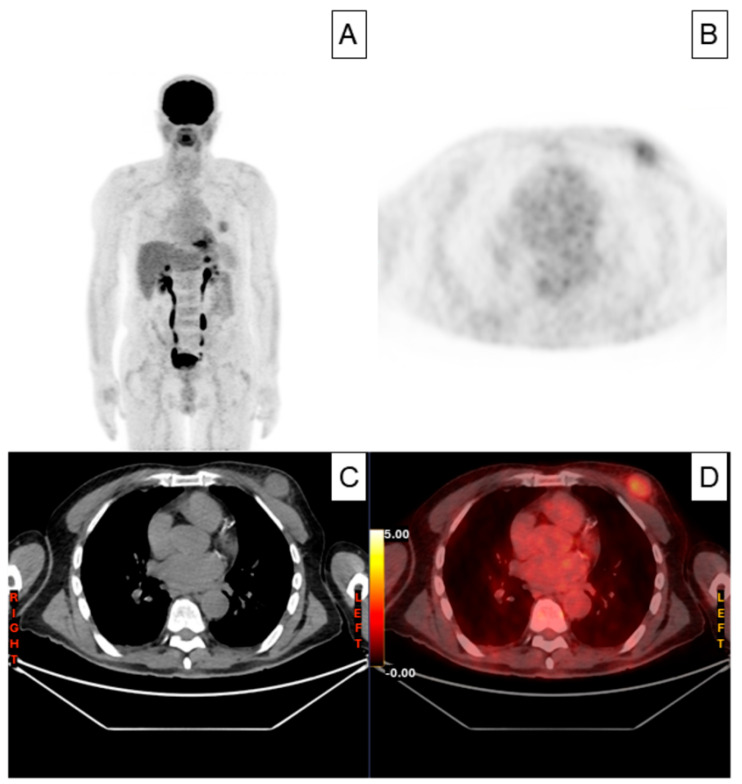 Figure 1
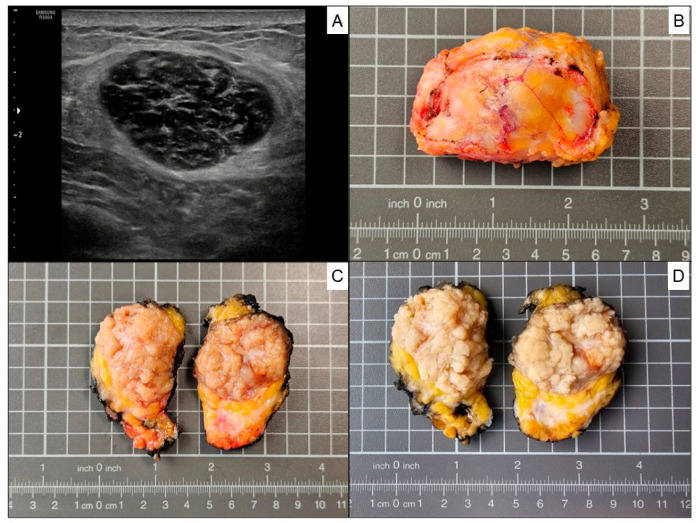 Figure 2
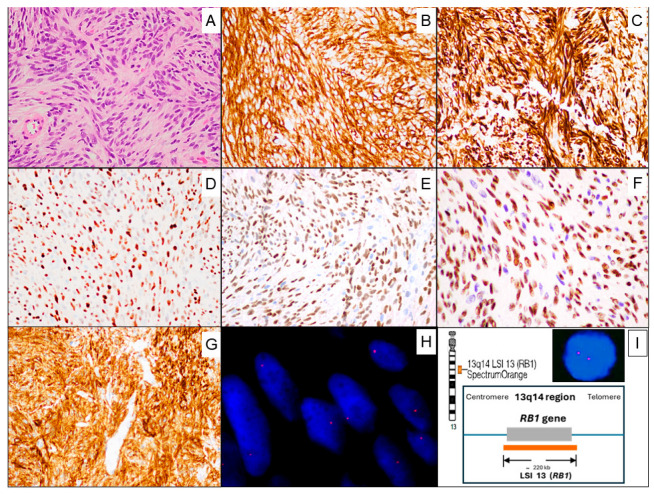 Figure 3
Peer Reviews
No public reviews on file for this paper yet. If you reviewed it on a platform where reviews are public (OpenReview, ICLR, NeurIPS, ICML), you can paste yours below so the community can read it here.
Videos
No videos yet. Explain this paper in a talk, walkthrough, or lecture? Add one.
Taxonomy
TopicsUrologic and reproductive health conditions · Soft tissue tumor case studies · Testicular diseases and treatments