A New Wearable System for Postural Balance Assessment: Comparison with EquiTest and Static Posturography in Healthy Adults
Valerio Maria Di Pasquale Fiasca, Alfredo Gabriele Nanni, Marco Pozzi, Lorenzo Collino, Barbara Martino, Paolo Ranieri, Eliana Filipponi, Giulio Dehesh, Andrea Beghi, Federica Di Berardino

TL;DR
This paper introduces a wearable system for assessing balance in healthy adults and compares it to traditional methods like EquiTest and static posturography.
Contribution
The study evaluates the reliability and agreement of a wearable IMU-based system for balance assessment in comparison to established methods.
Findings
Gravity demonstrated higher reliability for length-based balance measures compared to area-based measures.
Gravity showed narrower limits of agreement when compared to static posturography.
Moderate agreement was found between Gravity and computerised dynamic posturography for certain scores.
Abstract
Background: Objective assessment of postural control is central to the clinical evaluation of vestibular disorders. Although force-platform-based posturography is considered the gold standard, its use may be limited by cost and infrastructural requirements. Wearable inertial measurement units (IMUs) represent a promising alternative; however, their clinical validation should account for intrinsic differences in measurement paradigms rather than strict metric equivalence. Objective: To preliminarily evaluate the within-session reliability of a wearable IMU-based medical device for balance assessment (Gravity), and its agreement with established static (SBP) and computerised dynamic posturographic systems (CDP) in healthy subjects. Methods: Sixty-three healthy adults were enrolled in two independent method comparison studies: a wearable IMU-based balance system versus a static…
Genes, proteins, chemicals, diseases, species, mutations and cell lines named across the full text — each resolved to its canonical identifier and authoritative record.
Click any figure to enlarge with its caption.
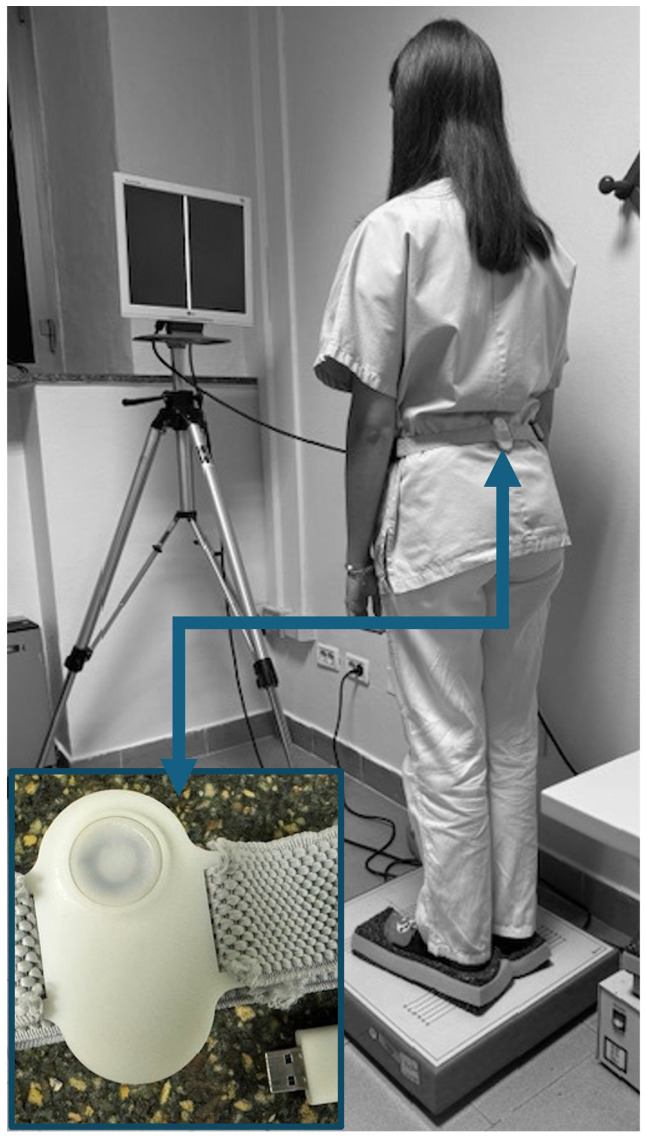 Figure 1
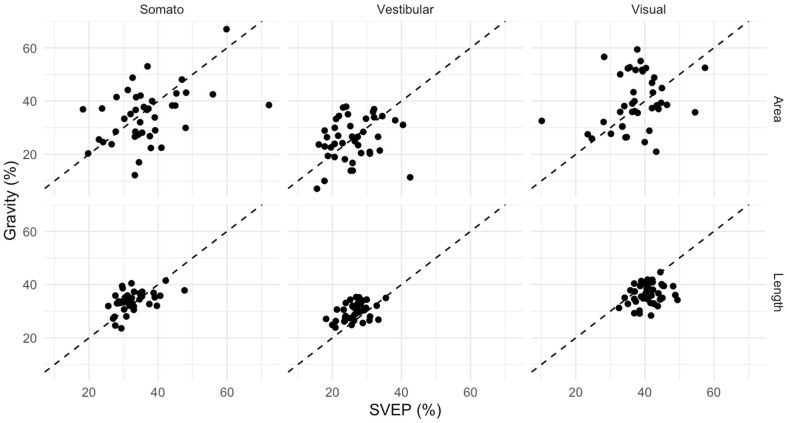 Figure 2
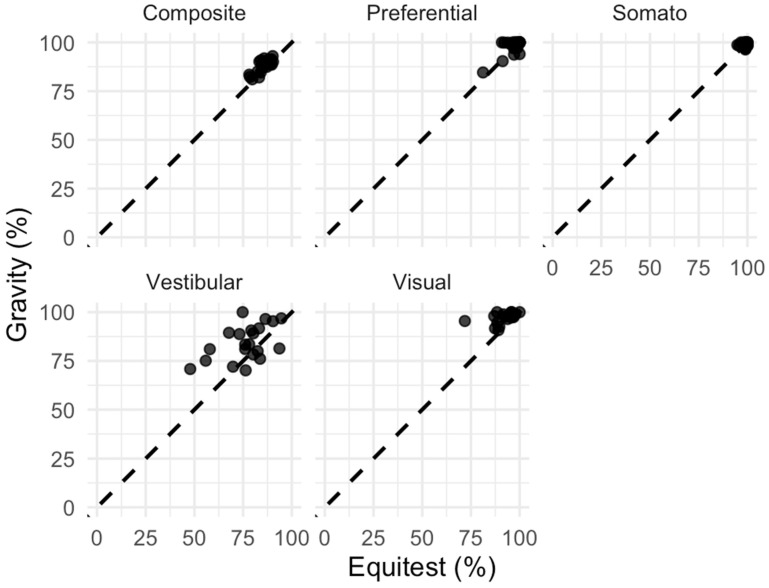 Figure 3
Peer Reviews
No public reviews on file for this paper yet. If you reviewed it on a platform where reviews are public (OpenReview, ICLR, NeurIPS, ICML), you can paste yours below so the community can read it here.
Videos
No videos yet. Explain this paper in a talk, walkthrough, or lecture? Add one.
Taxonomy
TopicsBalance, Gait, and Falls Prevention · Vestibular and auditory disorders · Scoliosis diagnosis and treatment