Engineering Clostridium Tyrobutyricum for High Butanol Production through Induction Expression of Exogenous NADPH-Dependent HBD
Qingke Wang, Geng Wang, Jialei Hu, Jun Feng, Ziqi Emily Lin, Shang-Tian Yang

TL;DR
Scientists engineered a bacteria to produce more butanol by controlling when a specific enzyme is active, improving efficiency and reducing unwanted byproducts.
Contribution
A novel inducible expression system for HBD in Clostridium tyrobutyricum enhances butanol production while reducing acetate and ethanol.
Findings
Inducing hbd(Ck) at 12 h increased butanol yield by 20%, productivity by 87.5%, and selectivity by 52%.
Optimized induction timing reduced acetate formation and improved redox balance in the engineered strain.
Scale-up in a bioreactor achieved high butanol titer (21.8 g/L) with improved productivity and yield.
Abstract
Clostridium tyrobutyricum Δcat1::adhE2 is a promising cell factory for butanol production because of its robustness, high butanol tolerance, and minimal butyrate production. However, excessive acetate and ethanol production remains a major bottleneck limiting its butanol yield. Coexpressing an exogenous hbd(Ck) encoding the NADPH-dependent 3-hydroxybutyryl-CoA dehydrogenase (HBD) from Clostridium kluyveri with adhE2 could increase the C4 carbon flux, resulting in increased butanol and decreased acetate and ethanol production. However, constitutively overexpressing hbd(Ck) in Δcat1::adhE2 shows little improvement in butanol yield, productivity, and selectivity, which might be caused by redox imbalance and growth inhibition. To alleviate this problem, C. tyrobutyricum MΔcat1::adhE2-Pbgal-hbd(Ck) with a dynamic expression of hbd(Ck) controlled by an inducible promoter was developed. In…
Genes, proteins, chemicals, diseases, species, mutations and cell lines named across the full text — each resolved to its canonical identifier and authoritative record.
Click any figure to enlarge with its caption.
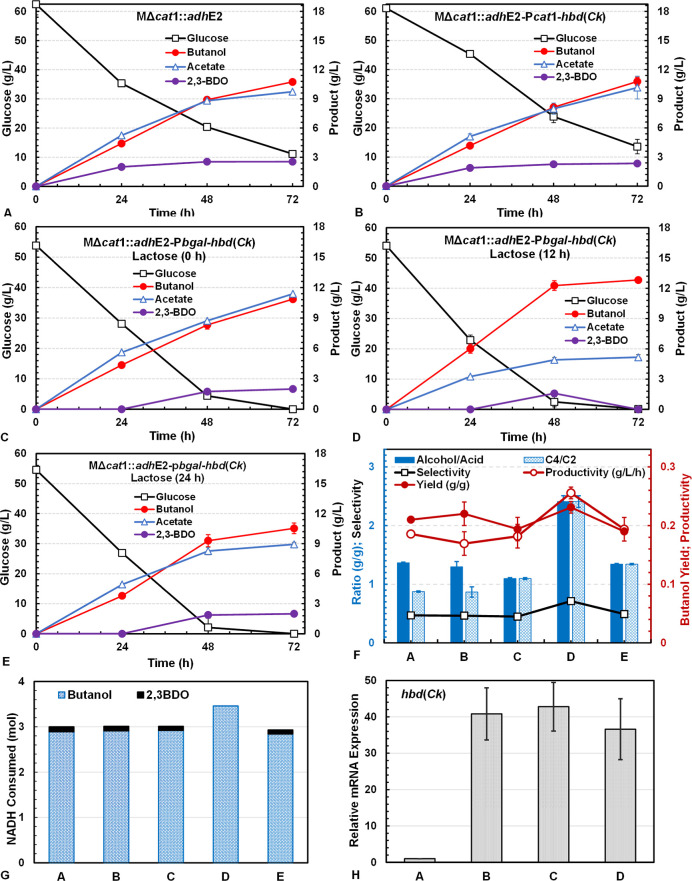 Figure 1
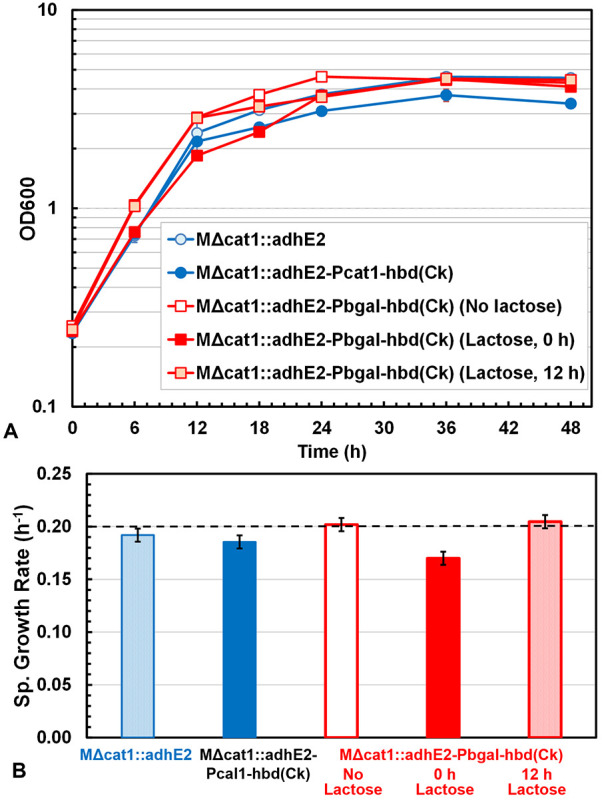 Figure 2
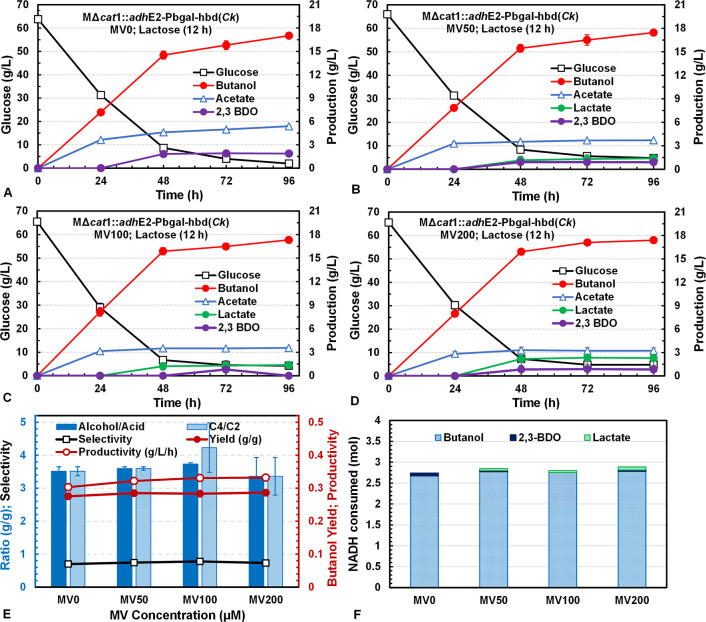 Figure 3
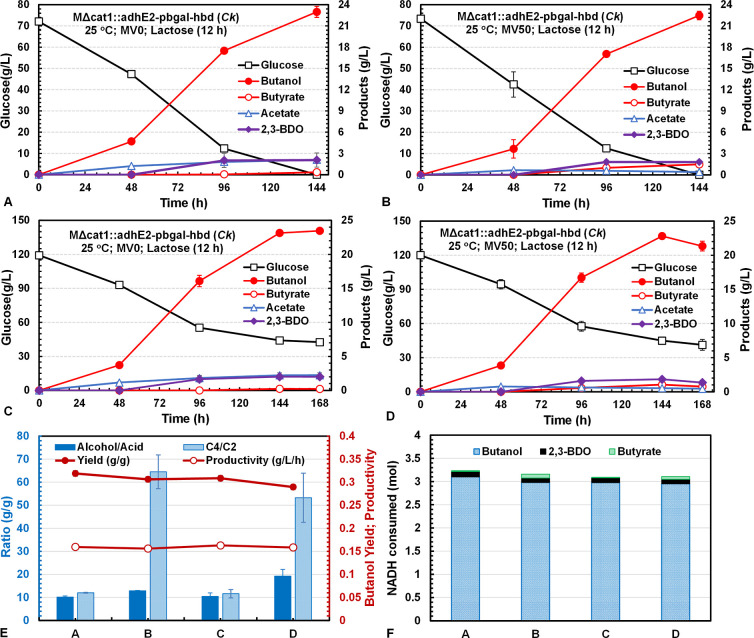 Figure 4
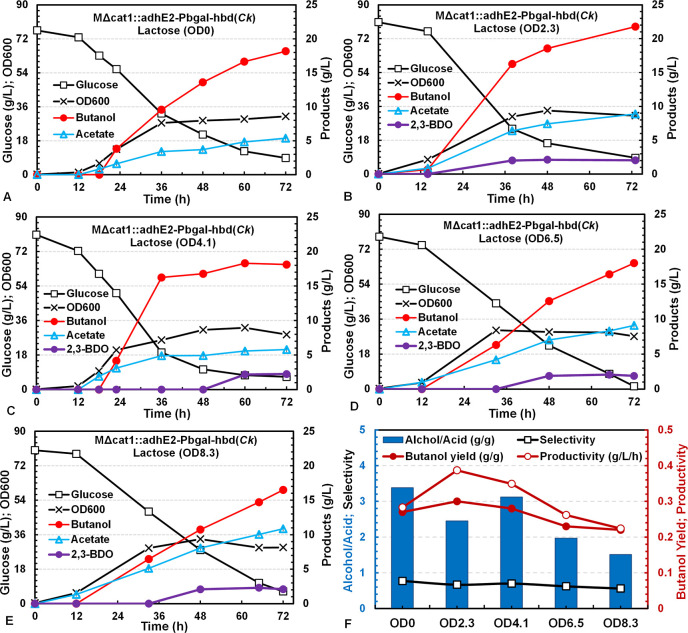 Figure 5
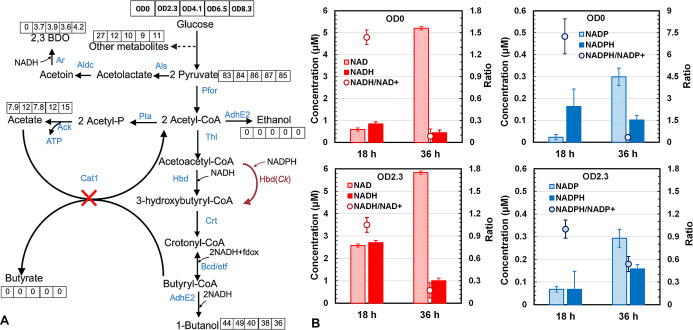 Figure 6
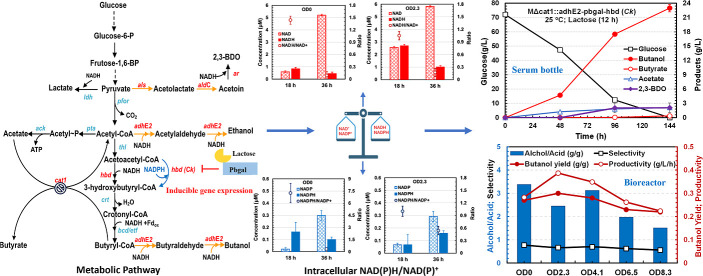 Figure 7
 Figure 8
Peer Reviews
No public reviews on file for this paper yet. If you reviewed it on a platform where reviews are public (OpenReview, ICLR, NeurIPS, ICML), you can paste yours below so the community can read it here.
Videos
No videos yet. Explain this paper in a talk, walkthrough, or lecture? Add one.
Taxonomy
TopicsMicrobial Metabolic Engineering and Bioproduction · Biofuel production and bioconversion · Polysaccharides and Plant Cell Walls