Metabolism of Epigenetic Ribonucleosides Leads to Nucleolar Stress and Cytotoxicity
Xuemeng Sun, Anita Donlic, Jacob A. Boyer, Theodore E. Press, Minjae Kim, Neal K. Reddy, Clifford P. Brangwynne, Joshua D. Rabinowitz, Ralph E. Kleiner

TL;DR
This study investigates how modified RNA building blocks affect cell health and metabolism, revealing that some modifications cause cell stress and damage.
Contribution
The paper reveals how bulky N6-modified adenosines cause cytotoxicity and RNA misincorporation, while smaller modifications are restricted by cellular mechanisms.
Findings
N6-modified adenosines like i6A cause high cytotoxicity and RNA misincorporation.
Small N6-modified adenosines like m6A are restricted by enzymatic deamination.
Ribopyrimidines show cytotoxicity dependent on UCK2 at higher concentrations.
Abstract
Post-transcriptional RNA modifications are ubiquitous in biology, but the fate of epigenetic ribonucleotides after RNA turnover and the consequences of their metabolism and misincorporation into nucleic acids are largely unknown. Here, we explore epigenetic ribonucleoside metabolism in human cells by studying effects on cell growth, quantifying RNA misincorporation and identifying metabolic regulators, and exploring phenotypes associated with cytotoxicity. We find that bulky N6-modified adenosines (i.e., i6A) exhibit high levels of cytotoxicity and RNA misincorporation, whereas cells dramatically restrict the misincorporation of small N6-modified adenosines (i.e., m6A), partly through sanitization by enzymatic deamination, consistent with a recent report. Epigenetic ribopyrimidines also exhibit cytotoxicity, dependent on nucleoside kinase UCK2, but only at much higher concentrations…
Genes, proteins, chemicals, diseases, species, mutations and cell lines named across the full text — each resolved to its canonical identifier and authoritative record.
Click any figure to enlarge with its caption.
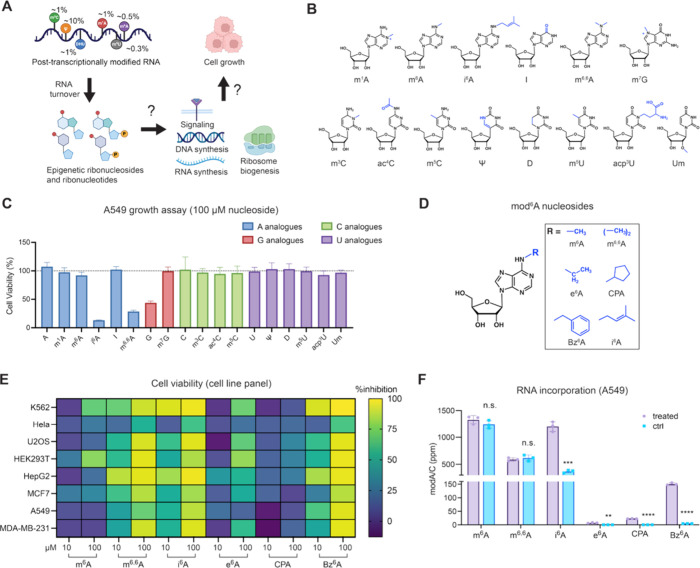 Figure 1
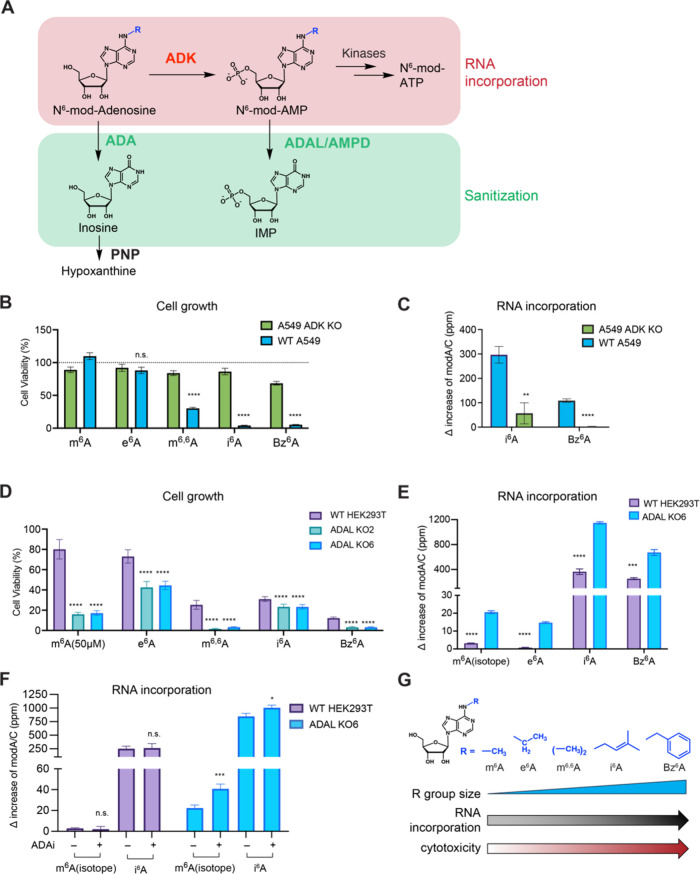 Figure 2
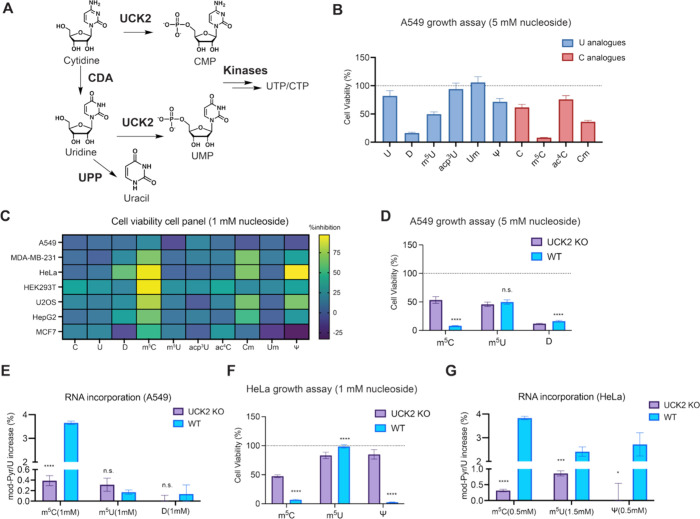 Figure 3
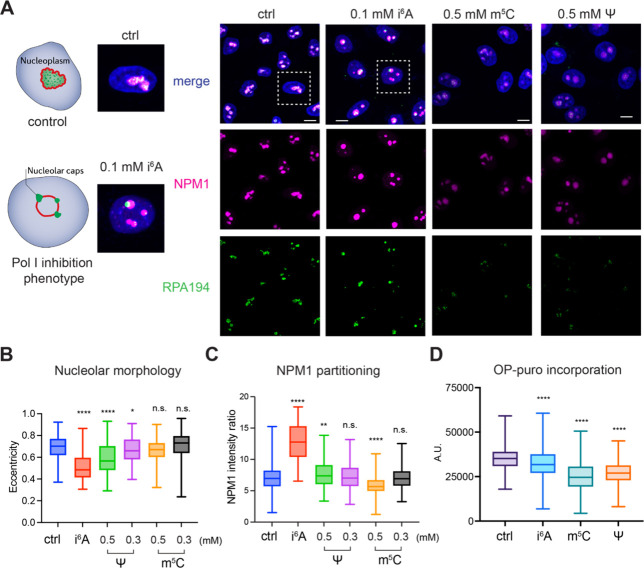 Figure 4
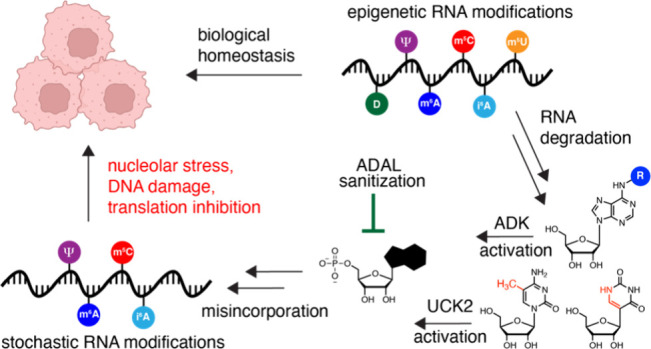 Figure 5
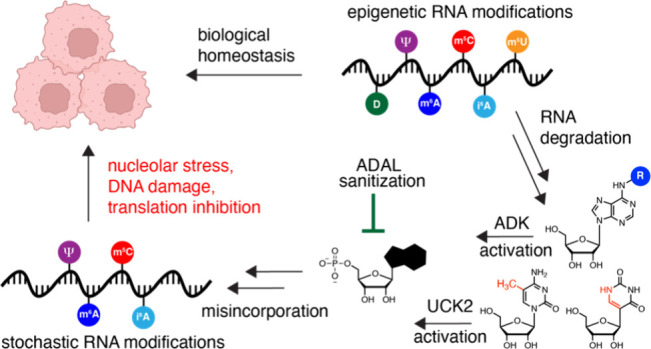 Figure 6
Peer Reviews
No public reviews on file for this paper yet. If you reviewed it on a platform where reviews are public (OpenReview, ICLR, NeurIPS, ICML), you can paste yours below so the community can read it here.
Videos
No videos yet. Explain this paper in a talk, walkthrough, or lecture? Add one.
Taxonomy
TopicsRNA modifications and cancer · RNA regulation and disease · Biochemical and Molecular Research