Hexagonal Boron Nitride Monolayers as Protective Barriers for Graphene during Thermal Annealing
Vladimir Calvi, Matthew D. Barnes, Dominique J. Wehenkel, Michele Buscema, Irene M. N. Groot, Richard van Rijn

TL;DR
This study shows that h-BN protects graphene from damage during high-temperature cleaning processes.
Contribution
The novel use of h-BN as a protective layer for graphene during thermal annealing is demonstrated.
Findings
h-BN effectively protects graphene from damage at temperatures up to 500 °C.
Thermal annealing in air is an effective method for removing PMMA residues.
Raman and AFM confirm the protective role of h-BN on graphene.
Abstract
In this study, we investigate the behavior of CVD-grown monolayer hexagonal boron nitride (h-BN) as a protective barrier on top of CVD-grown monolayer graphene during the removal of poly(methyl methacrylate) (PMMA) residues by thermal annealing in air. We use a combination of Raman spectroscopy, optical microscopy, and atomic force microscopy to measure the damage of graphene and the efficacy of air annealing as a cleaning method. Our experimental findings demonstrate the effectiveness of h-BN as a protective barrier against graphene damage at temperatures up to 500 °C compared with bare graphene.
Genes, proteins, chemicals, diseases, species, mutations and cell lines named across the full text — each resolved to its canonical identifier and authoritative record.
Click any figure to enlarge with its caption.
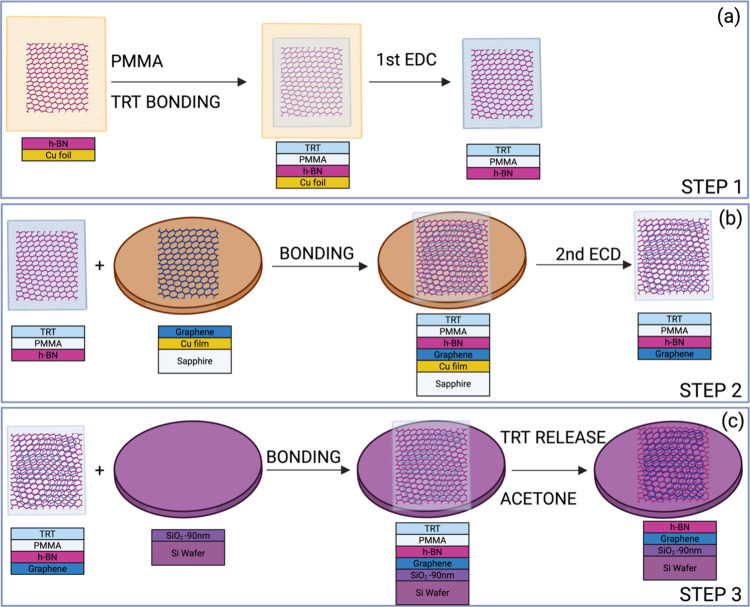 Figure 1
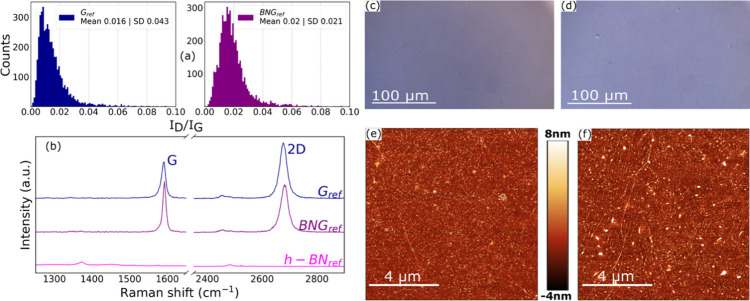 Figure 2
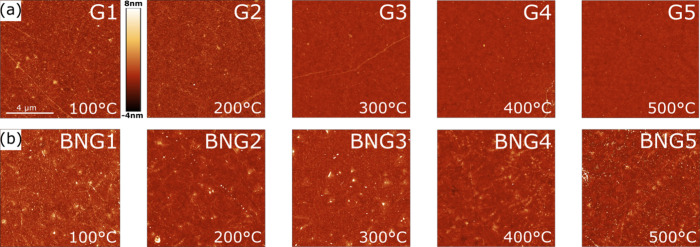 Figure 3
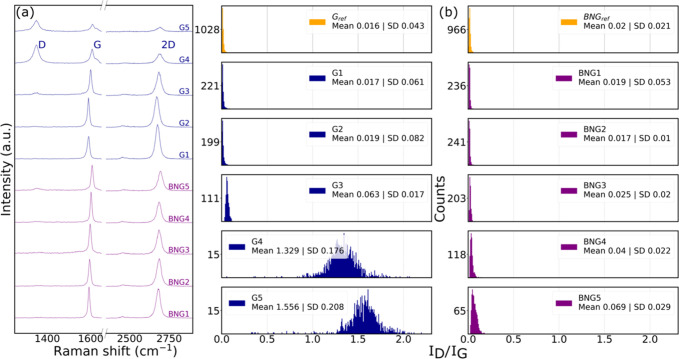 Figure 4
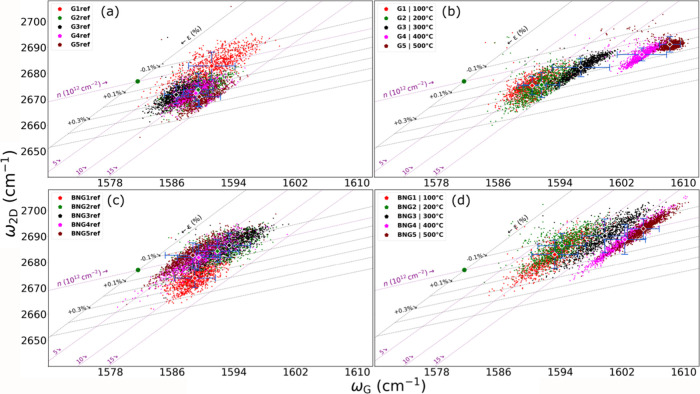 Figure 5
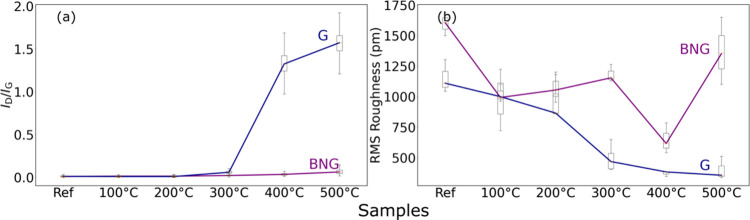 Figure 6
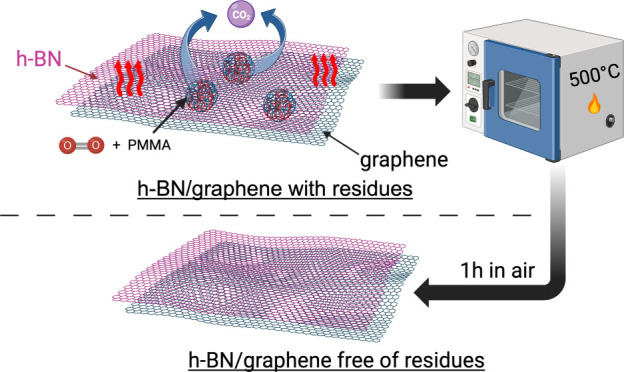 Figure 7
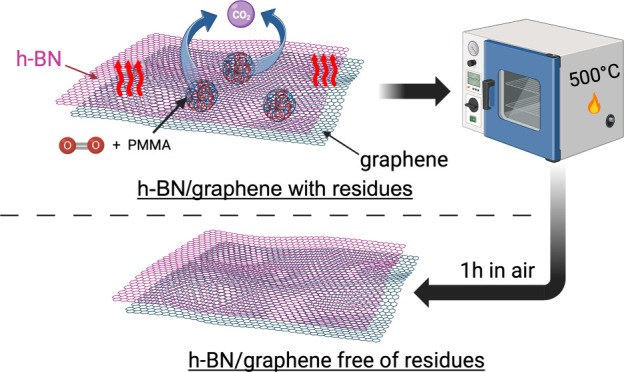 Figure 8
Peer Reviews
No public reviews on file for this paper yet. If you reviewed it on a platform where reviews are public (OpenReview, ICLR, NeurIPS, ICML), you can paste yours below so the community can read it here.
Videos
No videos yet. Explain this paper in a talk, walkthrough, or lecture? Add one.
Taxonomy
TopicsGraphene research and applications · Thermal properties of materials · 2D Materials and Applications