Transperineal ultrasonography in detecting penetrating perianal disease: a systematic review and meta-analysis
Chong-Teik Lim, Maarten Pruijt, Gek-Hsiang Lim, Faridi Jamaludin, Christoph Teichert, Floris de Voogd, Geert D’Haens, Britt Christensen, Giovanni Maconi, Krisztina Gecse

TL;DR
This study shows that transperineal ultrasonography is a highly accurate, non-invasive method for detecting perianal fistulas and abscesses in Crohn’s disease patients.
Contribution
The paper provides a systematic review and meta-analysis confirming TPUS as a reliable first-line diagnostic tool for perianal disease in Crohn’s disease.
Findings
TPUS showed high pooled sensitivity (97.5%) and accuracy (88.0%) for detecting perianal fistulas.
TPUS demonstrated strong accuracy (91.8%) for detecting abscesses with a high specificity of 94.5%.
Subgroup analysis on Crohn’s disease patients confirmed TPUS accuracy for fistula detection at 86.4%.
Abstract
Perianal complications such as fistulas and abscesses are common in Crohn’s disease (CD) and contribute to significant morbidity. Transperineal ultrasonography (TPUS) has emerged as a non-invasive and accurate method for perianal fistulizing CD (pfCD). This review evaluates the diagnostic accuracy of TPUS compared with magnetic resonance imaging (MRI), transrectal ultrasonography (TRUS), and examination under anesthesia (EUA) for detecting and classifying perianal fistulas and abscesses. A comprehensive literature search was conducted across multiple databases through January 2025 to identify studies evaluating TPUS accuracy in detecting perianal fistulas and abscesses compared with MRI, TRUS, or EUA as the reference standard. Meta-analysis was performed to assess TPUS accuracy for fistula detection (FD), fistula classification (FC), internal opening (IO) detection, and abscess…
Genes, proteins, chemicals, diseases, species, mutations and cell lines named across the full text — each resolved to its canonical identifier and authoritative record.
Click any figure to enlarge with its caption.
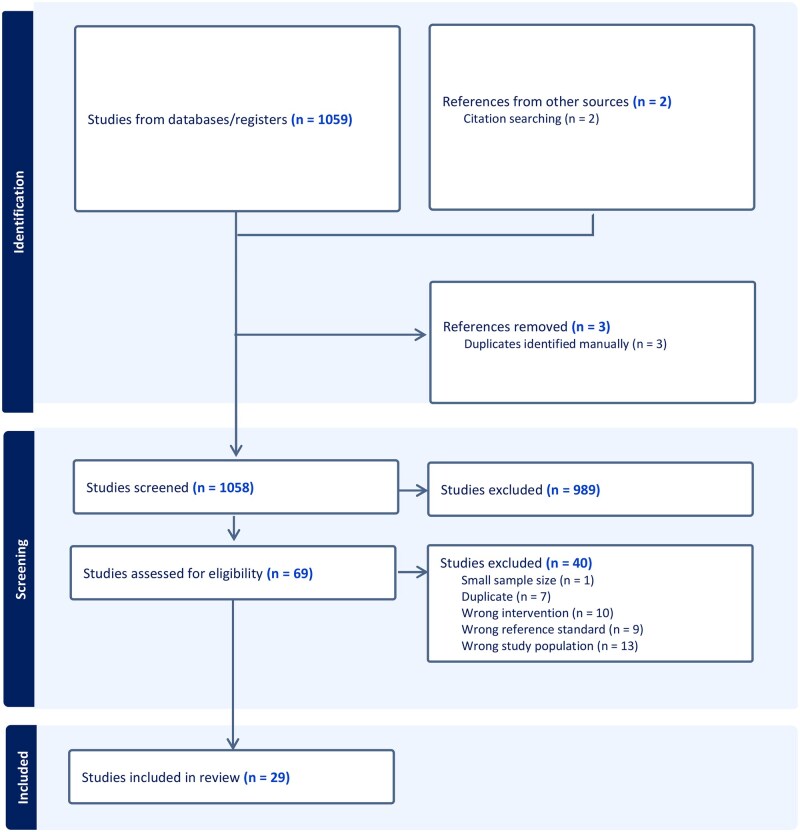 Figure 1
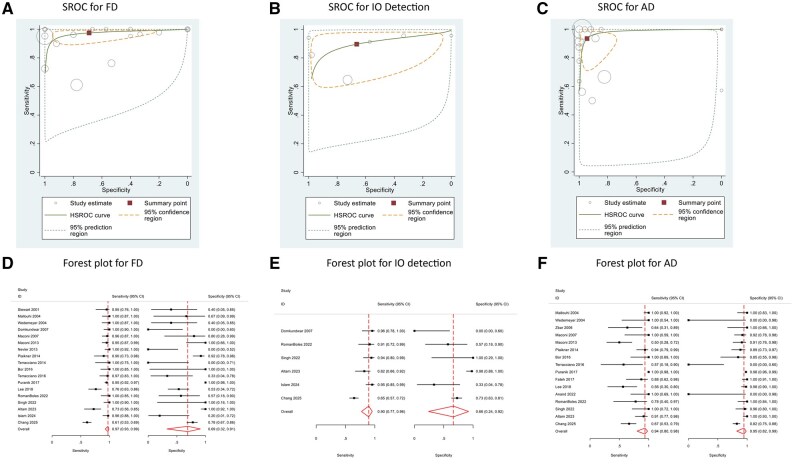 Figure 2
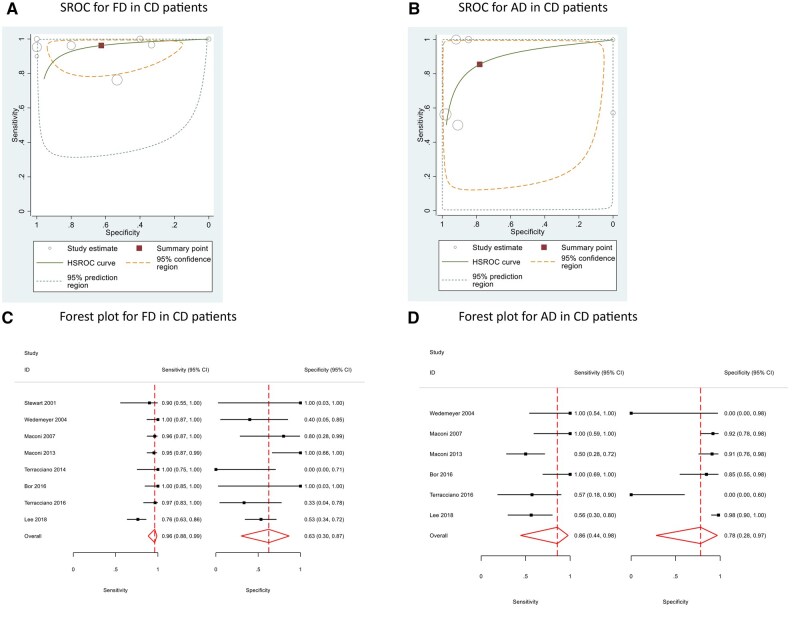 Figure 3
Peer Reviews
No public reviews on file for this paper yet. If you reviewed it on a platform where reviews are public (OpenReview, ICLR, NeurIPS, ICML), you can paste yours below so the community can read it here.
Videos
No videos yet. Explain this paper in a talk, walkthrough, or lecture? Add one.
Taxonomy
TopicsAnorectal Disease Treatments and Outcomes · Amoebic Infections and Treatments · Appendicitis Diagnosis and Management