Photocatalytic Reductive Desulfonation of Aryl Tosylates
Kasmier Vicioso, Jonathan Santoro, Zachary Coren, Rashanique D. Quarels

TL;DR
This paper introduces a new method to convert aryl tosylates into phenols using light, with high efficiency and without damaging other parts of the molecule.
Contribution
A visible-light photocatalytic method for reductive desulfonation of aryl tosylates is presented.
Findings
The method achieves up to 93% yield in converting aryl tosylates to phenols.
The process selectively cleaves the S–O bond without affecting other functional groups.
It offers an orthogonal deprotection strategy for use in organic synthesis and medicinal chemistry.
Abstract
This communication describes the reductive deprotection of aryl tosylates to their corresponding phenols in up to 93% yield using visible-light photocatalysis. In this new methodology, the photoexcited enolate generated from the deprotonation of 10-bromoanthracen-9-one and subsequent excitation is capable of selectively cleaving the S–O bond on the aryl tosylate substrate, releasing the phenolate anion. Moreover, this deprotection method does not perturb common functional groups. Thus, this transformation affords an orthogonal deprotection strategy and has potential for use in the late-stage deprotection of aryl tosylates in organic synthesis and medicinal chemistry. The design, scope, and limitations are discussed.
Genes, proteins, chemicals, diseases, species, mutations and cell lines named across the full text — each resolved to its canonical identifier and authoritative record.
Click any figure to enlarge with its caption.
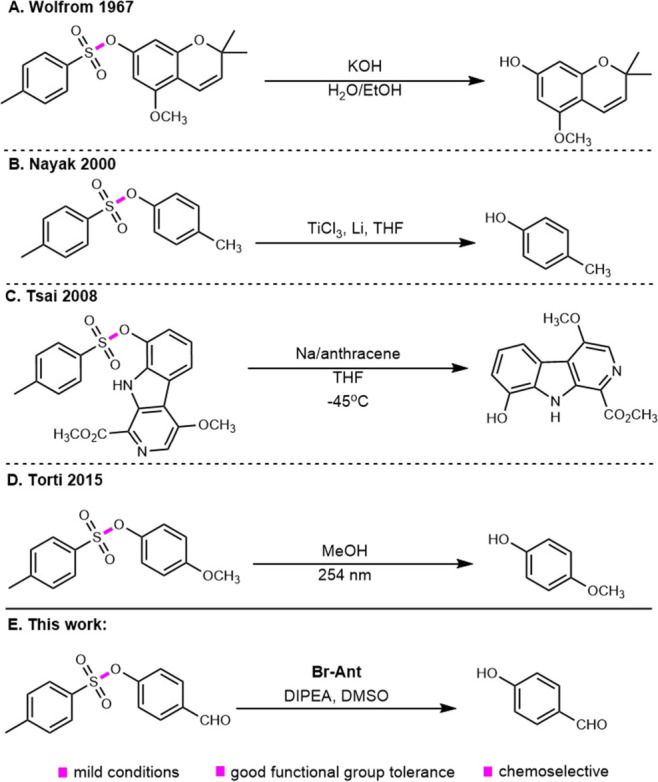 Figure 1
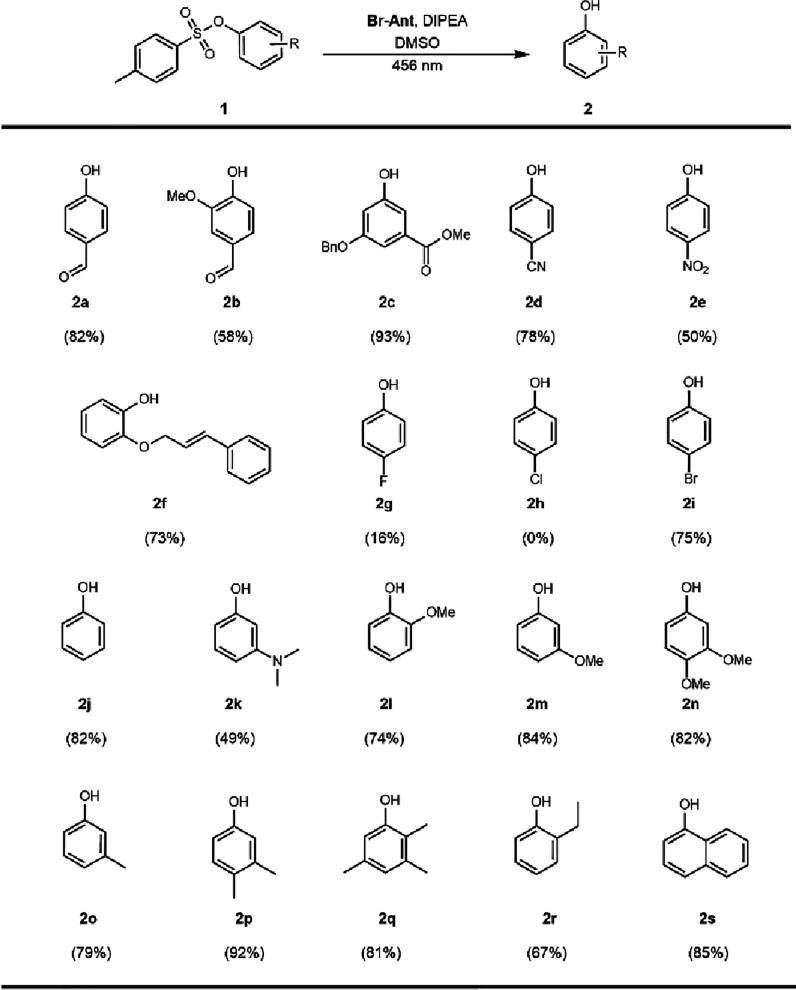 Figure 2
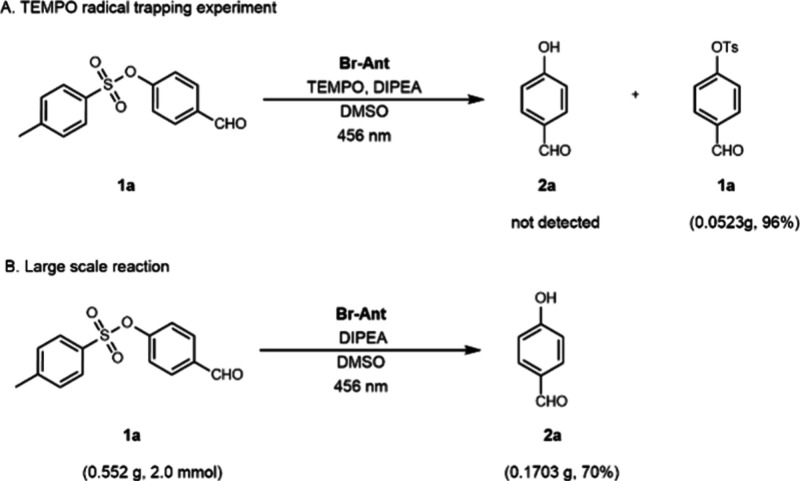 Figure 3
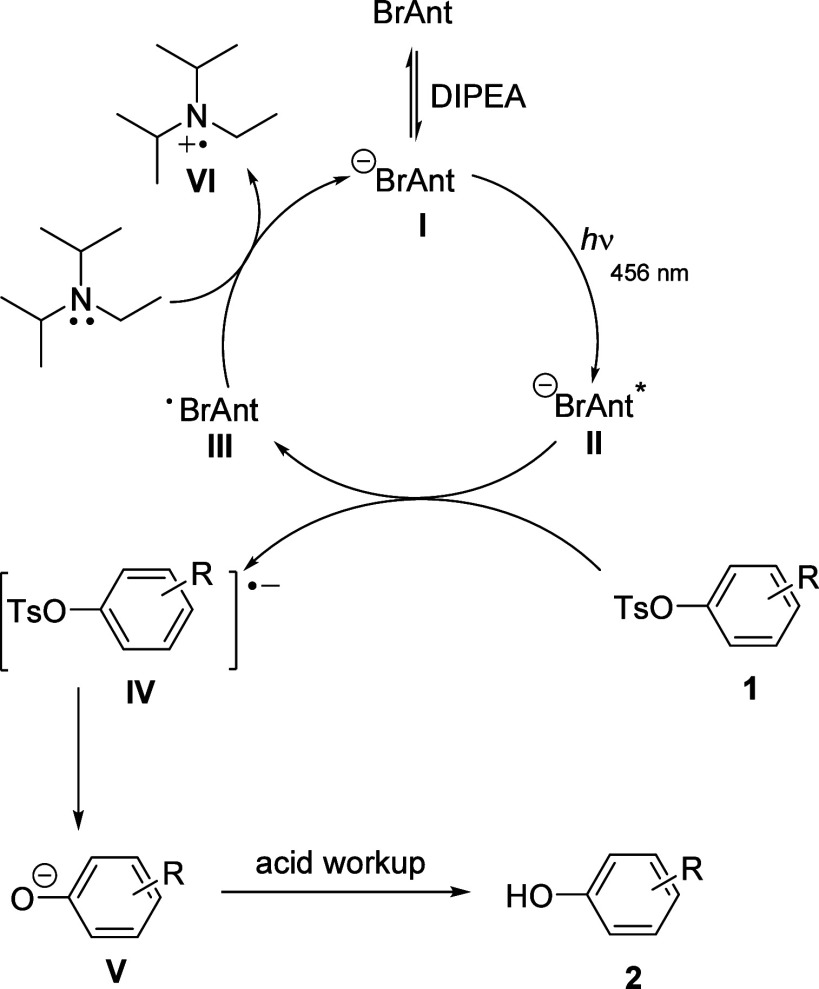 Figure 4
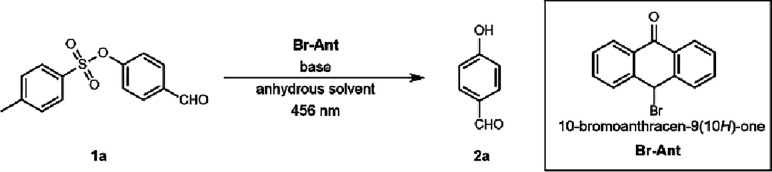 Figure 5
 Figure 6
 Figure 7
Peer Reviews
No public reviews on file for this paper yet. If you reviewed it on a platform where reviews are public (OpenReview, ICLR, NeurIPS, ICML), you can paste yours below so the community can read it here.
Videos
No videos yet. Explain this paper in a talk, walkthrough, or lecture? Add one.
Taxonomy
TopicsRadical Photochemical Reactions · Sulfur-Based Synthesis Techniques · Catalytic Cross-Coupling Reactions