Fragment-Based Development of NSP14 Exonuclease Inhibitors Confounded by Batch-to-Batch Variability
Jesse A. Coker, Rong Sun, Paul M. Polzer, Todd Romigh, Christopher M. Goins, Nancy S. Wang, Jae U. Jung, Shaun R. Stauffer

TL;DR
Researchers tried to develop inhibitors for a key SARS-CoV-2 enzyme but found their initial results were unreliable due to contamination.
Contribution
Highlights the challenges of fragment-based drug design for NSP14 ExoN due to batch variability and cation interference.
Findings
3,5-disubstituted pyrazoles initially appeared to inhibit NSP14 ExoN but were later found to be false positives.
Divalent cations, possibly from contamination, strongly inhibit NSP14 ExoN activity.
The study warns about the sensitivity of NSP14 ExoN to environmental factors during drug development.
Abstract
Point mutations in the exonuclease (ExoN) site of nonstructural protein 14 (NSP14) compromise the fitness of betacoronaviruses such as SARS-CoV-2, implicating NSP14 ExoN inhibition as an antiviral strategy. However, there are no advanced compounds that inhibit NSP14’s ExoN activity. Building upon the reported crystal structures of two fragments bound to NSP14’s ExoN site, we identified a series of 3,5-disubsituted pyrazoles that bound to and inhibited NSP14 ExoN. However, upon resynthesis, we discovered that these putative leads were false positives, perhaps due to contaminating divalent cations, which potently inhibit NSP14 ExoN. Our results provide a cautionary tale to the field about the sensitivity of NSP14 to divalent cations and illustrate the challenges associated with directly targeting the NSP14 ExoN site via fragment merging.
Genes, proteins, chemicals, diseases, species, mutations and cell lines named across the full text — each resolved to its canonical identifier and authoritative record.
Click any figure to enlarge with its caption.
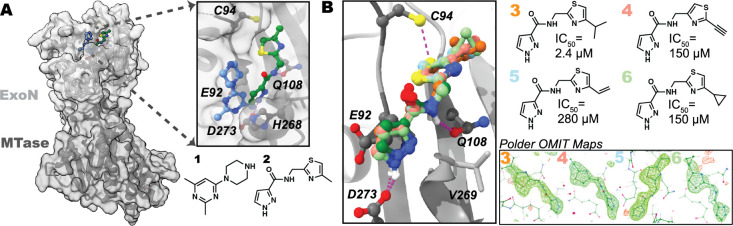 Figure 1
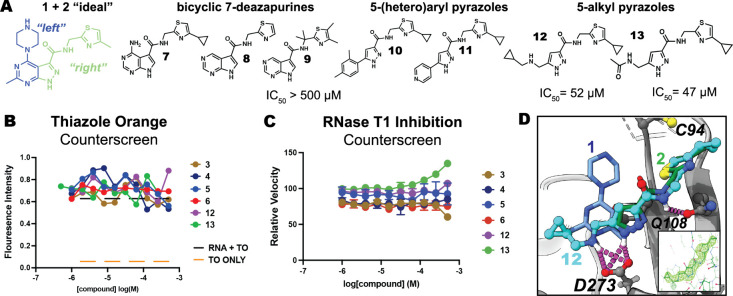 Figure 2
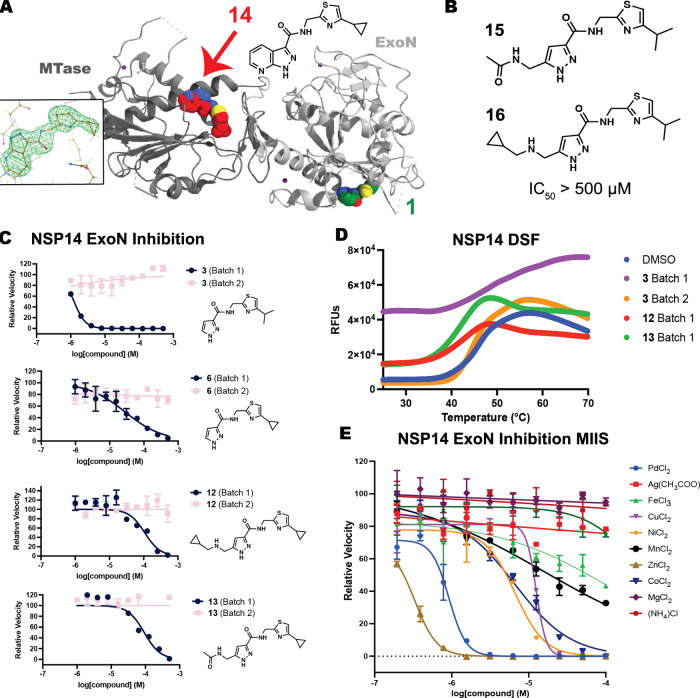 Figure 3
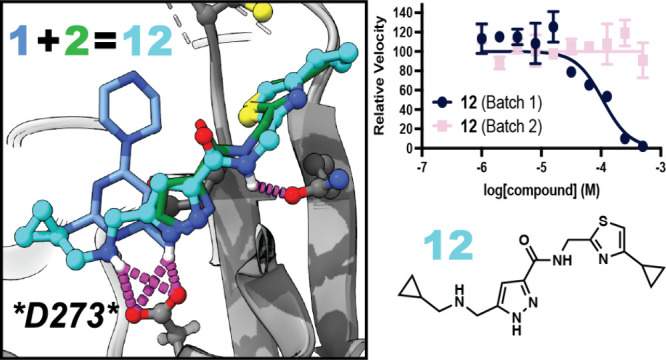 Figure 4
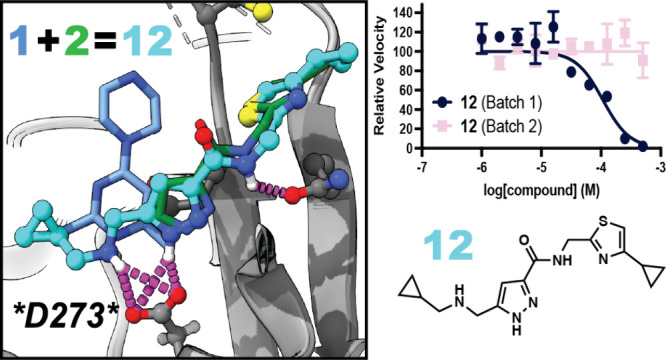 Figure 5
Peer Reviews
No public reviews on file for this paper yet. If you reviewed it on a platform where reviews are public (OpenReview, ICLR, NeurIPS, ICML), you can paste yours below so the community can read it here.
Videos
No videos yet. Explain this paper in a talk, walkthrough, or lecture? Add one.
Taxonomy
TopicsDNA Repair Mechanisms · Heat shock proteins research · SARS-CoV-2 and COVID-19 Research