Modified Polycyclic Compounds Rescue Mis-splicing in Myotonic Dystrophy Type 1 Disease Models
Jesus A. Frias, Sawyer M. Hicks, Hormoz Mazdiyasni, Subodh K. Mishra, Kahini Sarkar, Clara Yeboah, Noah M. LeFever, Marina M. Scotti, Hana Zeghal, Naomi Brandt, Sweta Vangaveti, Pramita Chakma, Ting Wang, Tammy S. Reid, Omari McMichael, Christopher Crumbaugh, Marina Provenzano

TL;DR
Scientists developed new compounds that reduce RNA toxicity in myotonic dystrophy type 1, showing potential as a treatment.
Contribution
Modified polycyclic compounds (MPCs) were designed to rescue mis-splicing in DM1 with low toxicity and high efficacy.
Findings
MPC03 and MPC04 rescued mis-splicing in DM1 patient-derived cells at low concentrations.
MPCs reduced CUGexp RNA levels and partially corrected splicing in a DM1 mouse model.
MPCs bind specifically to CUGexp RNA, displacing sequestered MBNL proteins.
Abstract
Myotonic dystrophy type 1 (DM1) is an autosomal dominant multisystemic disorder with no approved therapeutics targeting the disease mechanism. DM1 is caused by the expression of expanded CUG repeat RNA (CUGexp), which sequester the muscleblind-like (MBNL) family of RNA binding proteins leading to dysregulated alternative splicing and a host of downstream impacts. While previous studies showed that diamidines rescued DM1 dysregulated alternative splicing events, their potential was limited by toxicity and off-target effects. A new class of modified polycyclic compounds (MPCs), based on diamidines, were created and screened in DM1 patient-derived cell lines. This approach identified MPC03 and MPC04 as being capable of rescuing DM1 dysregulated splicing events at low nanomolar concentrations with no obvious toxicity and limited off-target effects. In a DM1 mouse model, treatment with MPC03…
Genes, proteins, chemicals, diseases, species, mutations and cell lines named across the full text — each resolved to its canonical identifier and authoritative record.
Click any figure to enlarge with its caption.
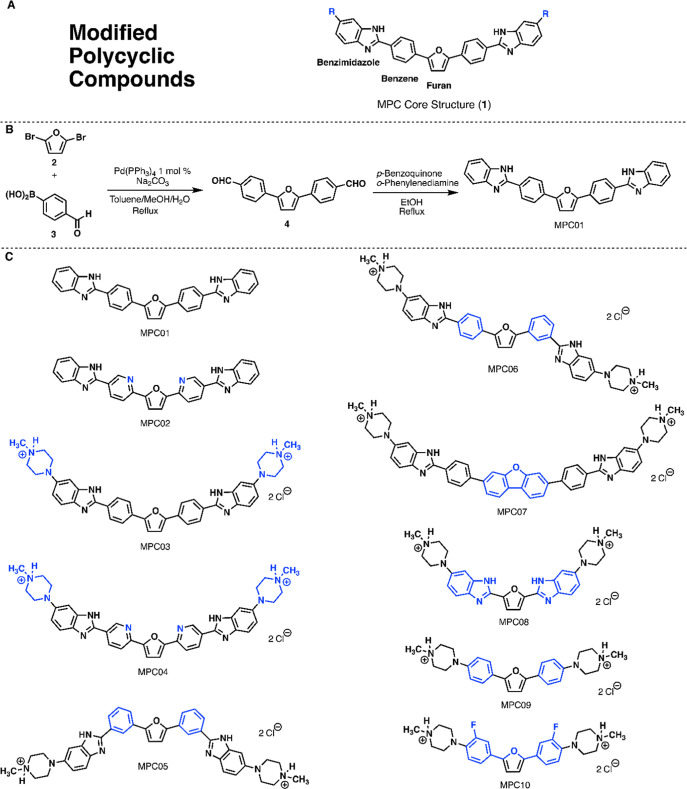 Figure 1
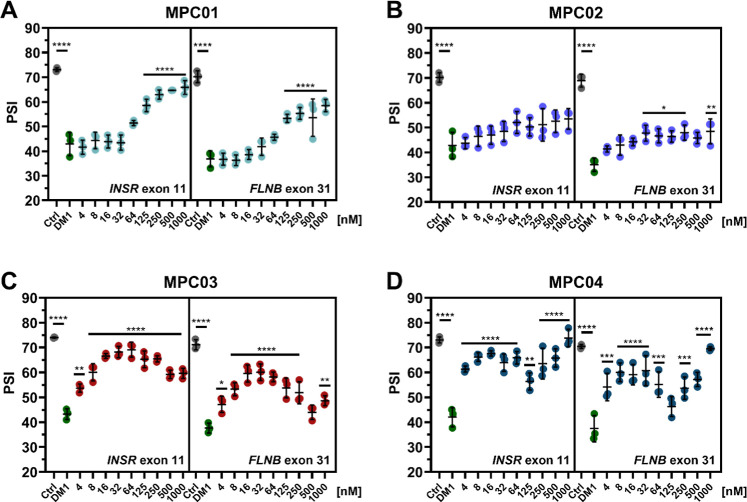 Figure 2
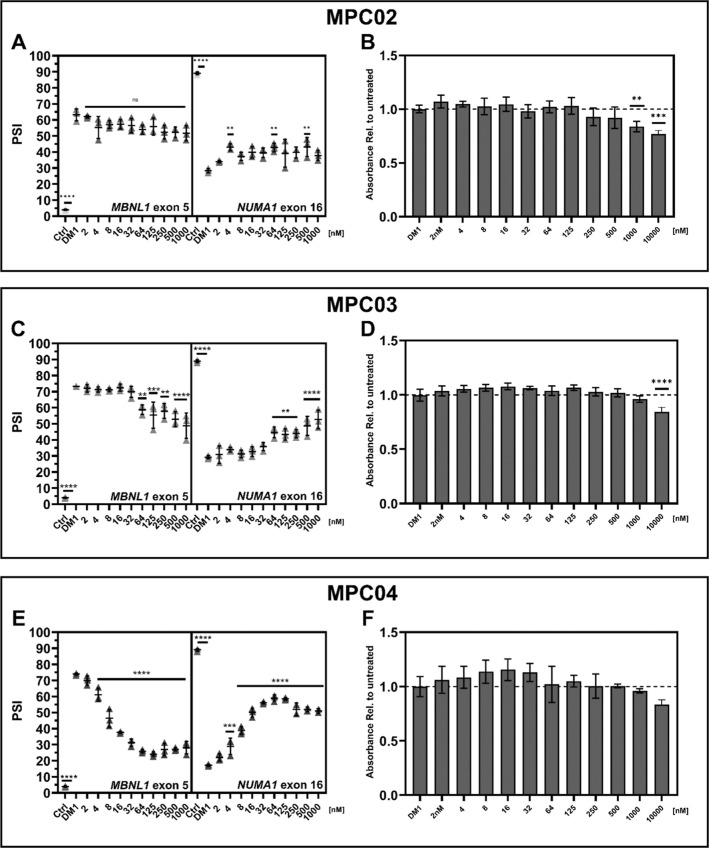 Figure 3
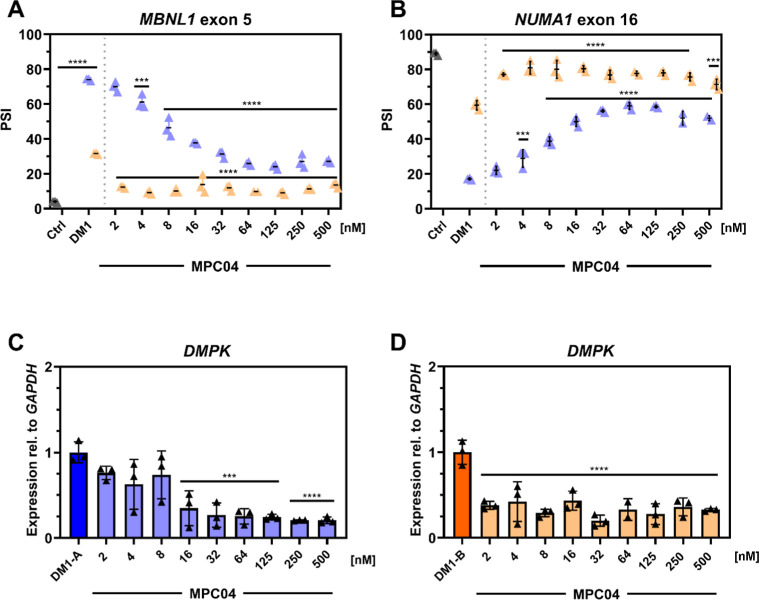 Figure 4
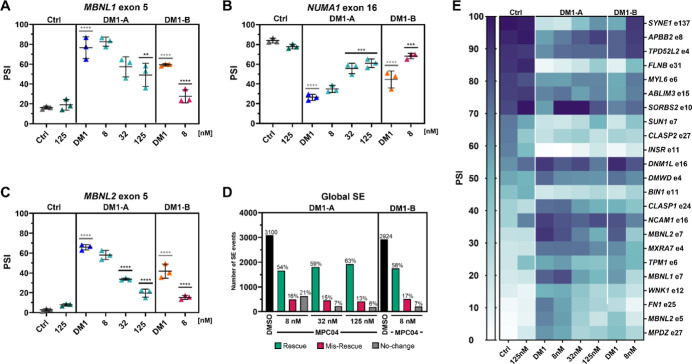 Figure 5
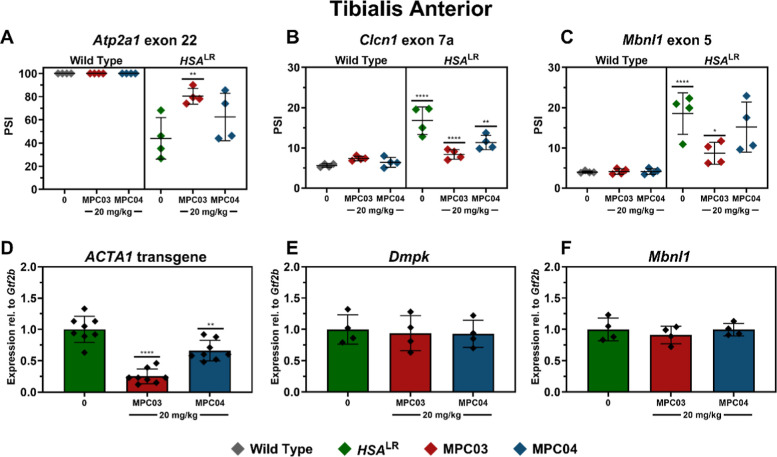 Figure 6
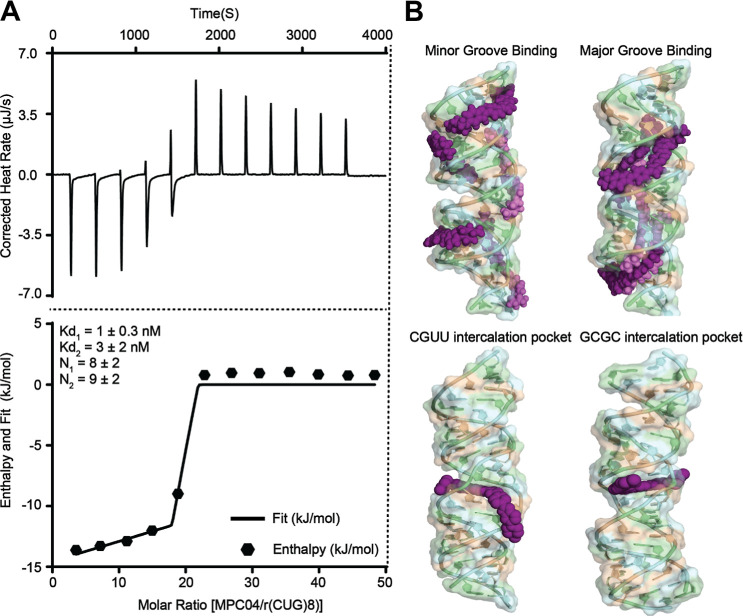 Figure 7
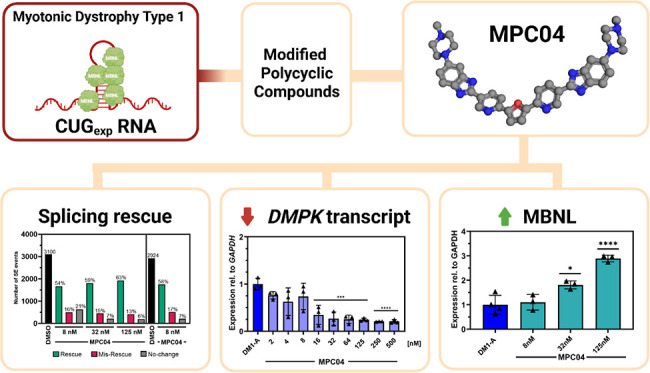 Figure 8
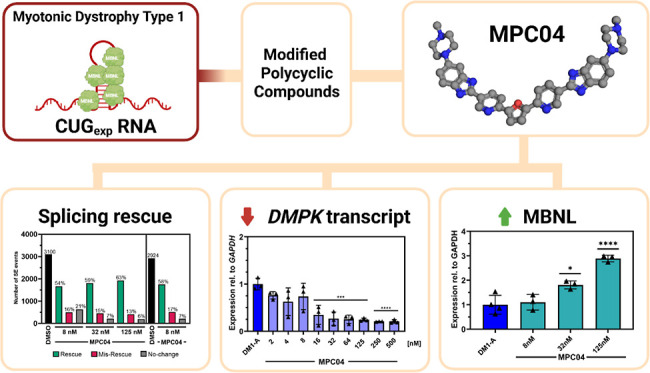 Figure 9
 Figure 10
 Figure 11
 Figure 12
 Figure 13
Peer Reviews
No public reviews on file for this paper yet. If you reviewed it on a platform where reviews are public (OpenReview, ICLR, NeurIPS, ICML), you can paste yours below so the community can read it here.
Videos
No videos yet. Explain this paper in a talk, walkthrough, or lecture? Add one.
Taxonomy
TopicsGenetic Neurodegenerative Diseases · Biochemical and Molecular Research · RNA Research and Splicing