Regioselective Halogenation of BOPPY Fluorophores and Subsequent Diversification via Cross-Coupling and Aromatic Nucleophilic Substitution Strategies
Sebastian O. Oloo, Petia Bobadova-Parvanova, Alexis A. Lueders, Mina Kim, Frank R. Fronczek, Kevin M. Smith, Maria da Graça H. Vicente

TL;DR
This paper describes a method to selectively modify BOPPY dyes with bromine and then use chemical reactions to create new fluorescent compounds with altered light properties.
Contribution
The study introduces regioselective bromination and diversification strategies for BOPPY fluorophores through cross-coupling and nucleophilic substitution.
Findings
Brominated BOPPYs undergo efficient cross-coupling with boronic acids and organotin reagents.
Nucleophilic substitution reactivity varies with bromine position on the BOPPY molecule.
Functionalized BOPPY derivatives show significant bathochromic shifts and altered fluorescence quantum yields.
Abstract
The regioselective mono- and tribromination of a BOPPY dye followed by its reactivity under Pd-catalyzed cross-coupling and nucleophilic substitution reactions are reported. The brominated BOPPYs undergo Pd(0)-catalyzed cross-couplings with a variety of boronic acids and organotin reagents to give the corresponding products in good-to-excellent yields. Nucleophilic aromatic substitutions occur both on the mono- and tribromo-BOPPYs. The reactivity order of the latter is C3-Br > C1-Br > C2-Br, while in the cross-coupling reactions using Pd(PPh3)4, it is C1-Br > C3-Br > C2-Br, likely due to steric interaction upon Pd(PPh3)2 insertion into the C3-Br bond and the slightly longer and weaker C1-Br bond. The functionalized BOPPY derivatives showed pronounced bathochromic shifts in their absorption and emission bands compared with the starting compound, and fluorescence quantum yields depend…
Genes, proteins, chemicals, diseases, species, mutations and cell lines named across the full text — each resolved to its canonical identifier and authoritative record.
Click any figure to enlarge with its caption.
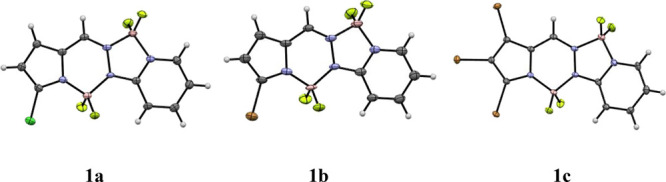 Figure 1
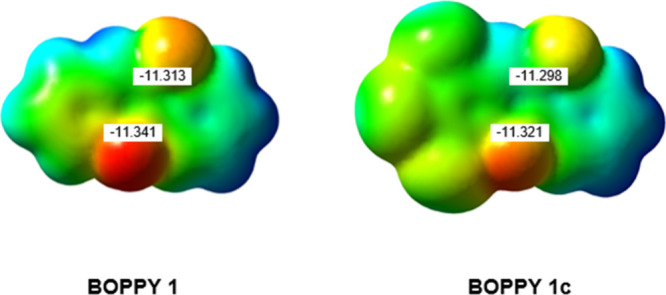 Figure 2
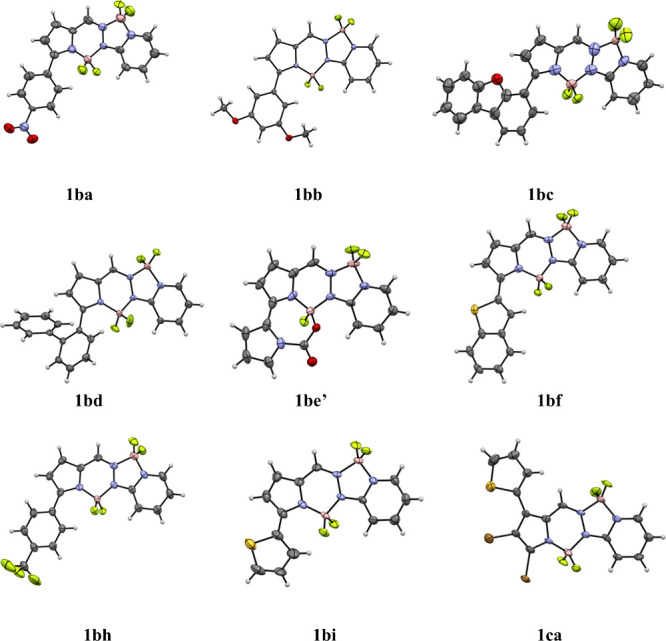 Figure 3
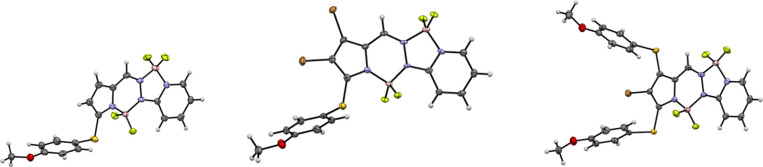 Figure 4
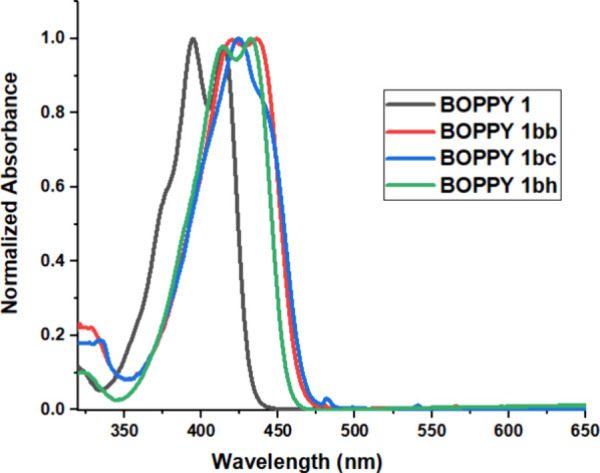 Figure 5
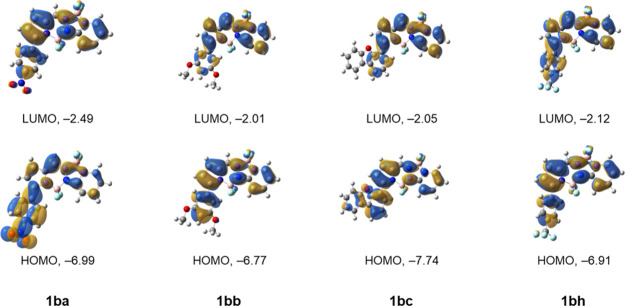 Figure 6
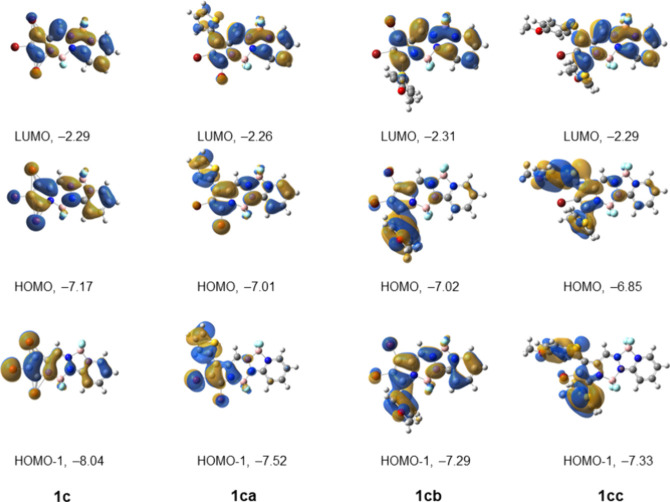 Figure 7
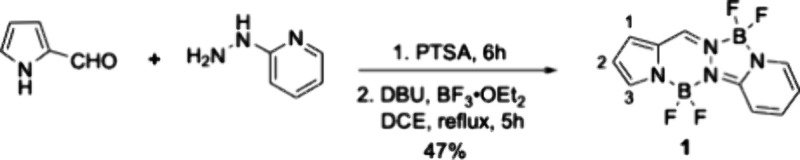 Figure 8
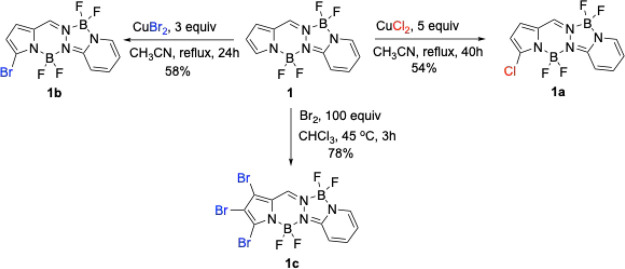 Figure 9
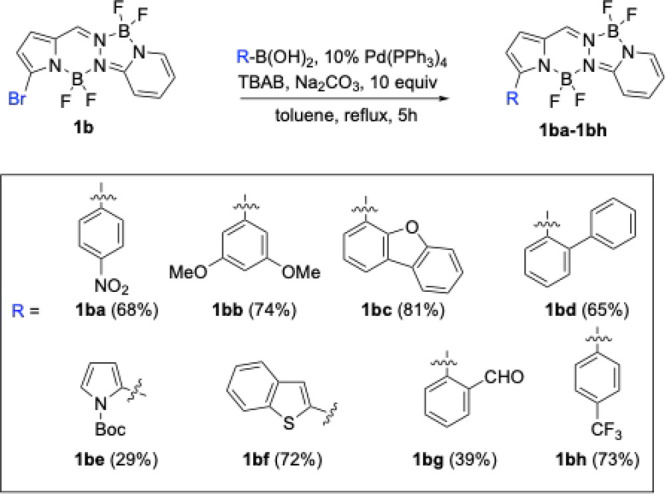 Figure 10
 Figure 11
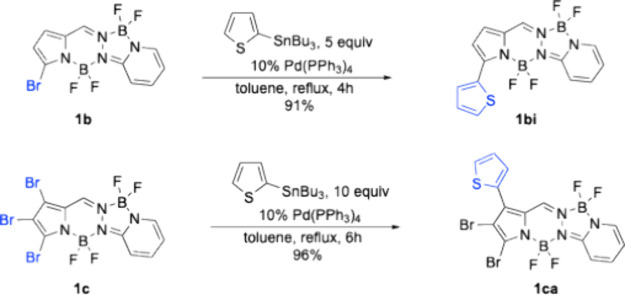 Figure 12
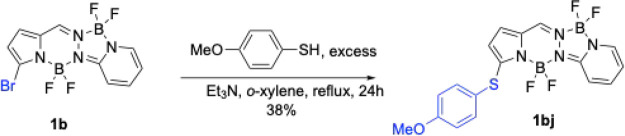 Figure 13
 Figure 14
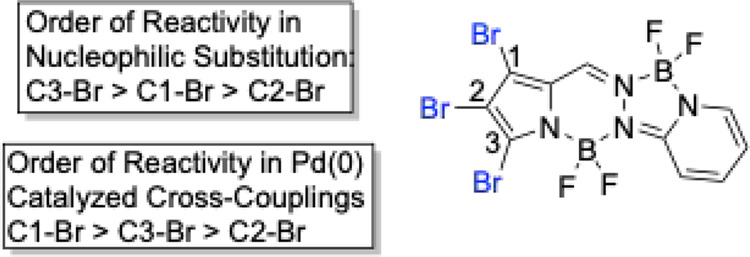 Figure 15
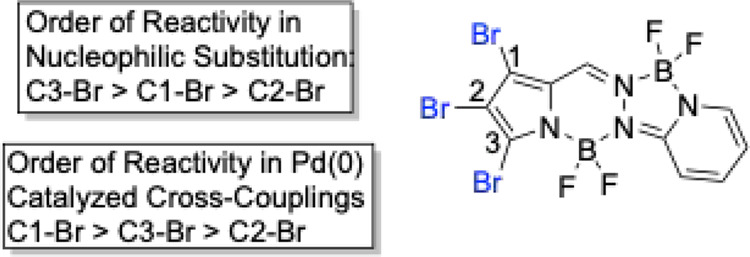 Figure 16
Peer Reviews
No public reviews on file for this paper yet. If you reviewed it on a platform where reviews are public (OpenReview, ICLR, NeurIPS, ICML), you can paste yours below so the community can read it here.
Videos
No videos yet. Explain this paper in a talk, walkthrough, or lecture? Add one.
Taxonomy
TopicsLuminescence and Fluorescent Materials · Porphyrin and Phthalocyanine Chemistry · Molecular Sensors and Ion Detection