Generation of Polysubstituted Tetrahydrofurans via Urea-Enabled, Pd-Catalyzed Olefin Heteroannulation
Shannon T. O’Neil, Owen E. Monteferrante, Brooke R. Stanley, Shauna M. Paradine

TL;DR
Scientists developed a new method using palladium and urea to create complex THF rings, which are important in making natural products.
Contribution
A novel Pd-catalyzed heteroannulation method enabled by urea ligands for synthesizing polysubstituted THF rings.
Findings
Urea-enabled Pd catalysis couples 2-bromoallyl alcohols and 1,3-dienes to form THF rings.
The method allows diverse ambiphiles and dienes to generate THF products with varied substitution patterns.
THF products can be transformed into core scaffolds found in polyketide natural products.
Abstract
Herein, we report a palladium-catalyzed heteroannulation approach to couple 2-bromoallyl alcohols and 1,3-dienes to generate a broad range of polysubstituted tetrahydrofuran (THF) rings enabled by urea ligands. Under urea-enabled Pd catalysis, a structurally diverse range of ambiphiles and dienes can be engaged to generate THF products with varying substitution patterns. These products can be readily transformed into prevalent core scaffolds in polyketide natural products.
Genes, proteins, chemicals, diseases, species, mutations and cell lines named across the full text — each resolved to its canonical identifier and authoritative record.
Click any figure to enlarge with its caption.
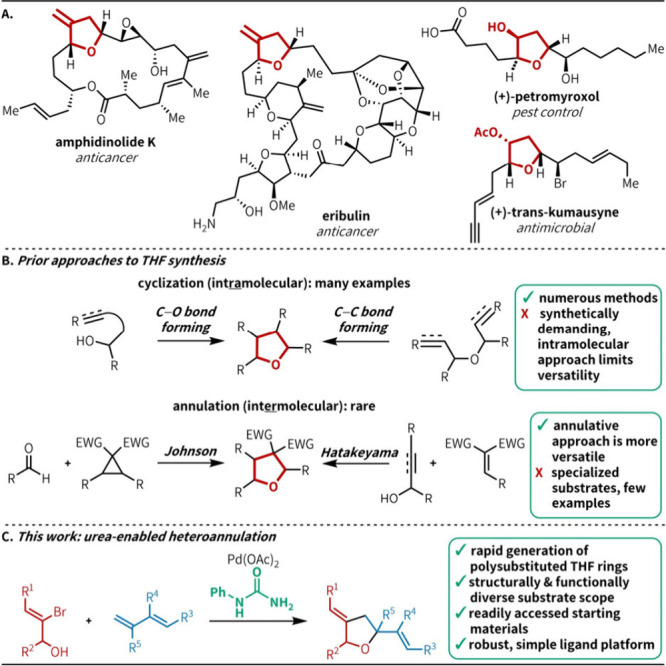 Figure 1
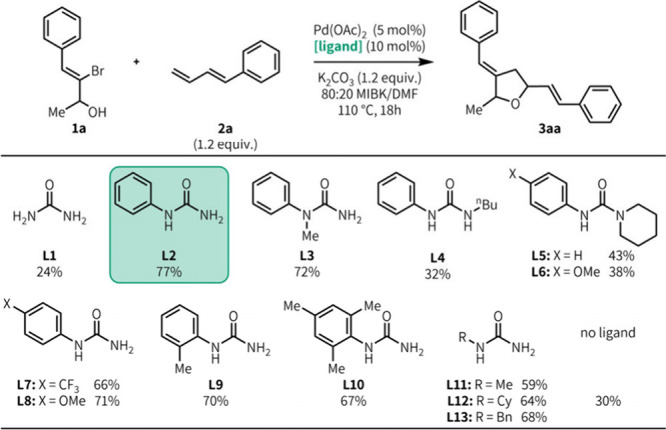 Figure 2
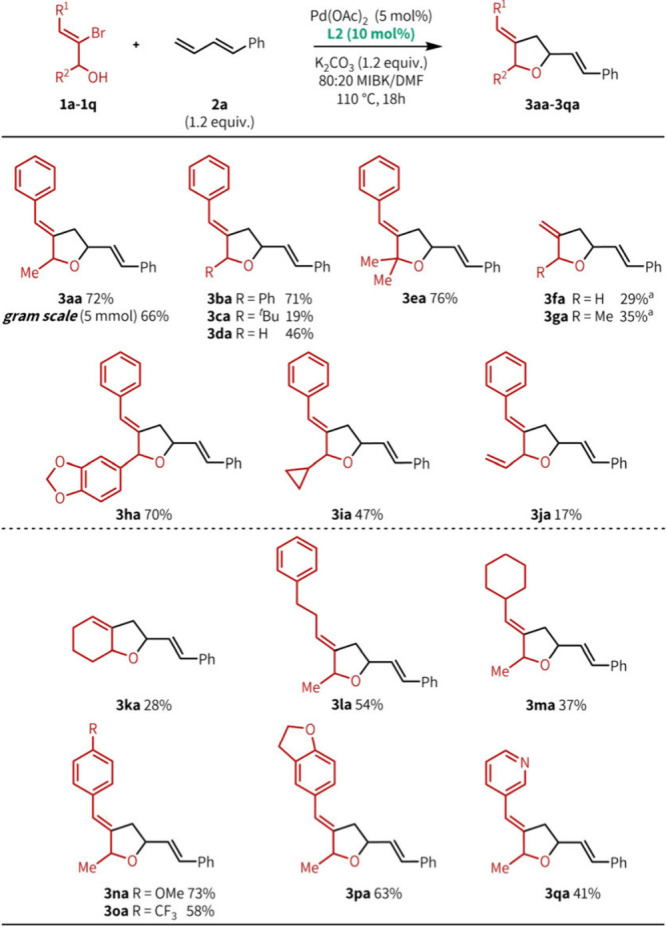 Figure 3
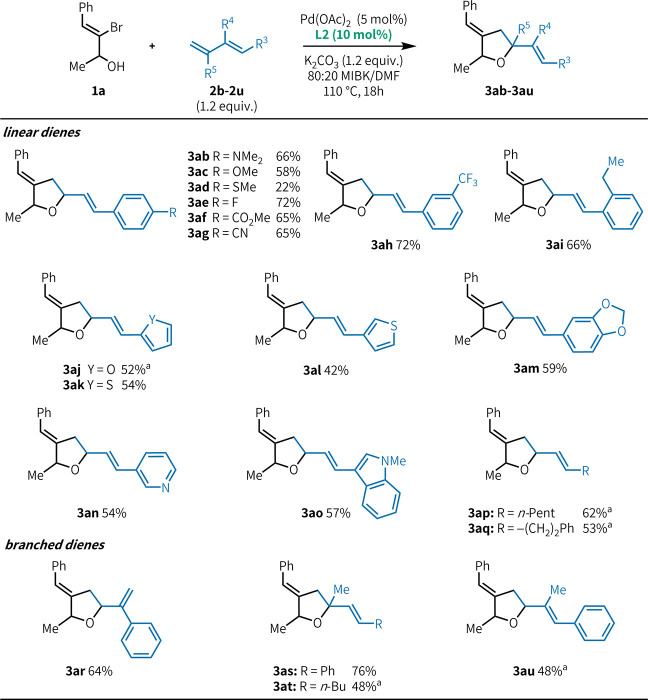 Figure 4
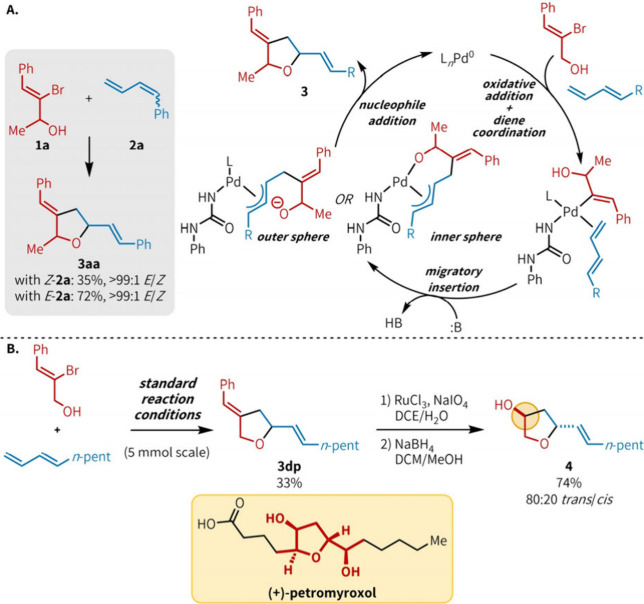 Figure 5
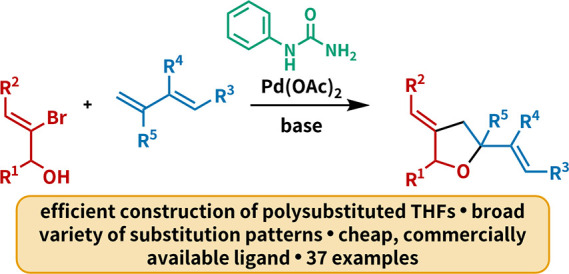 Figure 6
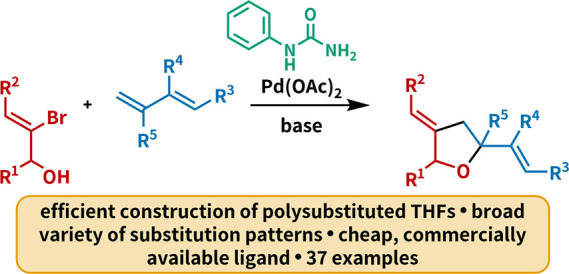 Figure 7
Peer Reviews
No public reviews on file for this paper yet. If you reviewed it on a platform where reviews are public (OpenReview, ICLR, NeurIPS, ICML), you can paste yours below so the community can read it here.
Videos
No videos yet. Explain this paper in a talk, walkthrough, or lecture? Add one.
Taxonomy
TopicsCyclopropane Reaction Mechanisms · Catalytic C–H Functionalization Methods · Synthetic Organic Chemistry Methods