Avoiding Mitochondrial Apoptosis by the Bcl-2-Driven Bax Oligomerization on Membrane Surfaces
Sophie E. Ayscough, Luke A. Clifton, Jörgen Ådén, Sebastian Köhler, Nicolò Paracini, James Doutch, Éilís C. Bragginton, Anna E. Leung, Oliver Bogojevic, Jia-Fei Poon, Tamás Milán Nagy, Hanna P. Wacklin-Knecht, Gerhard Gröbner

TL;DR
This study reveals how Bcl-2 proteins prevent cell death by trapping Bax proteins on mitochondrial membranes, offering insights into cancer cell survival.
Contribution
The study identifies a novel mechanism of Bcl-2-mediated Bax sequestration involving heterodimerization and oligomerization.
Findings
Bcl-2 sequesters Bax through heterodimerization and Bax oligomerization on mitochondrial membranes.
This sequestration occurs in two steps: rapid heterodimer formation followed by slower Bax oligomerization.
The mechanism persists even in the presence of cardiolipin, a lipid that normally promotes Bax pore formation.
Abstract
The Bcl-2 family of proteins governs mitochondrial outer membrane (MOM) permeabilization, a critical step in apoptosis that is dysfunctional in many cancers. Although cellular studies have long implicated direct interactions between the pore-forming apoptotic Bax protein and its opponent, the antiapoptotic Bcl-2 protein in apoptosis regulation, the underlying basic principles behind this control remained unresolved. To provide in-depth insight, we carried out a systematic biophysical study in which we utilized neutron reflectometry (NR) and ATR-FTIR to elucidate the molecular communication between those proteins in and around the mitochondrial membrane environment. The spatial and temporal changes across model MOM surfaces were resolved during the interaction of Bax with Bcl-2. The NR-derived membrane surface Bax distributions suggested that Bcl-2 mediated Bax sequestration through both…
Genes, proteins, chemicals, diseases, species, mutations and cell lines named across the full text — each resolved to its canonical identifier and authoritative record.
Click any figure to enlarge with its caption.
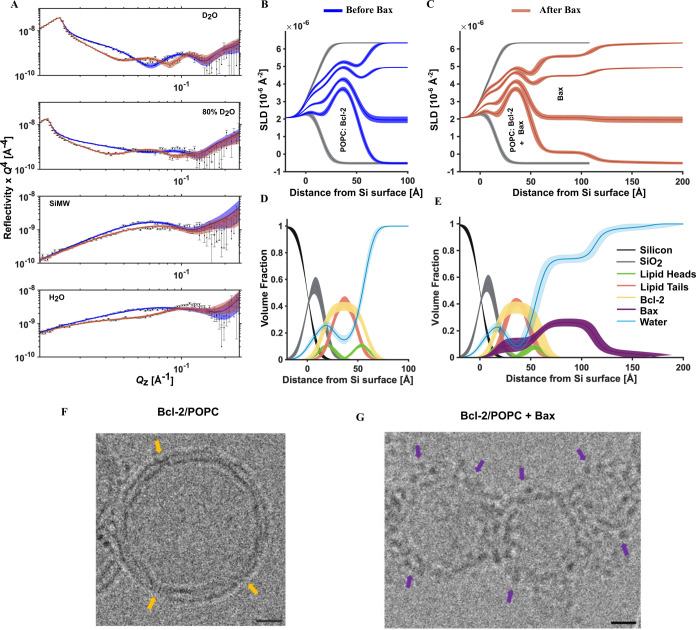 Figure 1
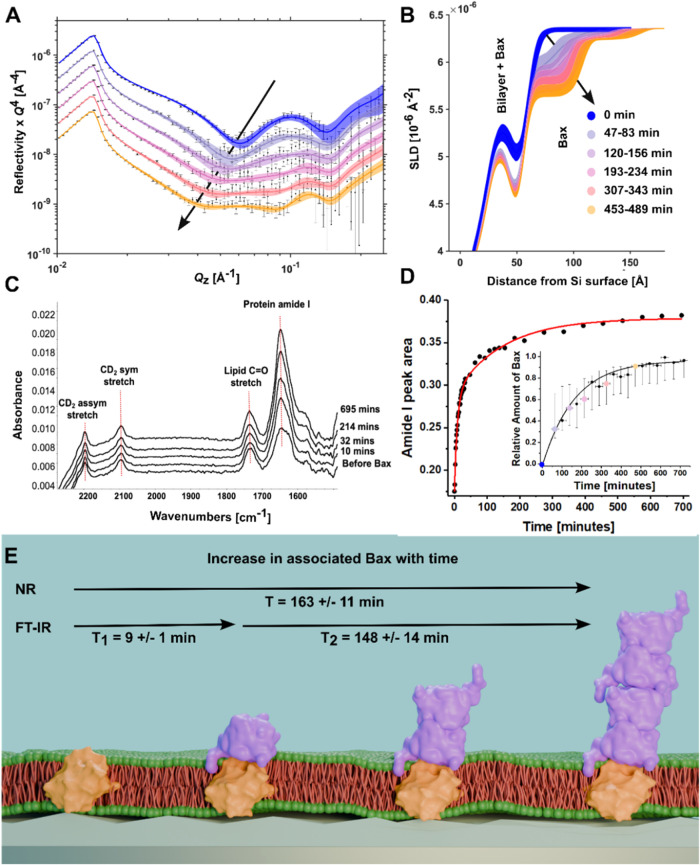 Figure 2
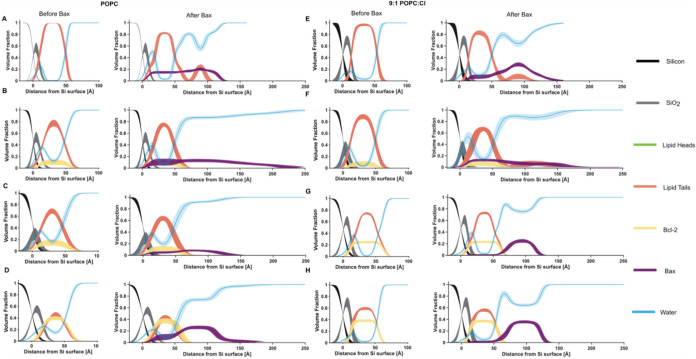 Figure 3
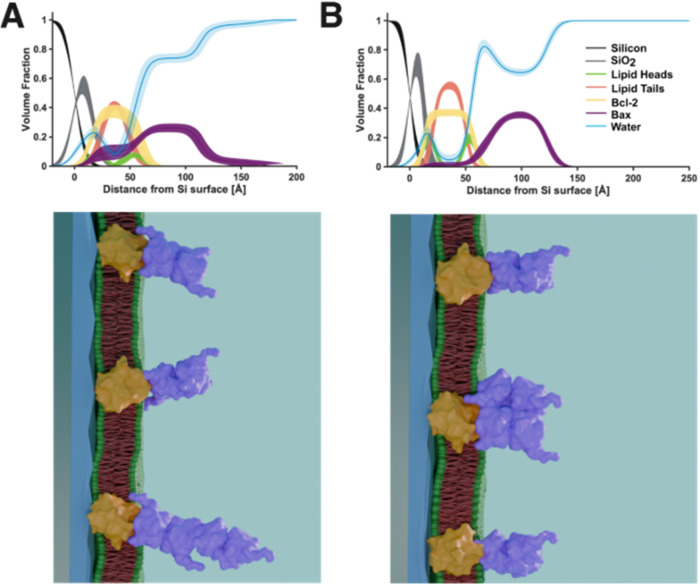 Figure 4
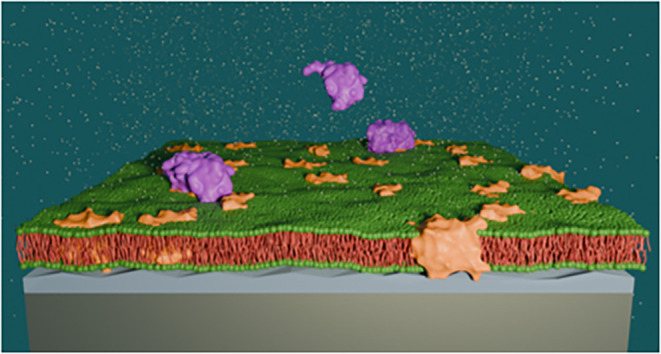 Figure 5
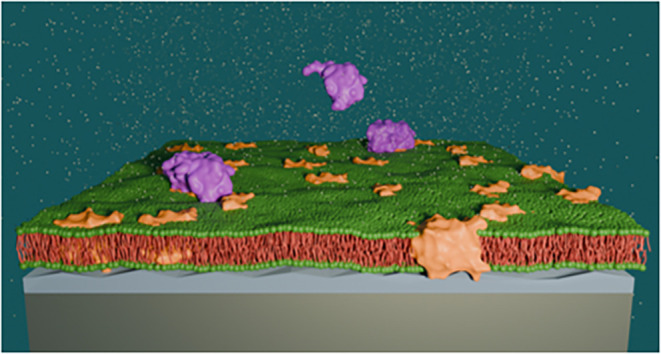 Figure 6
Peer Reviews
No public reviews on file for this paper yet. If you reviewed it on a platform where reviews are public (OpenReview, ICLR, NeurIPS, ICML), you can paste yours below so the community can read it here.
Videos
No videos yet. Explain this paper in a talk, walkthrough, or lecture? Add one.
Taxonomy
TopicsCell death mechanisms and regulation · Mitochondrial Function and Pathology · Nuclear Structure and Function