Enantioselective Synthesis of Axially Chiral Spiro[3.3]heptanes by Site-Selective C–H Functionalization
Duc Ly, Ziyi Chen, Djamaladdin G. Musaev, Huw M. L. Davies

TL;DR
This paper presents a new method for making axially chiral spiro compounds with high selectivity using a rhodium catalyst.
Contribution
A highly selective rhodium-catalyzed C–H functionalization method for axially chiral spiro[3.3]heptanes is developed.
Findings
The method achieves up to 92% yield, >20:1 regioselectivity, >20:1 diastereoselectivity, and 99% enantioselectivity.
The dirhodium catalyst's structure and noncovalent interactions enable conformation sorting and site selectivity.
The N-phthalimido group is ideal for further derivatization into amine and amide derivatives.
Abstract
The enantioselective synthesis of axially chiral 2,6-disubstituted spiro[3.3]heptanes is challenging because the differentiating functionalities are far apart from each other. The known enantioselective methods to generate these compounds have relied on the use of enzymatic processes. The current study achieves a highly regio-, diastereo-, and enantioselective entry to the 2,6-disubstituted spiro[3.3]heptanes by desymmetrizing 2-substituted spiro[3.3]heptanes using rhodium-catalyzed C–H functionalization by donor/acceptor carbenes derived from aryldiazoacetates and styryldiazoacetates. The optimum catalyst is dirhodium tetrakis(4,4′-(3,5-ditertbutylphenyl)-6,6′-dichlorobinaphthylphosphate) (Rh2(S-MegaBNP)4), which adopts a D4-symmetric structure. The optimum functionality on the spiro[3.3]heptane is the N-phthalimido group, which is ideally suited for further derivatization to a…
Genes, proteins, chemicals, diseases, species, mutations and cell lines named across the full text — each resolved to its canonical identifier and authoritative record.
Click any figure to enlarge with its caption.
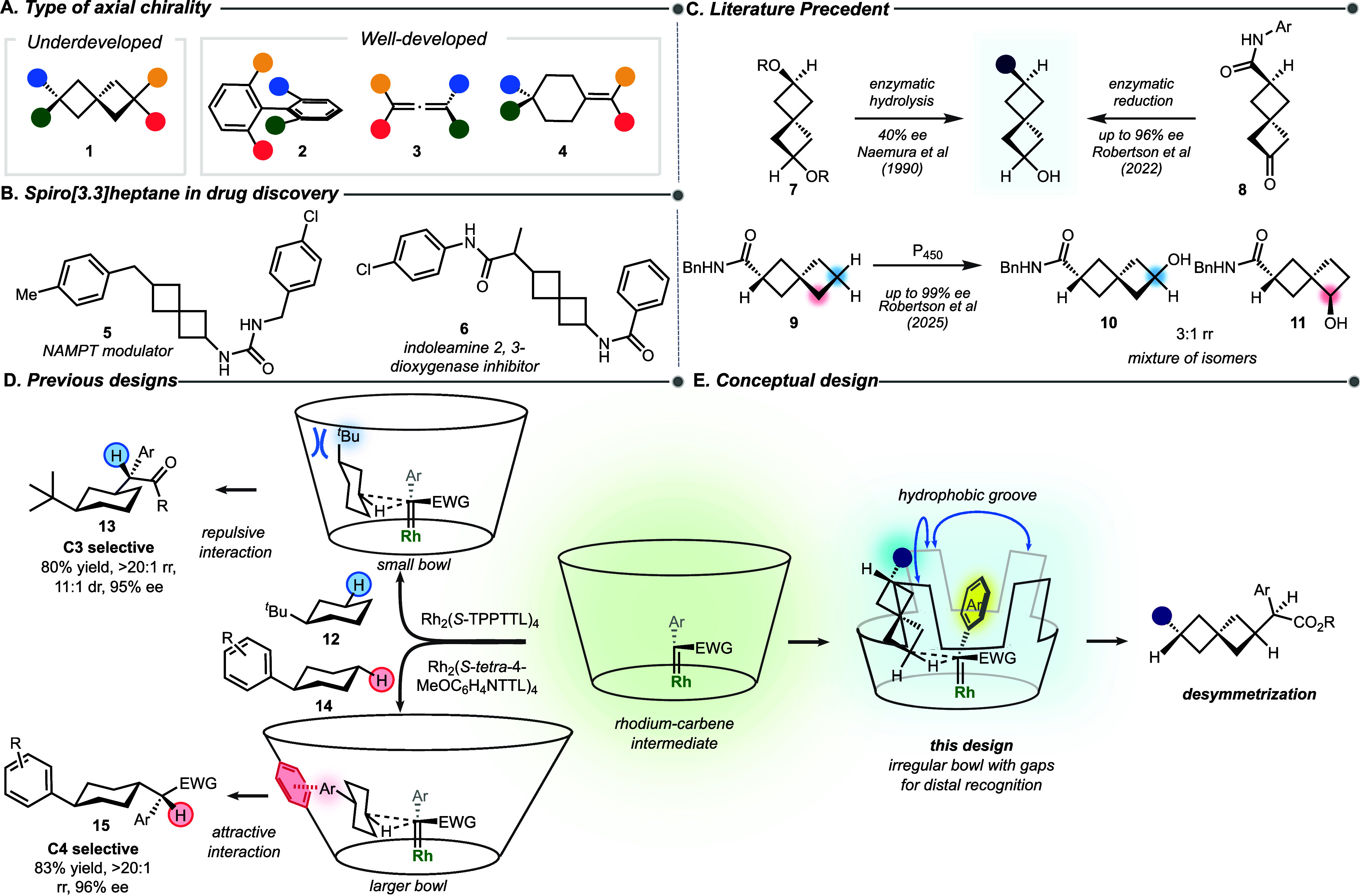 Figure 1
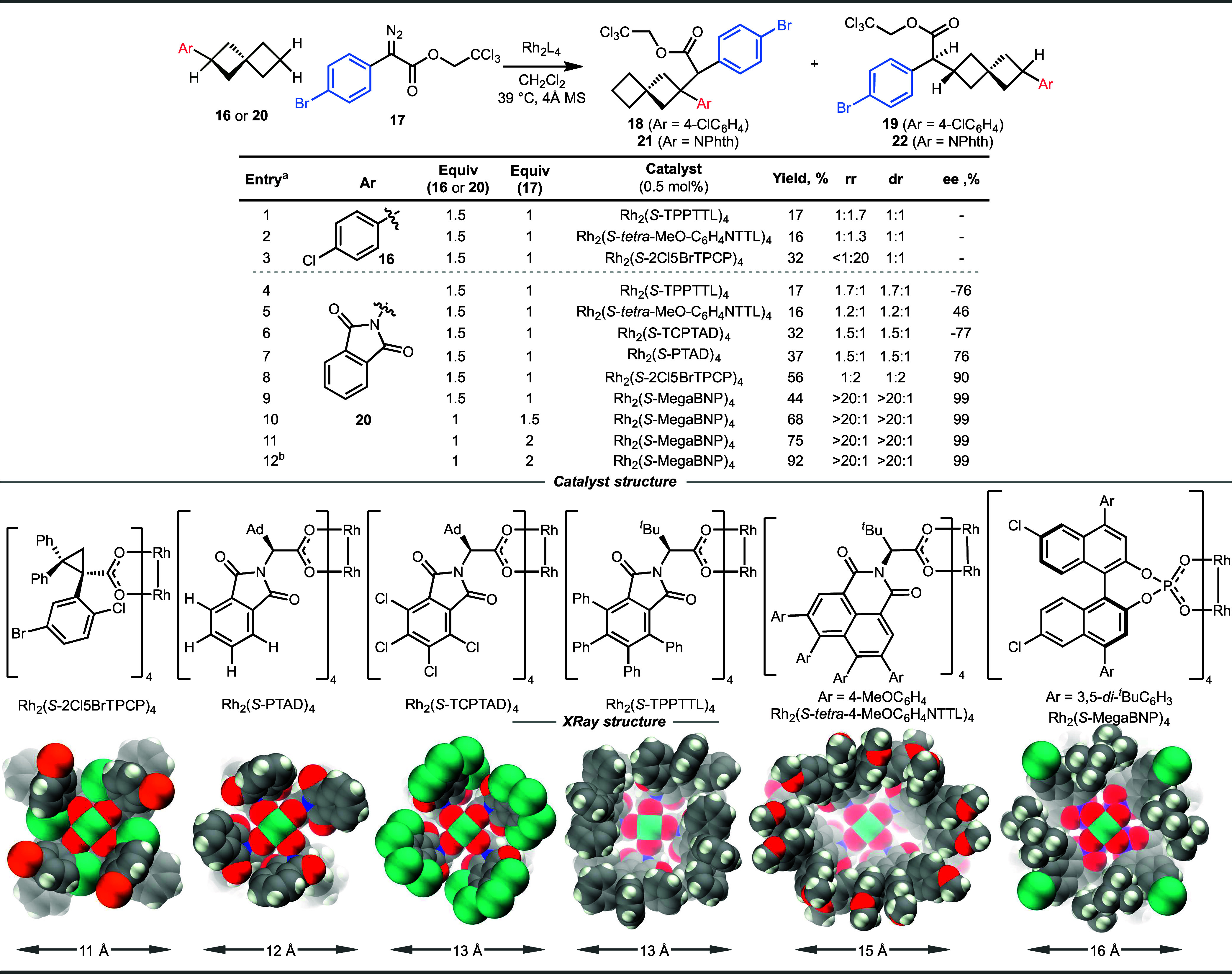 Figure 2
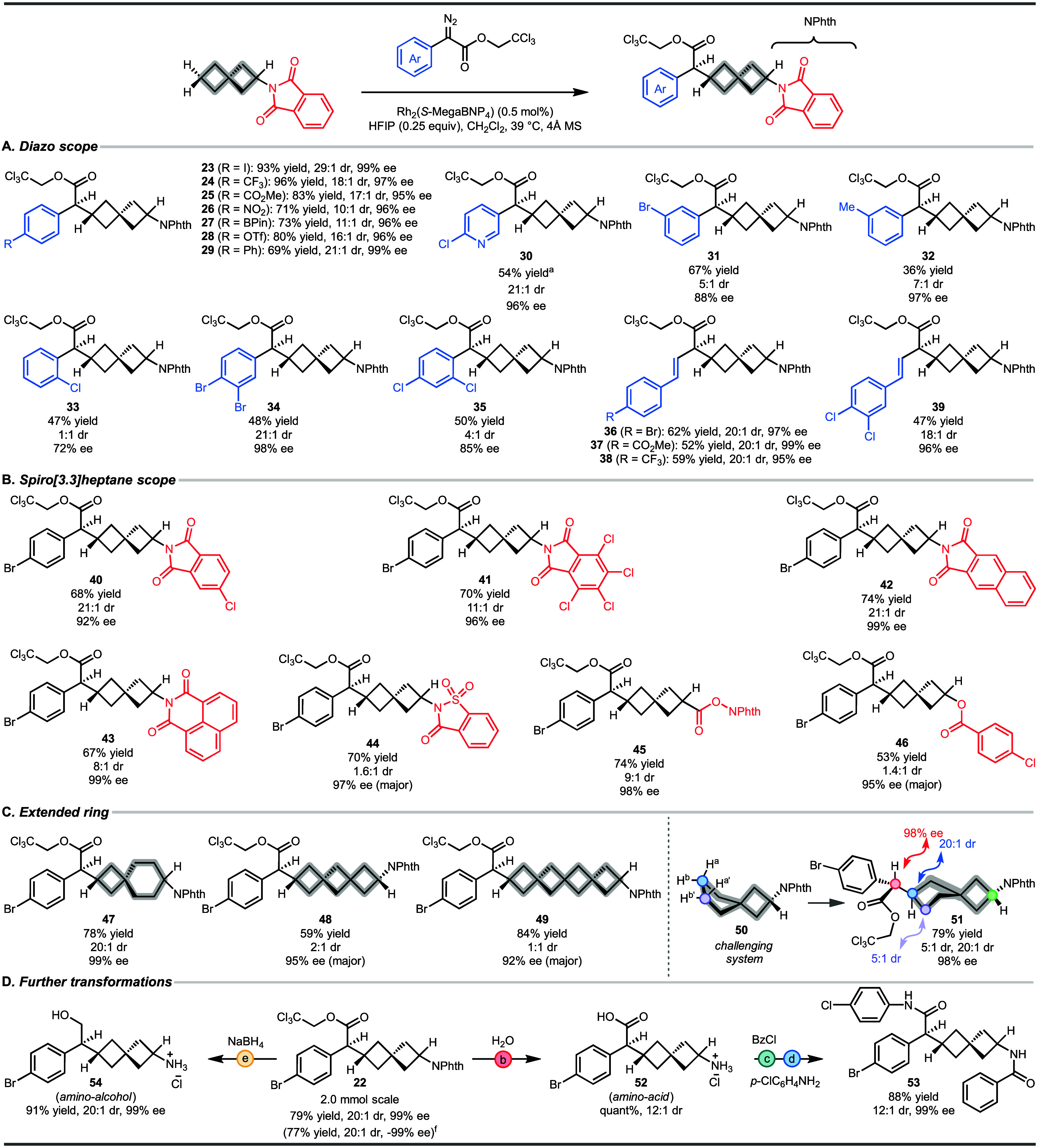 Figure 3
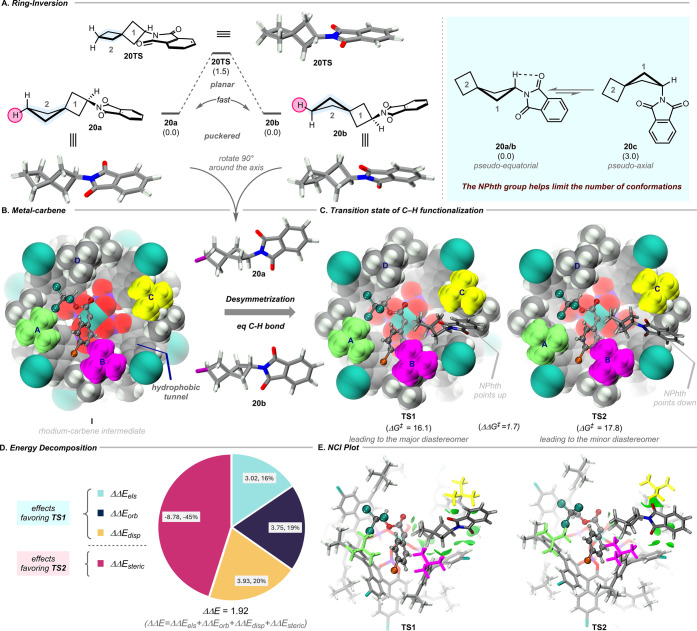 Figure 4
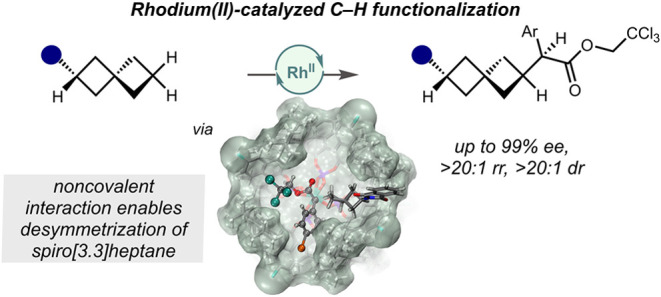 Figure 5
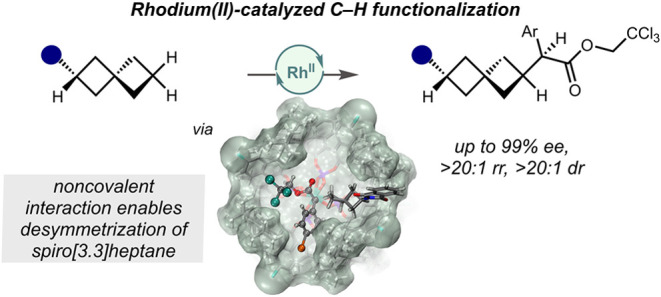 Figure 6
Peer Reviews
No public reviews on file for this paper yet. If you reviewed it on a platform where reviews are public (OpenReview, ICLR, NeurIPS, ICML), you can paste yours below so the community can read it here.
Videos
No videos yet. Explain this paper in a talk, walkthrough, or lecture? Add one.
Taxonomy
TopicsAxial and Atropisomeric Chirality Synthesis · Catalytic C–H Functionalization Methods · Cyclopropane Reaction Mechanisms