Versatile High‐Sensitivity EPR Using Superconducting Spiral Microresonators
Gediminas Usevičius, Mantas Šimėnas, Blaise L. Geoghegan, Oscar W. Kennedy, Ignas Pocius, Patrick Hogan, Ana Villanueva Ruiz de Temino, Jean‐Baptiste Verstraete, Paulina Verbaitytė, Angeliki Chatziathanasiou, G. Antilen Jacob, Mindaugas Kamarauskas, Marius Treideris

TL;DR
A new superconducting microresonator design boosts EPR sensitivity by 1000 times while working with standard equipment.
Contribution
A three-order-of-magnitude improvement in spin number sensitivity for X-band pulsed EPR using YBCO spiral microresonators.
Findings
Planar spiral microresonators achieve 10⁷ spins/G/Hz sensitivity in pulsed EPR experiments.
The microresonators are compatible with conventional EPR instrumentation and sample conditions.
High-fidelity spin control is demonstrated using microfluidic structures matching the resonator mode profile.
Abstract
Electron paramagnetic resonance (EPR) spectroscopy is a broadly used technique to study paramagnetic centers in diverse fields ranging from biology to quantum technologies. The availability of well‐established commercial instrumentation, including features such as rapid sample exchange, has been a key enabler for EPR to be applied widely across disciplines. Here, a three‐order‐of‐magnitude increase is presented in the spin number sensitivity of the commonly used X‐band pulsed EPR while retaining full compatibility with conventional instrumentation and typical sample conditions. This approach employs planar spiral‐shaped microresonators with 7 nL mode volumes fabricated from yttrium barium copper oxide (YBCO) high‐temperature superconductor. A wide range of microwave coupling is achieved by a single microresonator inside a conventional EPR tube, loaded into an EPR cavity. The performance…
Genes, proteins, chemicals, diseases, species, mutations and cell lines named across the full text — each resolved to its canonical identifier and authoritative record.
Click any figure to enlarge with its caption.
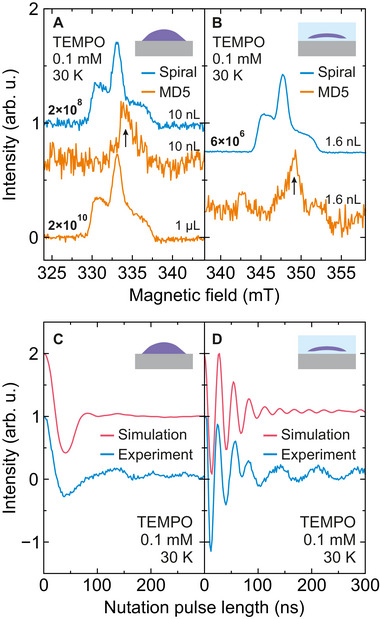 Figure 1
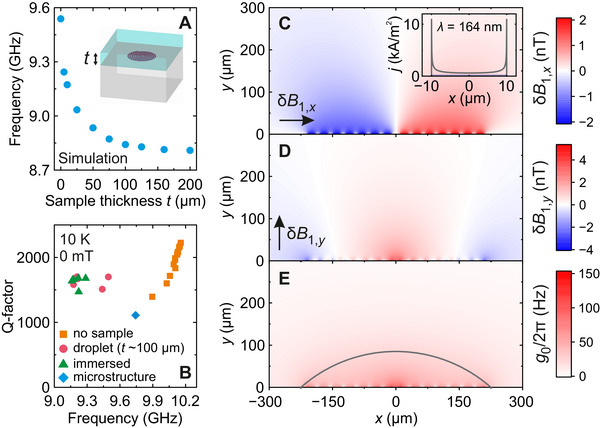 Figure 2
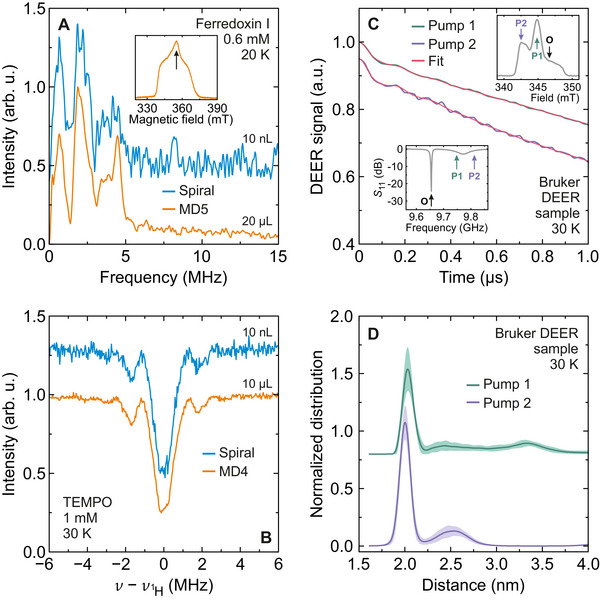 Figure 3
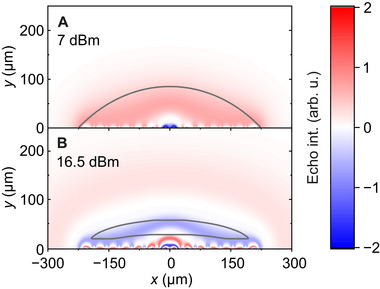 Figure 4
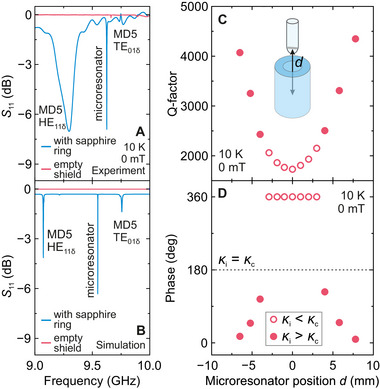 Figure 5
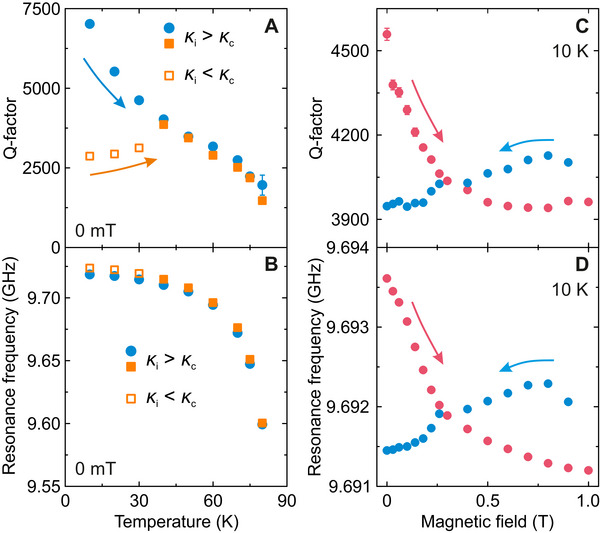 Figure 6
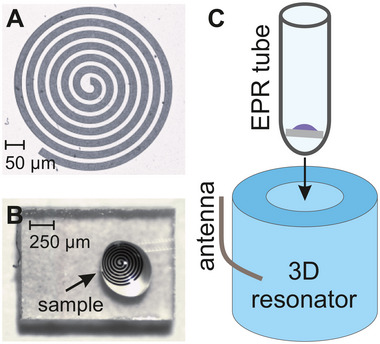 Figure 7
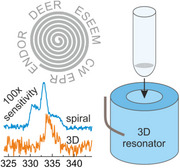 Figure 8
Peer Reviews
No public reviews on file for this paper yet. If you reviewed it on a platform where reviews are public (OpenReview, ICLR, NeurIPS, ICML), you can paste yours below so the community can read it here.
Videos
No videos yet. Explain this paper in a talk, walkthrough, or lecture? Add one.
Taxonomy
TopicsElectron Spin Resonance Studies · Radiation Effects and Dosimetry · Advanced NMR Techniques and Applications