Mapping lung function in late-onset Pompe disease using label-free functional MRI
Lina Tan, Alexandra L. Wagner, Rafael Heiss, Nadine Bayerl, Jana Zschüntzsch, Adrian P. Regensburger, Frauke Alves, Matthias Türk, Sandy Schmidt, Robert Grimm, Matthias Vorgerd, Lara Schlaffke, Hannah Vogt-Wolz, Merle Claßen, Benjamin Stoecklein, Adrian Buehler, Joachim Woelfle

TL;DR
This study introduces a non-invasive MRI method to assess lung function in late-onset Pompe disease patients, offering a new way to monitor respiratory issues without relying on patient cooperation.
Contribution
The study introduces PREFUL MRI as a novel, label-free, and effort-independent method for evaluating lung function in Pompe disease.
Findings
PREFUL MRI successfully detected ventilation-related impairments in LOPD patients.
Ventilation defects varied based on non-invasive ventilation status.
PREFUL MRI is feasible, fast, and well-tolerated in clinical settings.
Abstract
Pompe disease is a life-limiting metabolic myopathy characterized by proximal muscle weakness. In late-onset Pompe disease (LOPD), respiratory failure due to respiratory muscle weakness is the leading cause of death. Monitoring relies on spirometry, which is often not feasible in pediatric or severely affected patients, highlighting the need for effort-independent assessments. Phase-resolved functional lung (PREFUL) MRI enables non-invasive, label-free evaluation of lung function during free breathing without active cooperation. In this prospective pilot study, ten LOPD patients and ten age- and sex-matched healthy controls underwent 0.55 T PREFUL MRI. The method proved feasible and detected ventilation-related functional impairments in LOPD patients. Moreover, differences were observed depending on non-invasive ventilation (NIV) status. These findings align with the pathophysiology of…
Genes, proteins, chemicals, diseases, species, mutations and cell lines named across the full text — each resolved to its canonical identifier and authoritative record.
Click any figure to enlarge with its caption.
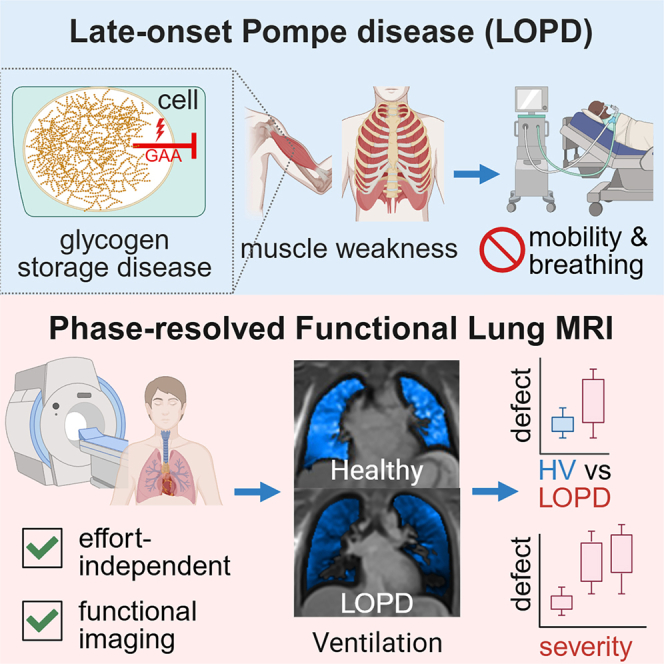 Figure 1
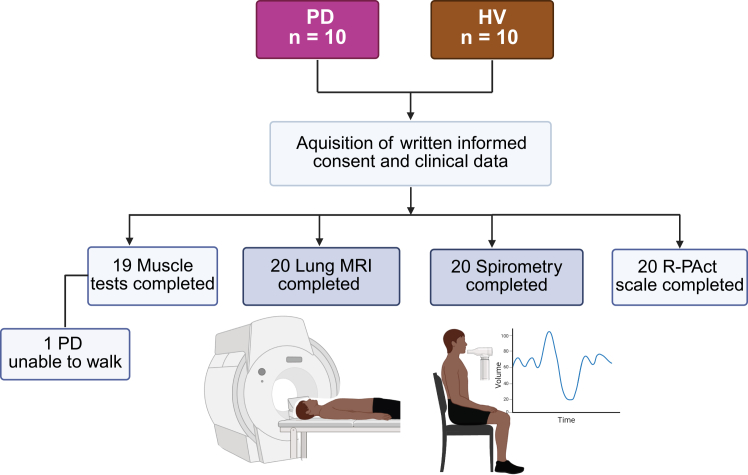 Figure 2
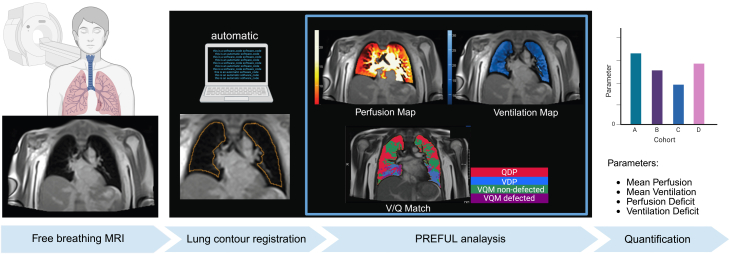 Figure 3
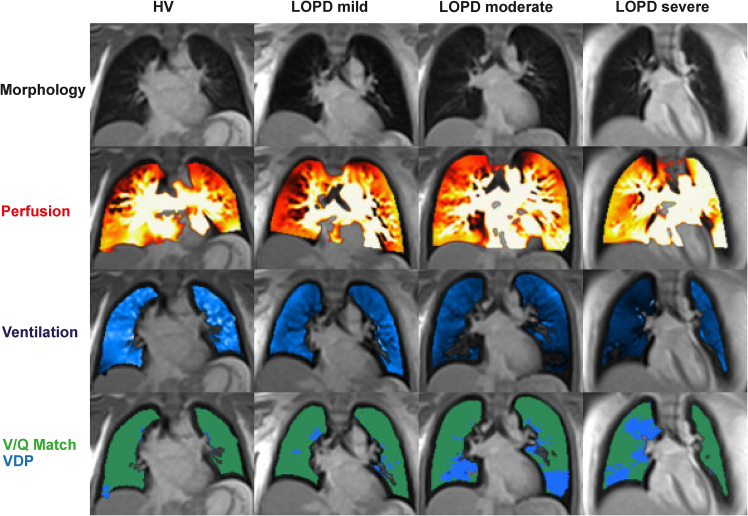 Figure 4
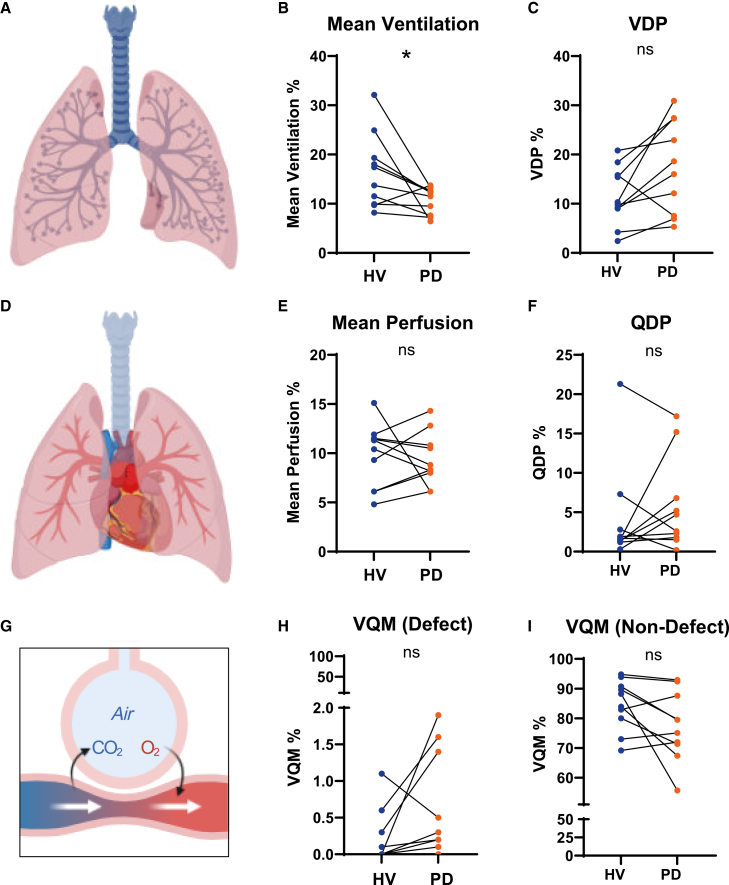 Figure 5
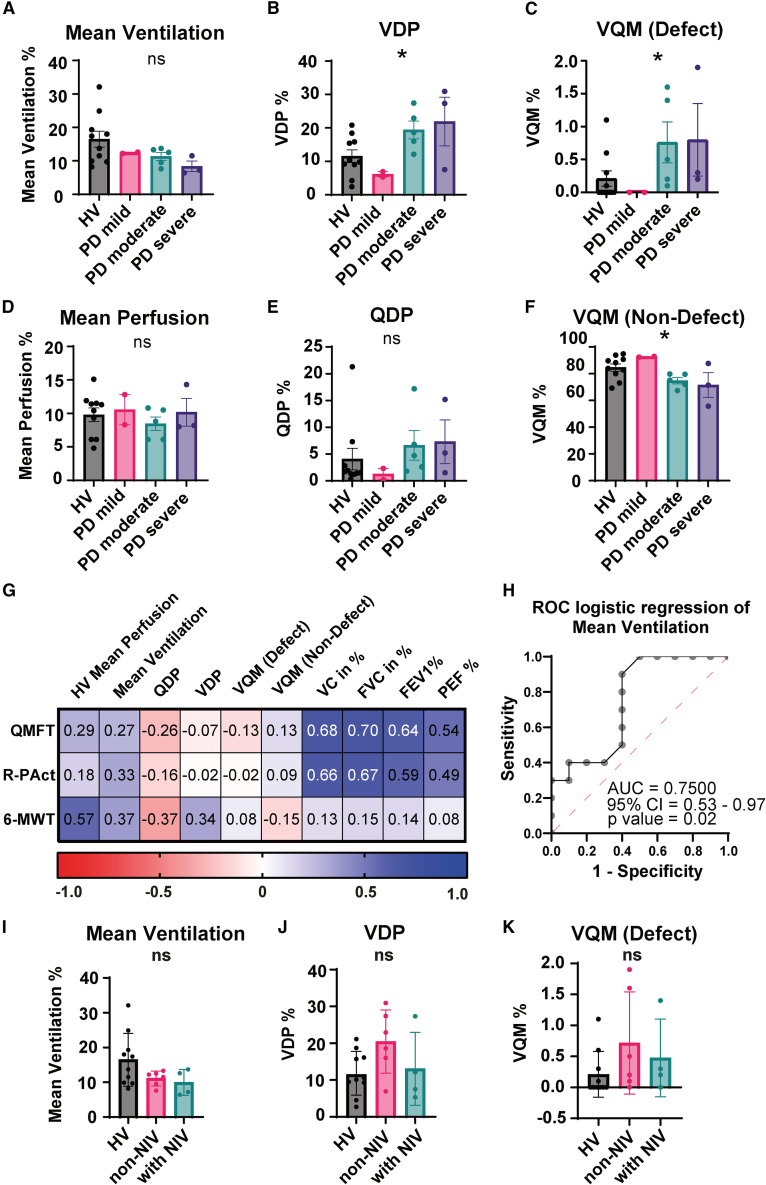 Figure 6
Peer Reviews
No public reviews on file for this paper yet. If you reviewed it on a platform where reviews are public (OpenReview, ICLR, NeurIPS, ICML), you can paste yours below so the community can read it here.
Videos
No videos yet. Explain this paper in a talk, walkthrough, or lecture? Add one.
Taxonomy
TopicsAtomic and Subatomic Physics Research · Advanced MRI Techniques and Applications · NMR spectroscopy and applications