Increased cortical thickness and decreased brain age among special operations veterans with blast TBI after a magnesium-ibogaine protocol
Andrew D. Geoly, John P. Coetzee, Derrick Matthew Buchanan, Wiebke Struckmann, Bora Kim, Malvika Sridhar, Azeezat Azeez, Jennifer I. Lissemore, Kirsten Cherian, Afik Faerman, Jackob N. Keynan, Prakamya Singal, Alaa Shanbour, Igor D. Bandeira, Ian H. Kratter, Maheen M. Adamson

TL;DR
A treatment combining magnesium and ibogaine was linked to brain structure improvements in veterans with blast-induced TBI, suggesting potential for neuroplastic recovery.
Contribution
This study is the first to show that magnesium-ibogaine therapy may reverse brain aging and enhance cortical thickness in blast TBI patients.
Findings
Cortical thickness increased in 11 brain regions after magnesium-ibogaine treatment.
Predicted brain age decreased by an average of 1.3 years at one month post-treatment.
Subcortical volume expanded in cerebellar, forebrain, and diencephalic regions following treatment.
Abstract
Ibogaine is a psychoactive alkaloid with therapeutic potential that may promote neuroplasticity. Its effects on human brain morphometry are unknown. Thirty Special Operations Forces veterans with prior blast-induced TBI participated in an observational study in which they received ibogaine co-administered with magnesium. Structural MRIs were collected at baseline (n = 25), initial post-treatment (n = 25), and 1-month post (n = 22). Longitudinal analyses assessed cortical thickness, subcortical volume, and predicted brain age (pBA), estimated from T1 scans. pBA was significantly reduced at 1 month relative to baseline (−1.3 years). Cortical thickness analysis revealed post-treatment increases in 11 regions. Subcortical analyses revealed significant volumetric expansion in 8 regions. Magnesium-ibogaine therapy was associated with increased cortical thickness, subcortical expansion, and…
Genes, proteins, chemicals, diseases, species, mutations and cell lines named across the full text — each resolved to its canonical identifier and authoritative record.
Click any figure to enlarge with its caption.
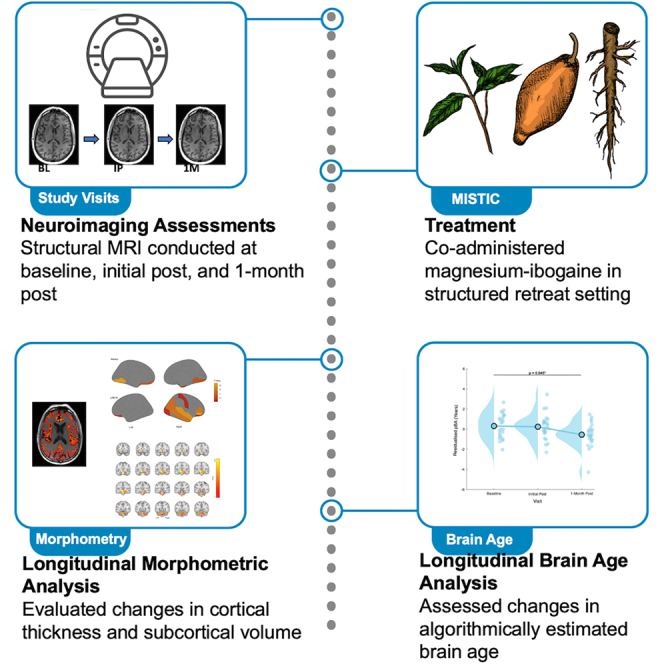 Figure 1
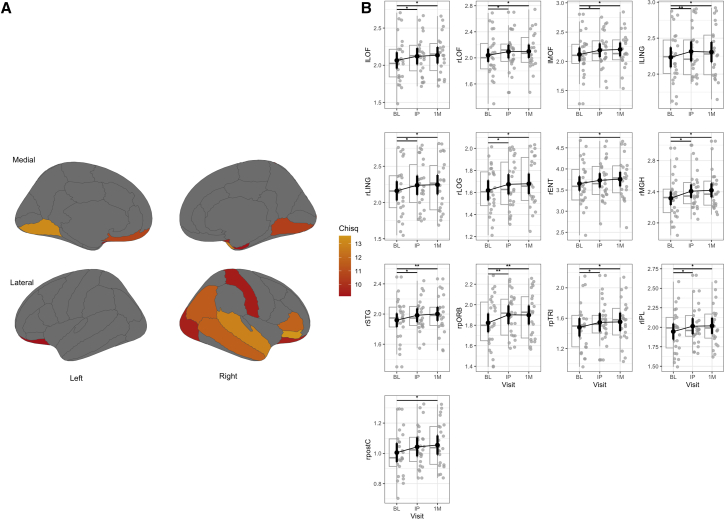 Figure 2
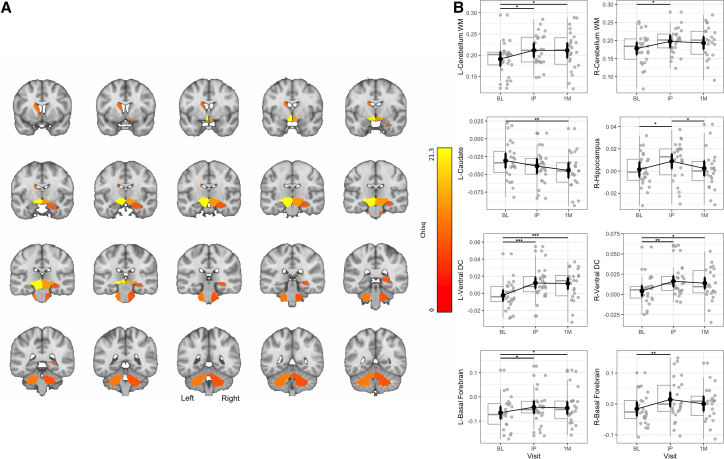 Figure 3
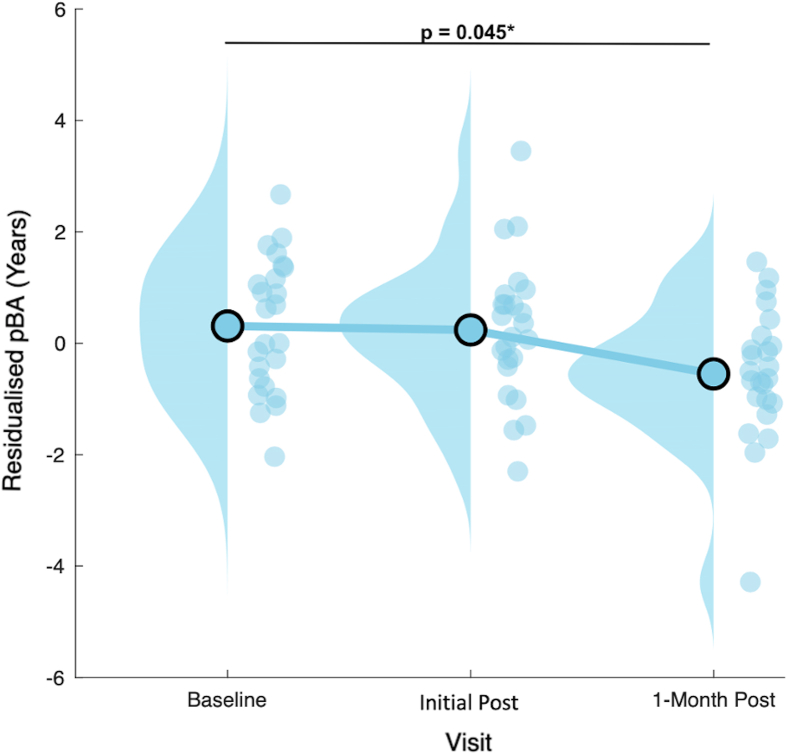 Figure 4
Peer Reviews
No public reviews on file for this paper yet. If you reviewed it on a platform where reviews are public (OpenReview, ICLR, NeurIPS, ICML), you can paste yours below so the community can read it here.
Videos
No videos yet. Explain this paper in a talk, walkthrough, or lecture? Add one.
Taxonomy
TopicsMagnesium in Health and Disease · Traumatic Brain Injury Research · Cardiac Arrest and Resuscitation