C9orf72 poly(glycine-alanine) knock-in mice exhibit mild rotarod and proteomic changes consistent with amyotrophic lateral sclerosis/frontotemporal dementia
Carmelo Milioto, Mireia Carcolé, Matteo Zanovello, Mhoriam Ahmed, Raja S Nirujogi, Daniel Biggs, Martha J Roberts, Kyra Schweers, Alexander J Cammack, Paolo M Marchi, Eszter Katona, Idoia Glaria, Almudena Santos, Anny Devoy, Pietro Fratta, Dario R Alessi, Ben Davies

TL;DR
Researchers created mice with a genetic mutation linked to ALS and FTD, observing subtle motor and protein changes that may help understand disease mechanisms.
Contribution
The study introduces a new mouse model expressing polyGA, a protein linked to ALS/FTD, revealing distinct proteomic effects.
Findings
PolyGA knock-in mice show impaired rotarod performance without major neuropathology.
Proteomic changes in the spinal cord include alterations in known polyGA interactors.
The polyGA model shows a distinct proteomic response compared to other C9orf72 models.
Abstract
A GGGGCC repeat expansion in C9orf72 is the most common genetic cause of amyotrophic lateral sclerosis (ALS) and frontotemporal dementia (FTD). The repeat expansion is translated into five different dipeptide repeat proteins: poly(glycine-alanine) (polyGA), poly(glycine-proline) (polyGP), poly(glycine-arginine) (polyGR), poly(alanine-proline) (polyAP) and poly(proline-arginine) (polyPR). To investigate the effect of polyGA, which is the most abundant dipeptide repeat protein in patient brains, we used clustered regularly interspaced short palindromic repeats (CRISPR) and CRISPR associated nuclease 9 (Cas9) to insert 400 codon-optimized polyGA repeats immediately downstream of the mouse C9orf72 start codon. This generated (GA)400 knock-in mice driven by the endogenous mouse C9orf72 promoter, coupled with heterozygous C9orf72 reduction. PolyGA remains soluble up to 18 months of age and…
Genes, proteins, chemicals, diseases, species, mutations and cell lines named across the full text — each resolved to its canonical identifier and authoritative record.
Click any figure to enlarge with its caption.
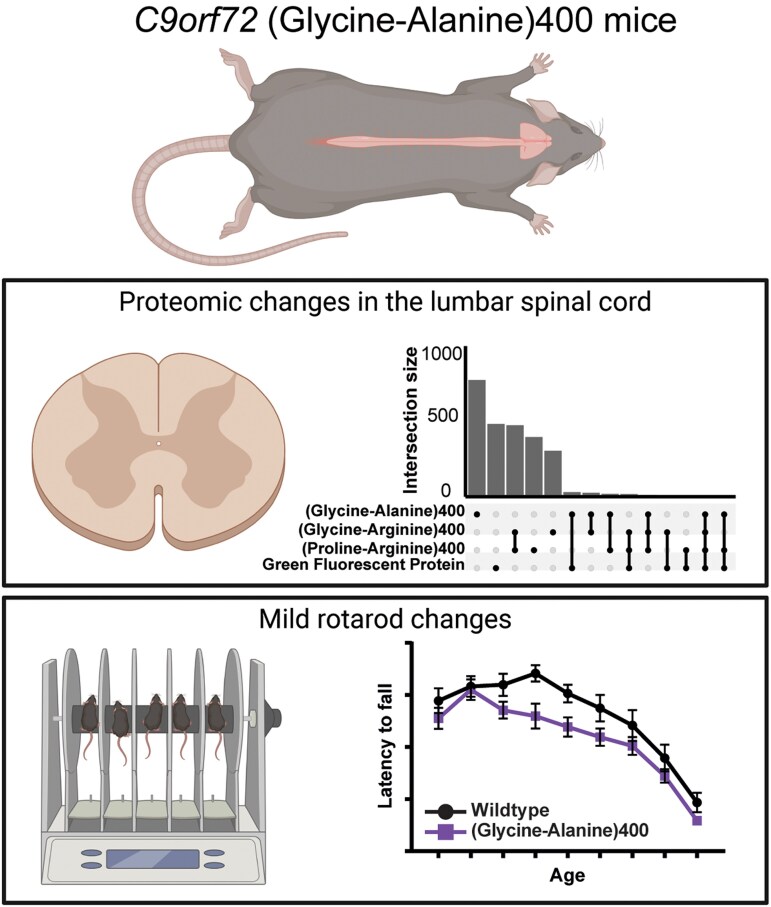 Figure 1
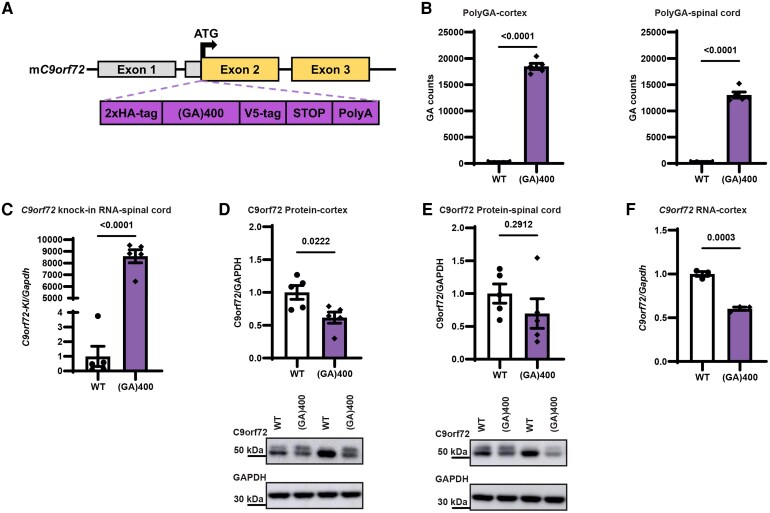 Figure 2
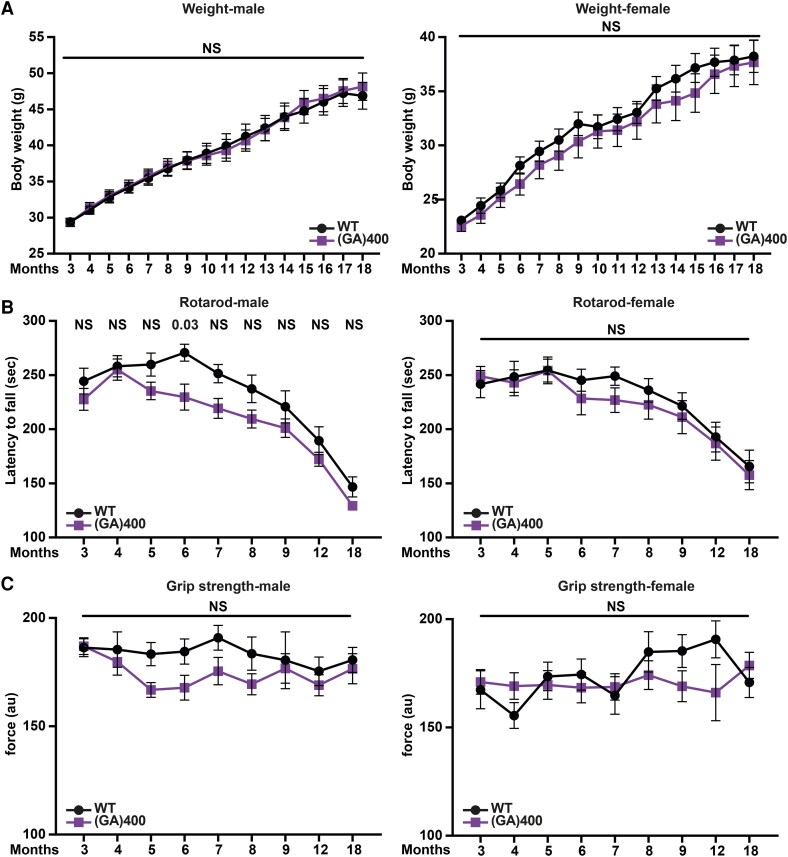 Figure 3
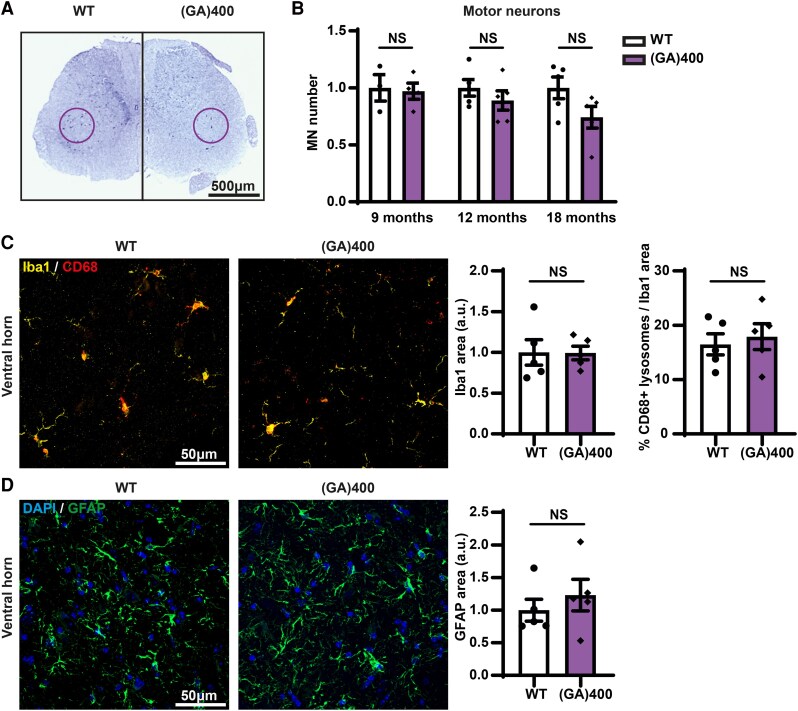 Figure 4
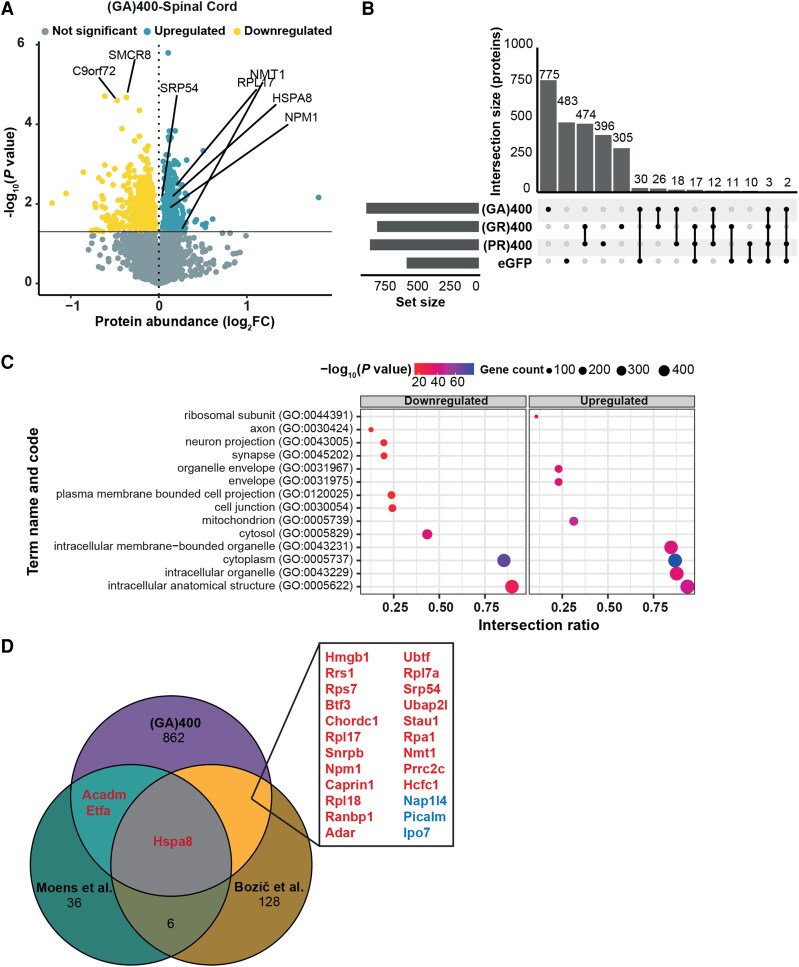 Figure 5
Peer Reviews
No public reviews on file for this paper yet. If you reviewed it on a platform where reviews are public (OpenReview, ICLR, NeurIPS, ICML), you can paste yours below so the community can read it here.
Videos
No videos yet. Explain this paper in a talk, walkthrough, or lecture? Add one.
Taxonomy
TopicsAmyotrophic Lateral Sclerosis Research · Genetic Neurodegenerative Diseases · RNA Research and Splicing