Medical Student Experiences With ChatGPT: National Cross-Sectional Study
Alan Yuesheng Xu, Skye Speakman, Vincent Salvatore Piranio, Robert Medina, Michelle Liu, Chris Lamprecht, Nicolas Abchee, Meghan Brennan

TL;DR
This study explores how U.S. medical students use ChatGPT for academic and clinical tasks, highlighting both its benefits and risks.
Contribution
The study provides national insights into ChatGPT use among medical students and identifies concerns about reliability and academic integrity.
Findings
Most students use ChatGPT to understand medical concepts, prepare for exams, and generate study materials.
A significant portion uses it for assignments and clinical tasks like writing differential diagnoses and clinical notes.
Students with higher AI literacy are more likely to use ChatGPT responsibly by cross-checking and editing outputs.
Abstract
Artificial intelligence (AI) is increasingly influencing medical student education, with AI-driven chatbots, such as ChatGPT, emerging as powerful study tools. While these technologies offer numerous benefits, they also pose challenges that warrant the adaptation of medical school curricula. This study examines medical students’ perceptions and use of ChatGPT. We hypothesize that ChatGPT is widely used for academic support, but concerns remain regarding reliability and academic integrity. We conducted a cross-sectional study from August 25 to December 10, 2024, in the United States. Students in all years of medical training who were enrolled in accredited allopathic or osteopathic medical schools were eligible to participate. Data were collected using an anonymous online questionnaire, which was distributed through institutional mailing lists. Overall, 188 schools were reached, of…
Genes, proteins, chemicals, diseases, species, mutations and cell lines named across the full text — each resolved to its canonical identifier and authoritative record.
Click any figure to enlarge with its caption.
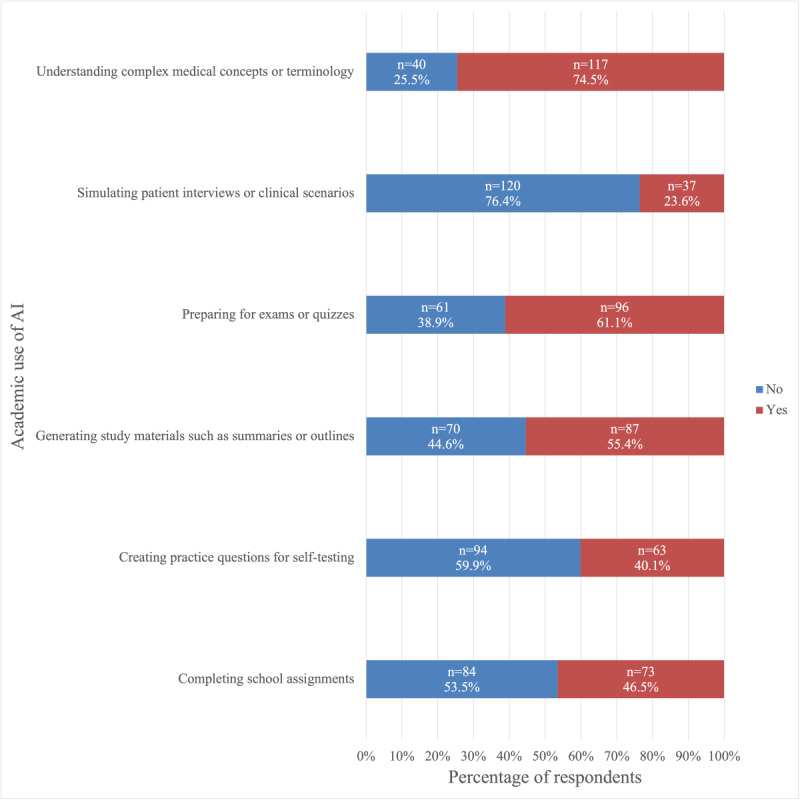 Figure 1
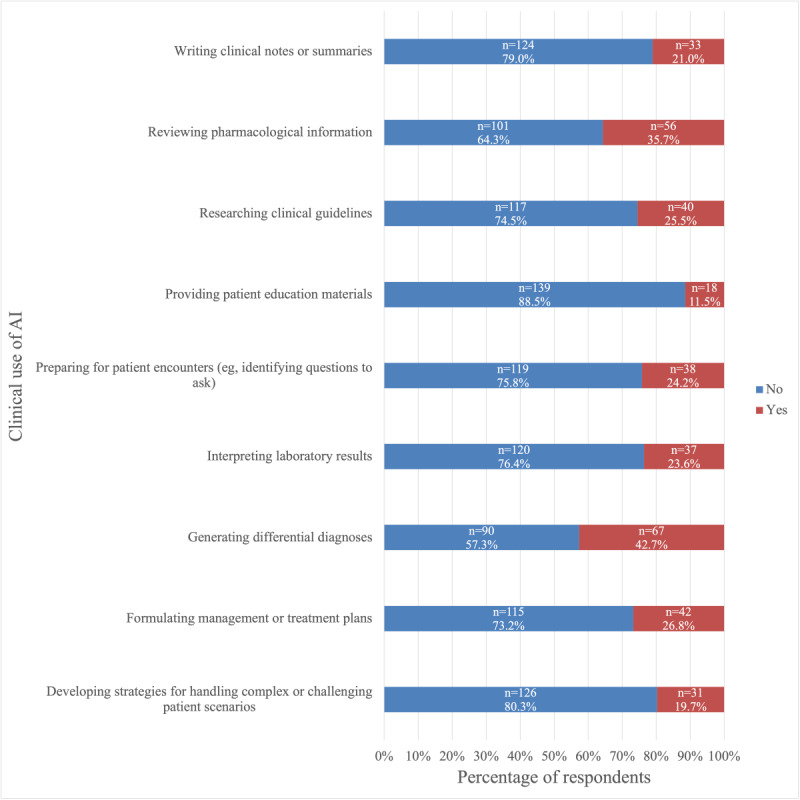 Figure 2
 Figure 3
 Figure 4
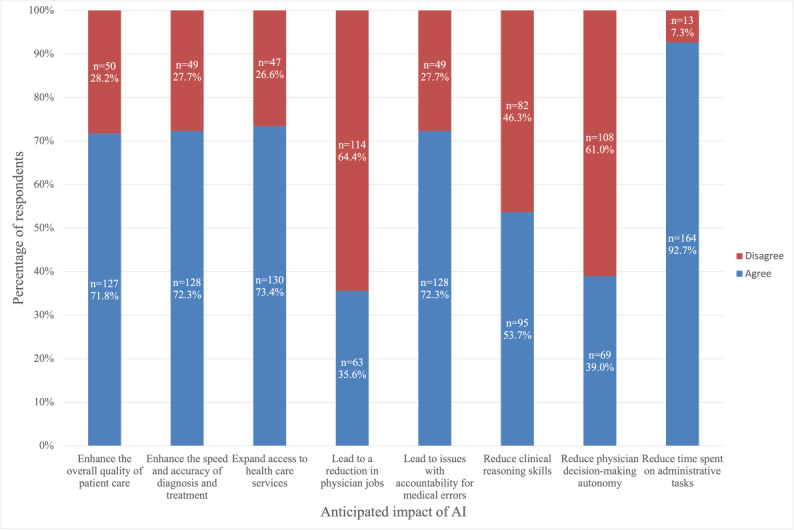 Figure 5
Peer Reviews
No public reviews on file for this paper yet. If you reviewed it on a platform where reviews are public (OpenReview, ICLR, NeurIPS, ICML), you can paste yours below so the community can read it here.
Videos
No videos yet. Explain this paper in a talk, walkthrough, or lecture? Add one.
Taxonomy
TopicsArtificial Intelligence in Healthcare and Education · Digital Mental Health Interventions · Social Media in Health Education