Machine learning-based combination of the central vein sign, cortical lesions and paramagnetic rim lesions: a web-based tool for the diagnosis of multiple sclerosis
Maxence Wynen, Colin Vanden Bulcke, Serena Borrelli, Pedro M Gordaliza, Anna Stölting, François Guisset, Clément Cordier, Maria Sofia Martire, Agnese Tamanti, Benoit Macq, Pascal Sati, Massimo Filippi, Massimiliano Calabrese, Martina Absinta, Daniel S Reich

TL;DR
This study shows that combining specific MRI biomarkers with machine learning improves the accuracy of diagnosing multiple sclerosis, and a web tool is available for clinical use.
Contribution
The novel contribution is a machine learning-based diagnostic framework using simplified MRI biomarkers that outperforms existing criteria for multiple sclerosis.
Findings
51 machine learning models outperformed the baseline McDonald criteria with up to 13% higher balanced accuracy.
A simplified logistic regression model achieved 94.7% balanced accuracy without significant difference from the best full-count model.
External validation confirmed robust performance, with the simplified model reaching 97.2% balanced accuracy on an out-of-distribution test set.
Abstract
Multiple sclerosis diagnostic criteria lack optimal specificity, leading to potential misdiagnosis. Advanced magnetic resonance imaging (MRI) biomarkers like the central vein sign, cortical lesions and paramagnetic rim lesions are highly specific to multiple sclerosis and could potentially improve diagnostic accuracy. In this study, we applied machine learning techniques to a retrospective, multicentric dataset of 322 multiple sclerosis/multiple sclerosis-mimic (204/118) and 84 prodromal multiple sclerosis/non-multiple sclerosis (43/41) adult patients, incorporating the central vein sign, cortical lesions and paramagnetic rim lesions. We compared (5 × 2 cross-validation combined F-test) the diagnostic performance of 71 machine learning models, each corresponding to a distinct combination of full-count or simplified biomarker inputs, against the baseline dissemination in space McDonald…
Genes, proteins, chemicals, diseases, species, mutations and cell lines named across the full text — each resolved to its canonical identifier and authoritative record.
Click any figure to enlarge with its caption.
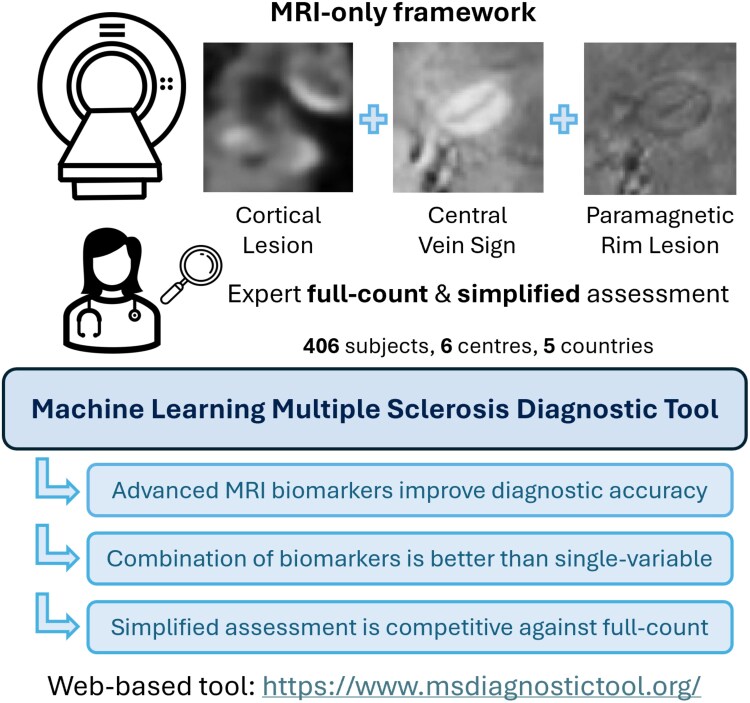 Figure 1
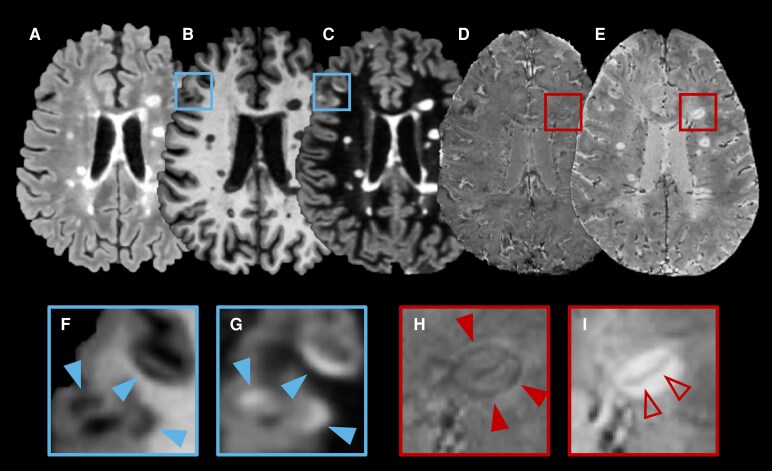 Figure 2
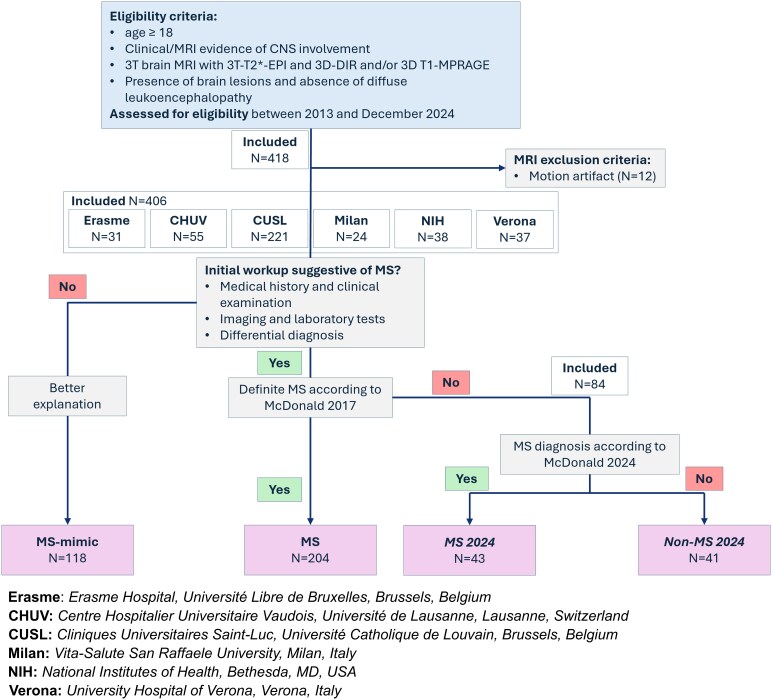 Figure 3
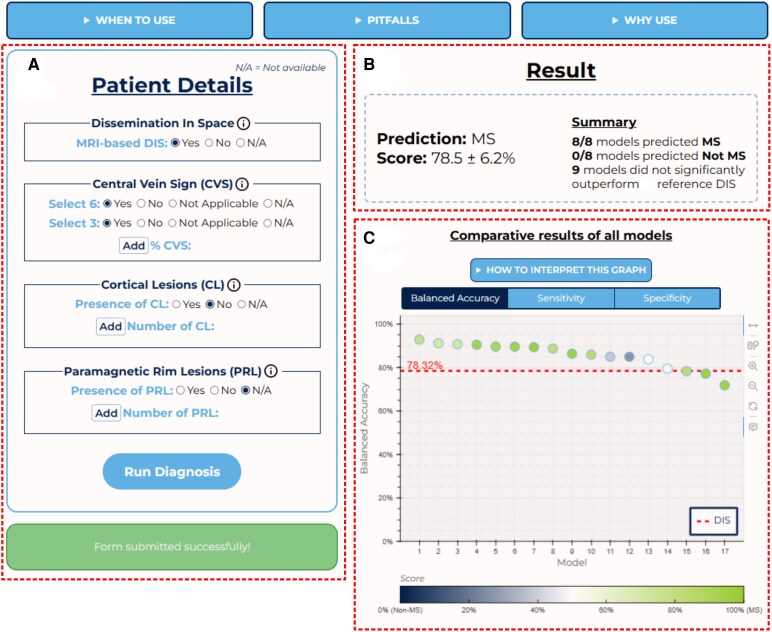 Figure 4
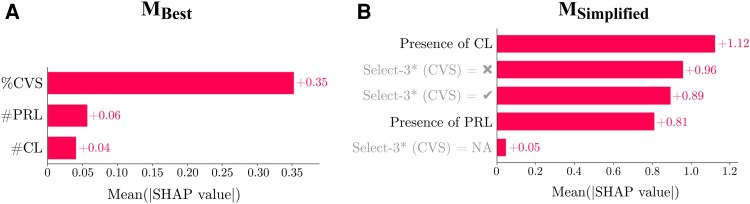 Figure 5
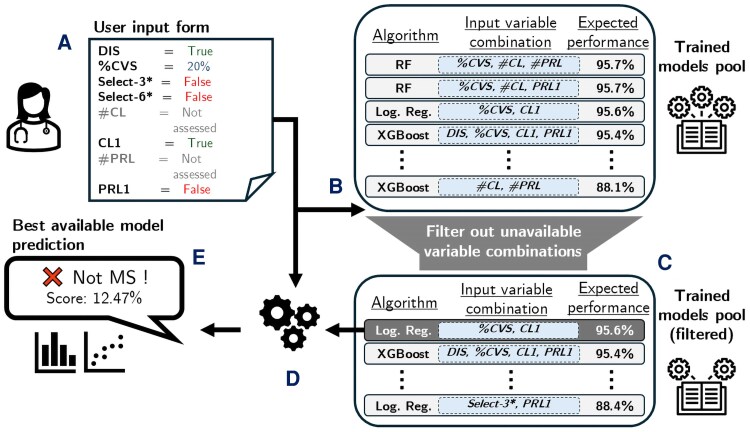 Figure 6
Peer Reviews
No public reviews on file for this paper yet. If you reviewed it on a platform where reviews are public (OpenReview, ICLR, NeurIPS, ICML), you can paste yours below so the community can read it here.
Videos
No videos yet. Explain this paper in a talk, walkthrough, or lecture? Add one.
Taxonomy
TopicsMultiple Sclerosis Research Studies · Voice and Speech Disorders · Cutaneous Melanoma Detection and Management