The Diabetic Hand as a Diagnostic Blind Spot: A Case of Severe Pseudohyperglycemia Masking Critical Hypoglycemia
King Hei Stanley Lam, Yonghyun Yoon, Daniel Chiung-Jui Su, Teinny Suryadi, Ngai Ho Yin Allen, Anwar Suhaimi, K. Dean Reeves

TL;DR
A diabetic patient's hand conditions caused misleadingly high blood sugar readings, hiding a dangerous low blood sugar level, highlighting a critical diagnostic risk.
Contribution
Identifies a novel failure mode in point-of-care glucose monitoring due to diabetic hand syndromes.
Findings
Bilateral carpal tunnel syndrome and hand osteoarthritis caused pseudohyperglycemia in a diabetic patient.
Venous blood testing revealed critical hypoglycemia despite persistently high capillary readings.
The diabetic hand can invalidate standard glucose monitoring, requiring routine hand assessment and venous verification.
Abstract
Carpal tunnel syndrome (CTS) and hand osteoarthritis (OA) are prevalent, painful comorbidities in diabetes mellitus. While their symptomatic burden is recognized, their potential to create critical diagnostic blind spots by compromising point-of-care glucose monitoring is an underappreciated patient safety hazard. These conditions can compromise the local capillary bed through nerve compression, joint inflammation, and microvascular dysfunction, thereby invalidating the core physiological assumption of point-of-care glucose monitoring: that a fingertip sample accurately reflects systemic glucose levels. An 80-year-old woman with type 2 diabetes presented for knee surgery. A routine postoperative capillary blood glucose (CBG) check yielded a value of 23 mmol/L, triggering a protocol for insulin administration. As the patient was asymptomatic, clinical suspicion led to a venous blood…
Genes, proteins, chemicals, diseases, species, mutations and cell lines named across the full text — each resolved to its canonical identifier and authoritative record.
Click any figure to enlarge with its caption.
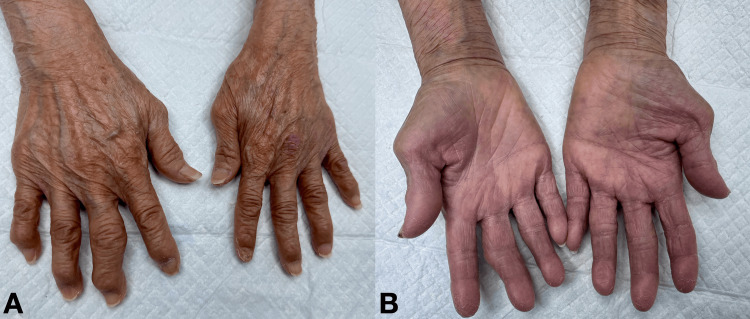 Figure 1
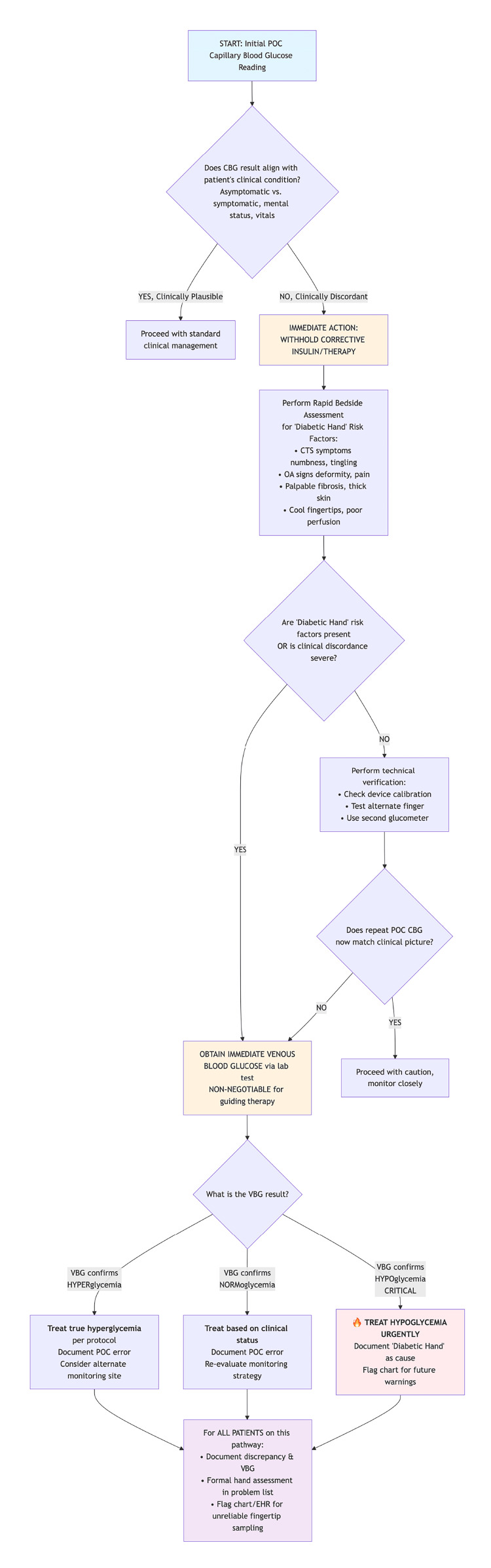 Figure 2
Peer Reviews
No public reviews on file for this paper yet. If you reviewed it on a platform where reviews are public (OpenReview, ICLR, NeurIPS, ICML), you can paste yours below so the community can read it here.
Videos
No videos yet. Explain this paper in a talk, walkthrough, or lecture? Add one.
Taxonomy
TopicsPeripheral Nerve Disorders · Skin Diseases and Diabetes · Intramuscular injections and effects