Evaluation of Pulse Oximetry Alarm Fatigue and the Impact of SpO2 Thresholds on Clinical Workflow: A Prospective Observational Study in a Kenyan Neonatal Unit
Bazil M. Masabo, Augustine W. Waswa, Jesse Coleman, Morris Ogero, Grace Irimu, Amy Sarah Ginsburg, Dorothy Chomba, Millicent Parsimei, Cynthia Shitote, Ferdinand Okwaro, June K. Madete, William M. Macharia, J. Mark Ansermino

TL;DR
This study examines how alarm thresholds in pulse oximetry affect clinical workflow in a Kenyan neonatal unit, finding that frequent alarms reduce monitoring effectiveness.
Contribution
The study introduces neonate-specific alarm thresholds to reduce alarm fatigue and improve monitoring accuracy in resource-limited settings.
Findings
Median hourly alarms per patient were 12 visual and 9 audible.
Half of SpO2 values were outside the set thresholds.
Neonate-specific thresholds improved monitoring specificity and sensitivity.
Abstract
Effective pulse oximetry monitoring in a newborn unit requires clinician action. However, if thresholds are not adapted to each neonate, frequent alarms cause alarm fatigue, which impacts the quality of patient monitoring, staff workload and clinical workflow. We conducted an observational study from October 2021 to December 2022 in a Kenyan newborn unit which enrolled neonates through convenience sampling. Data were analysed in R using default thresholds of 85% to 96% for SpO2 and 90 to 200 bpm for PR. Among the 49 neonates enrolled, median hourly alarms per patient were 12 visual and 9 audible. Half of SpO2 values were outside the set thresholds. The hourly alarm density per neonate was 4 SpO2 alarms and 1 PR alarm. The selected SpO2 alarm thresholds resulted in a high alarm burden which necessitates neonate-specific thresholds and delays. This improves monitoring specificity and…
Genes, proteins, chemicals, diseases, species, mutations and cell lines named across the full text — each resolved to its canonical identifier and authoritative record.
Click any figure to enlarge with its caption.
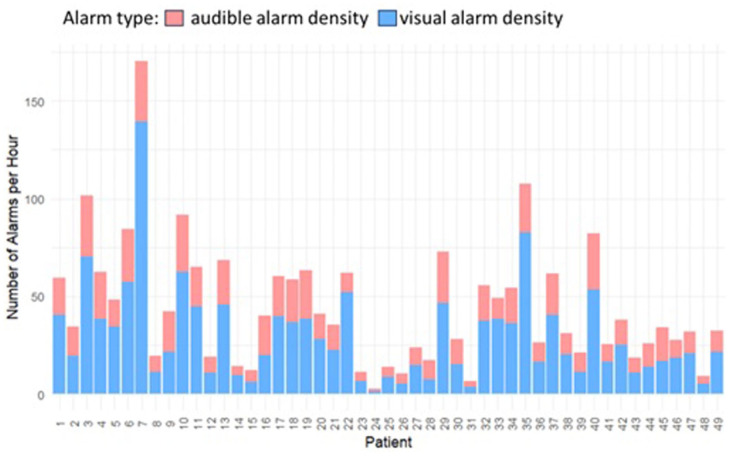 Figure 1
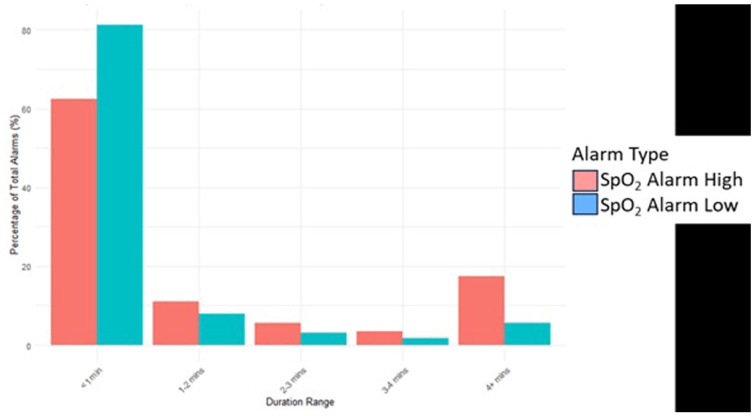 Figure 2
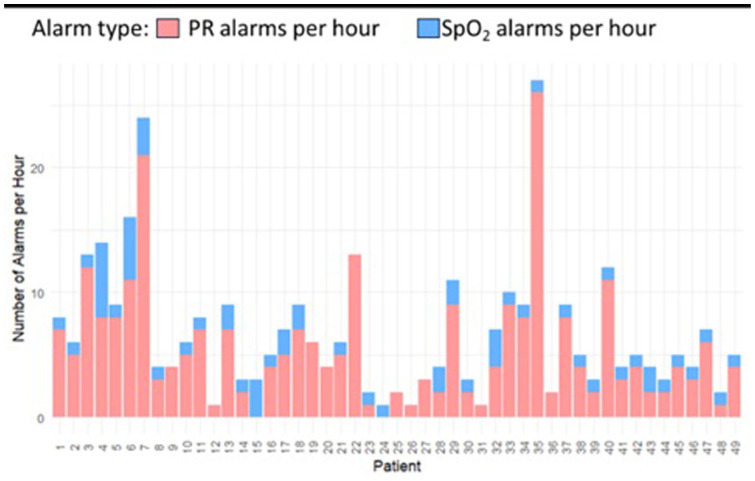 Figure 3
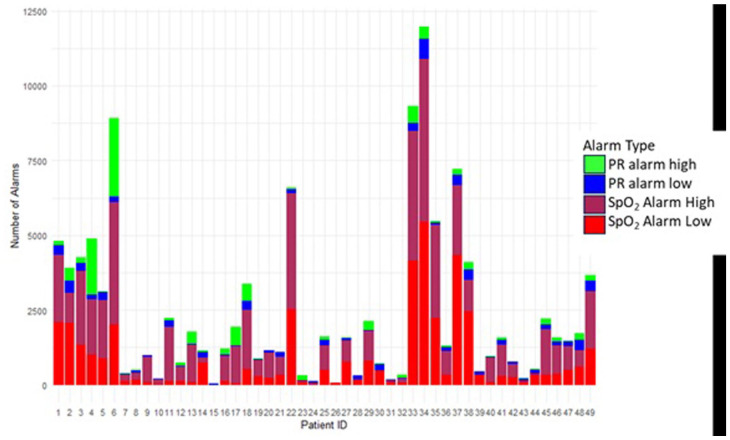 Figure 4
 Figure 5
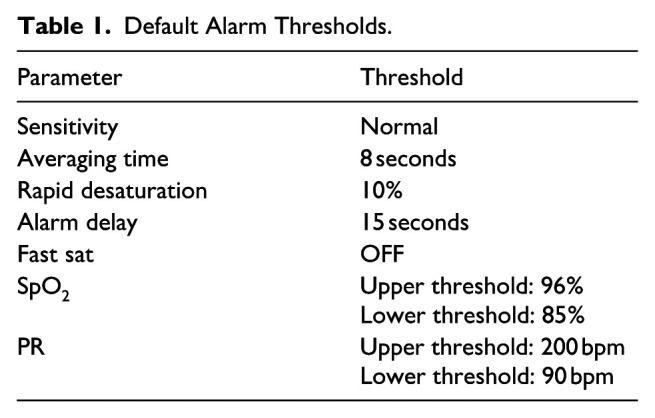 Figure 6
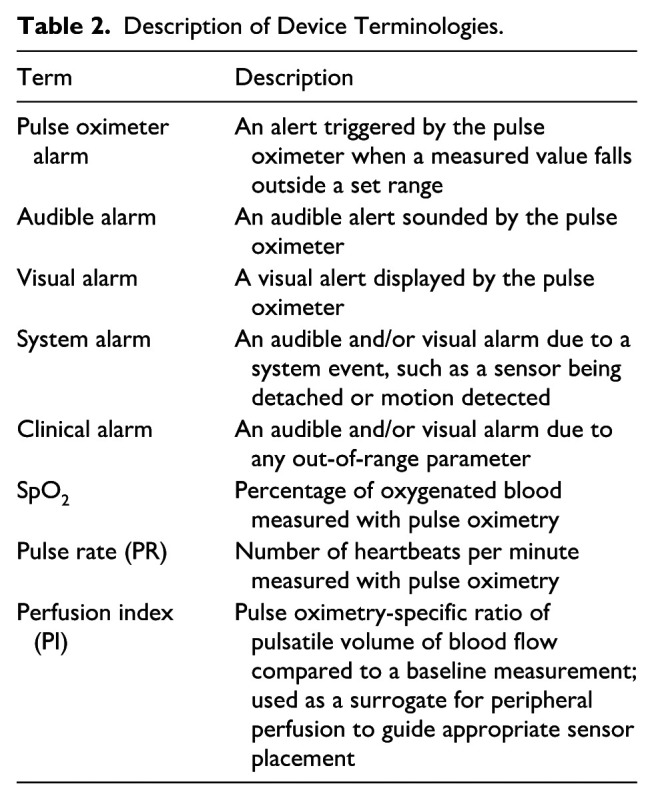 Figure 7
Peer Reviews
No public reviews on file for this paper yet. If you reviewed it on a platform where reviews are public (OpenReview, ICLR, NeurIPS, ICML), you can paste yours below so the community can read it here.
Videos
No videos yet. Explain this paper in a talk, walkthrough, or lecture? Add one.
Taxonomy
TopicsHealthcare Technology and Patient Monitoring · Non-Invasive Vital Sign Monitoring · Neonatal and fetal brain pathology