Cognitive Shifting Ability Does Not Predict Self-Perceived Hearing Difficulties in Adult Hearing-Aid Users
Francesca Molinari Luccini, Henrik Danielsson, Victoria Stenbäck, Elaine Hoi Ning Ng, Emil Holmer

TL;DR
This study found that cognitive shifting ability does not predict hearing difficulties in adults who use hearing aids, while hearing loss and education level do.
Contribution
The novel finding is that cognitive shifting ability does not significantly predict self-reported hearing difficulties in hearing-aid users.
Findings
Less hearing loss predicted lower levels of hearing difficulties across SSQ subscales.
Higher education level was a significant predictor of fewer reported difficulties in the Speech and Spatial subscales.
Cognitive shifting ability was not associated with hearing difficulties in any subscale.
Abstract
Age-related hearing loss (ARHL) often leads to hearing difficulties, impacting communication and daily functioning even among hearing-aid users. While hearing loss and cognitive functions, such as cognitive shifting ability, have been proposed as predictors of hearing difficulties, their specific contributions remain unclear. This study investigated whether hearing loss and cognitive shifting ability predict self-reported hearing difficulties across the Speech, Spatial, and Qualities of Hearing Scale questionnaire (SSQ) subscales in adults with ARHL who use hearing aids, and whether sex moderates these associations, while controlling for age and level of education. A total of 215 adults underwent audiometry, completed a cognitive flexibility task, and answered the SSQ questionnaire, of which 203 (89 females) were included in our analysis. Hierarchical multiple regression analyses…
Genes, proteins, chemicals, diseases, species, mutations and cell lines named across the full text — each resolved to its canonical identifier and authoritative record.
Click any figure to enlarge with its caption.
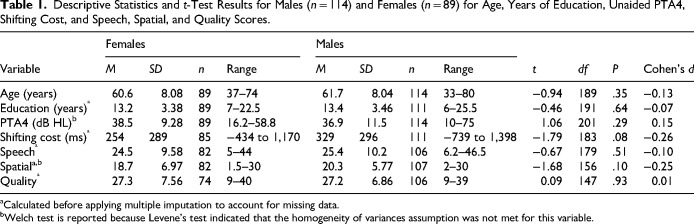 Figure 1
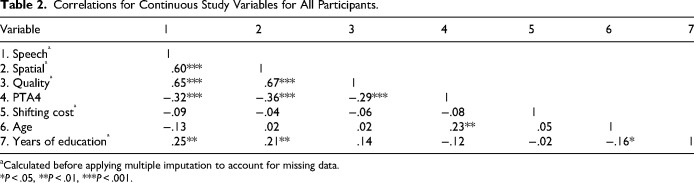 Figure 2
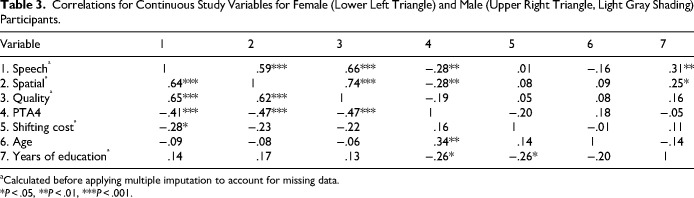 Figure 3
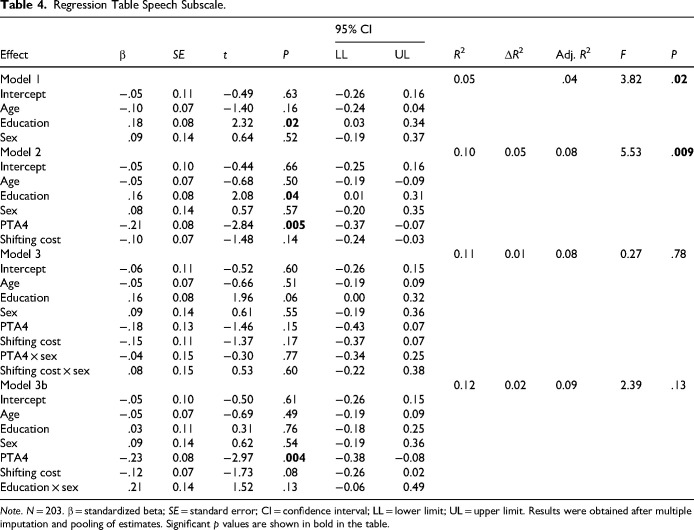 Figure 4
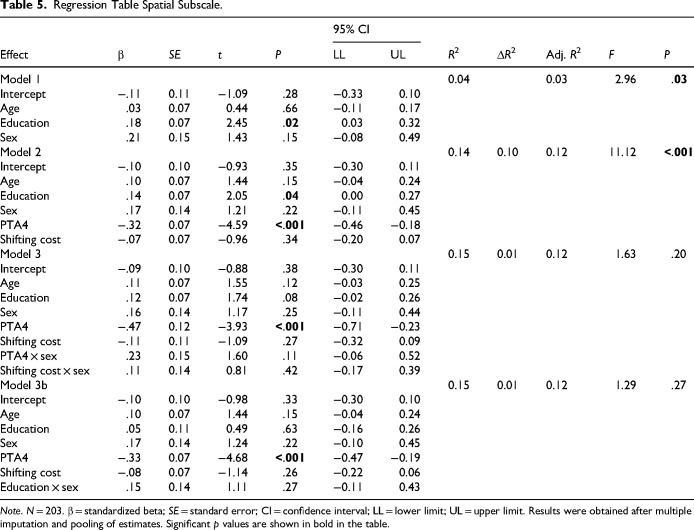 Figure 5
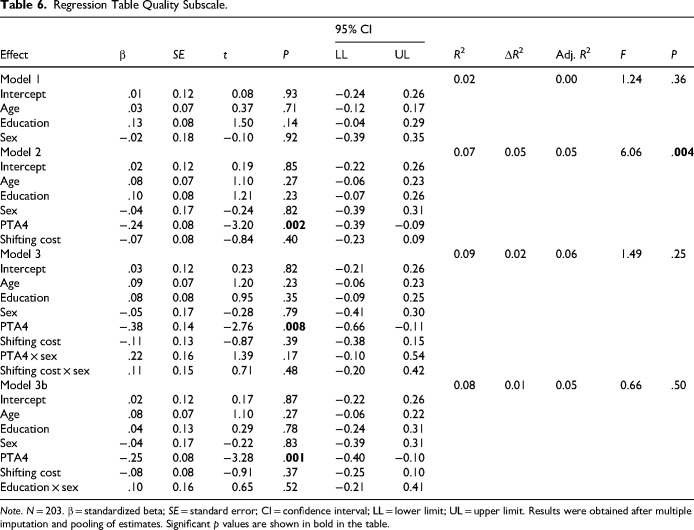 Figure 6
Peer Reviews
No public reviews on file for this paper yet. If you reviewed it on a platform where reviews are public (OpenReview, ICLR, NeurIPS, ICML), you can paste yours below so the community can read it here.
Videos
No videos yet. Explain this paper in a talk, walkthrough, or lecture? Add one.
Taxonomy
TopicsHearing Loss and Rehabilitation · Hearing Impairment and Communication · Hearing, Cochlea, Tinnitus, Genetics