Propensity to Punish in High Psychopathy may Promote Cooperation: Human and Computer Prisoner Dilemma Experiments
Lloyd Balbuena, Nathan Kolla, John Logan

TL;DR
People with high psychopathy can promote cooperation through punishment, and this behavior can thrive in social interactions.
Contribution
Demonstrates that high psychopathy traits can lead to cooperation through punishment and may outcompete reciprocal strategies in social dilemmas.
Findings
High psychopathy individuals earned more against low psychopathy players in prisoner dilemma matches.
High psychopathy strategies outcompeted less cooperative and tit-for-tat strategies in computer simulations.
Psychopathy traits can proliferate in social encounters due to harsh punishment deterring defection.
Abstract
We tested the adaptive hypothesis of psychopathy in human and computer Prisoner Dilemma (PD) matches. From a cohort of 448 male undergraduates who completed the Levenson Self-Report Psychopathy Scale (LSRP), 31 high psychopathic (PP) and 29 low PP students, sampled from upper and lower quartiles of the cohort, played a 40-round PD match in which real money was at stake. The human matches were of three kinds: Low PP versus Low PP, Low PP versus High PP, and High PP versus High PP. In computer simulations, the empirical defection probabilities from High and Low PP human players were entered in a three-player round-robin match with tit-for-tat (TFT) or a less cooperative variant. The strategies proliferated or dwindled in subsequent generations in proportion to their winnings and the matches continued until two players became extinct. In the human matches, High PP players had higher…
Genes, proteins, chemicals, diseases, species, mutations and cell lines named across the full text — each resolved to its canonical identifier and authoritative record.
Click any figure to enlarge with its caption.
 Figure 1
 Figure 2
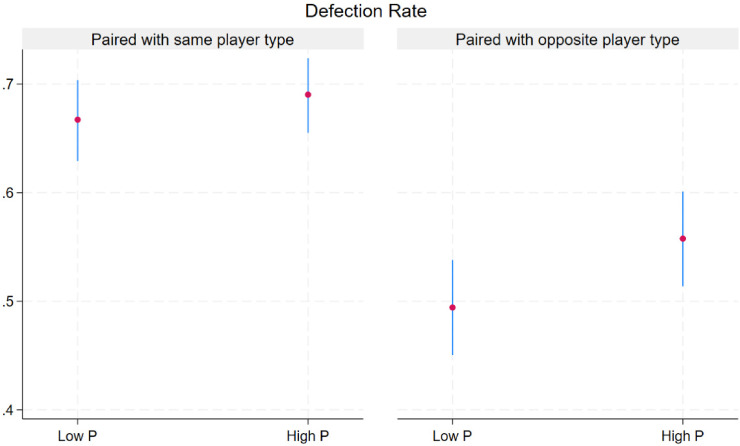 Figure 1
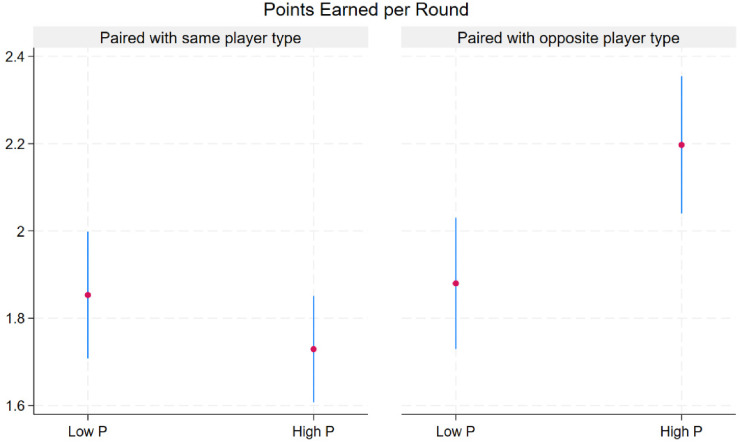 Figure 2
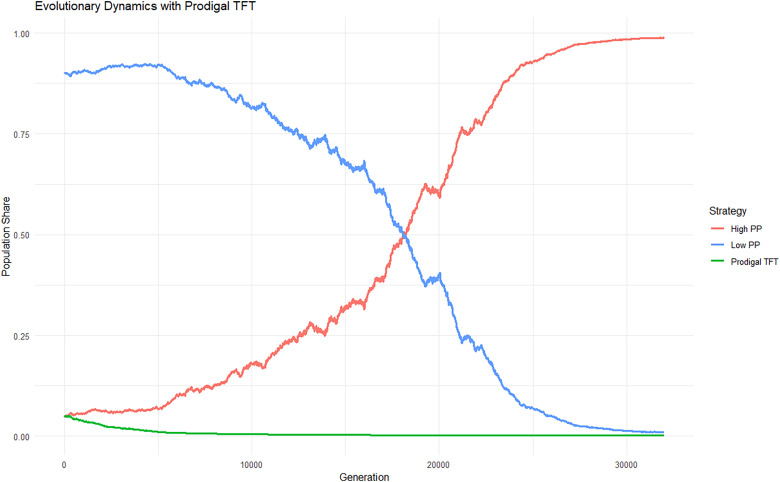 Figure 3
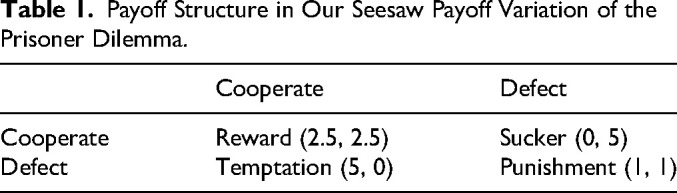 Figure 6
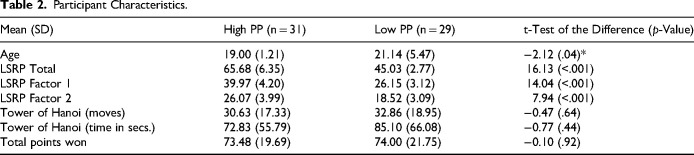 Figure 7
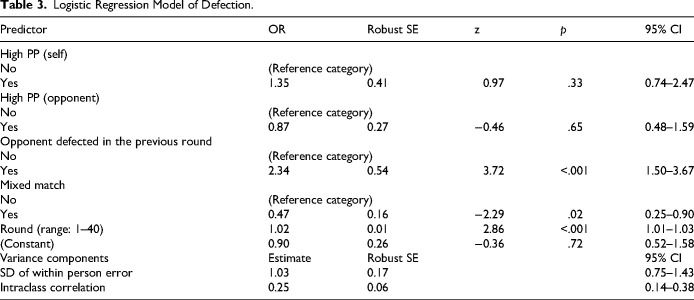 Figure 8
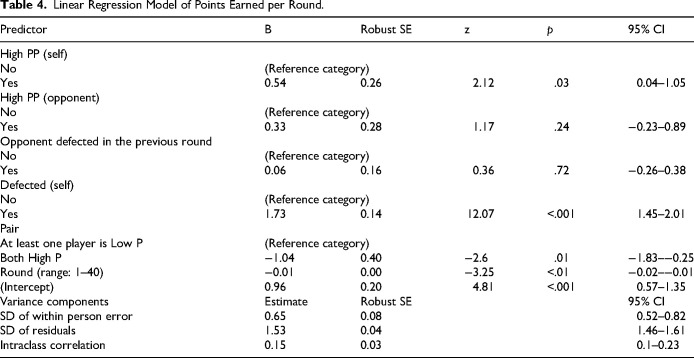 Figure 9
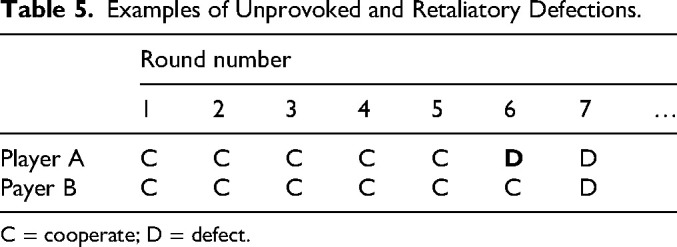 Figure 10
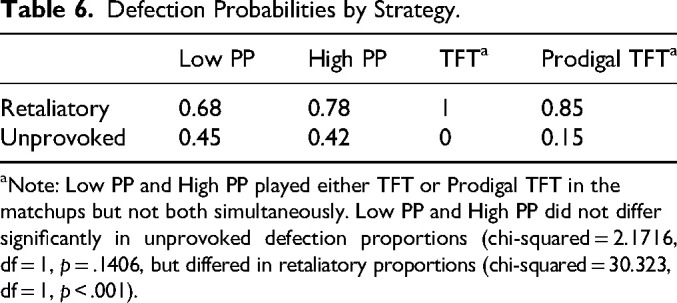 Figure 11
 Figure 12
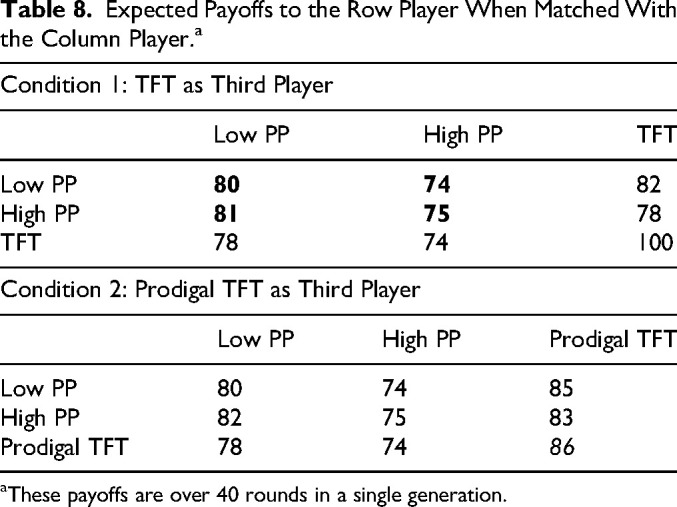 Figure 13
Peer Reviews
No public reviews on file for this paper yet. If you reviewed it on a platform where reviews are public (OpenReview, ICLR, NeurIPS, ICML), you can paste yours below so the community can read it here.
Videos
No videos yet. Explain this paper in a talk, walkthrough, or lecture? Add one.
Taxonomy
TopicsPsychopathy, Forensic Psychiatry, Sexual Offending · Evolutionary Game Theory and Cooperation · Gambling Behavior and Treatments