A Descriptive Study of the Attitudes, Characteristics and Behaviours Differentiating Men Who Do and Do Not Want Help for Their Sexual Interest in Children
Michael Salter, Tyson Whitten, Delanie Woodlock, Mengyao Lu, Maria Lamond, Georgia Naldrett, Matt Tyler

TL;DR
This study explores differences between men who seek help for their sexual interest in children and those who do not, based on survey data from over 4,900 men in Australia, the UK, and the US.
Contribution
The study provides new insights into the characteristics and motivations of men who seek help for child sexual interest, which can inform secondary prevention programs.
Findings
Men seeking help were more likely to be married, work with children, and have stronger social bonds.
Offending behavior is a key motivator for seeking help, with concerns about relationships and reputation playing a role.
Those seeking help also showed higher rates of other sexual deviancy and used encrypted apps to hide their behavior.
Abstract
In the field of child sexual abuse prevention, secondary prevention services seek to engage with people concerned about their sexual interest and behaviours towards children prior to the onset of offending. There is a lack of robust information to inform program development and to seek to engage earlier with people concerned about their risk to children. Accordingly, this paper reports on the findings of a survey of 4,918 men, drawn from representative samples in Australia, the United Kingdom, and the United States. The paper described the proportion of men in the survey with a sexual interest in children (n = 642), and the factors that distinguish between men who wanted help for that interest and men who did not want help. Study findings indicate that offending behaviour is a key motivator for help-seeking amongst men with a sexual interest in children. Men who wanted help were…
Genes, proteins, chemicals, diseases, species, mutations and cell lines named across the full text — each resolved to its canonical identifier and authoritative record.
Click any figure to enlarge with its caption.
 Figure 1
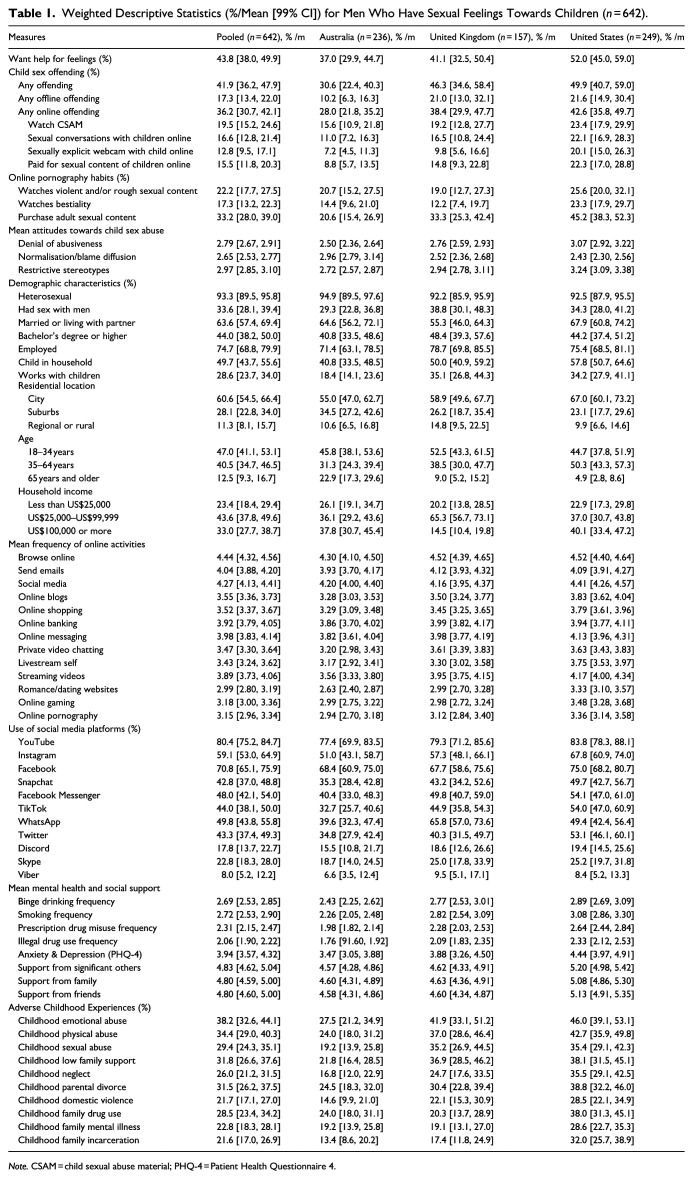 Figure 2
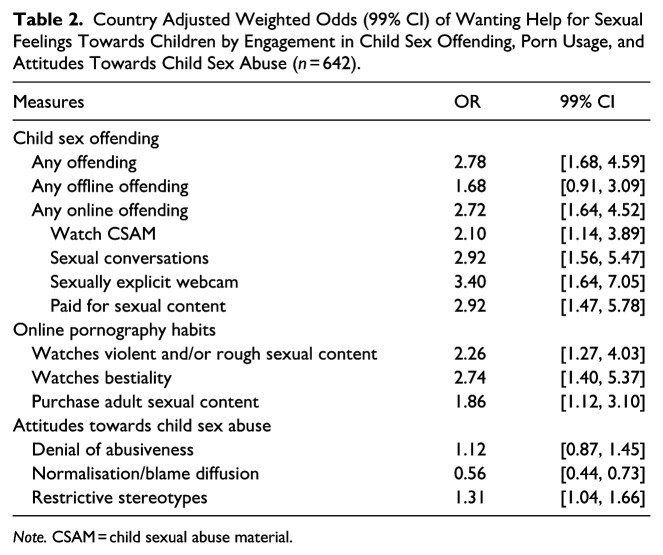 Figure 3
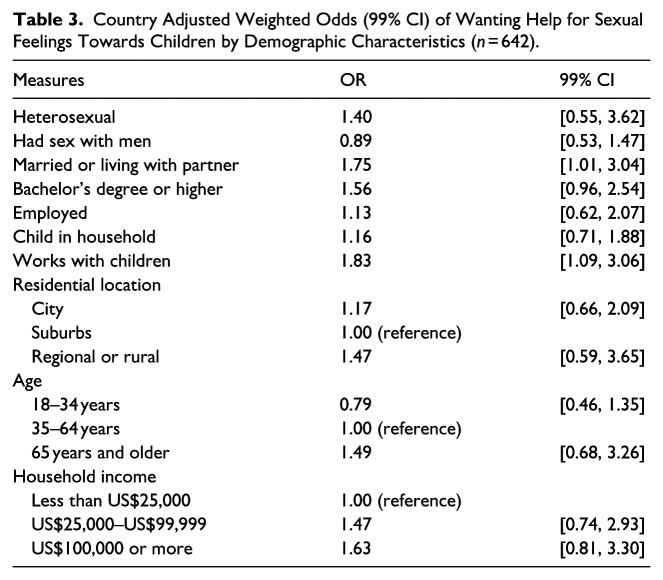 Figure 4
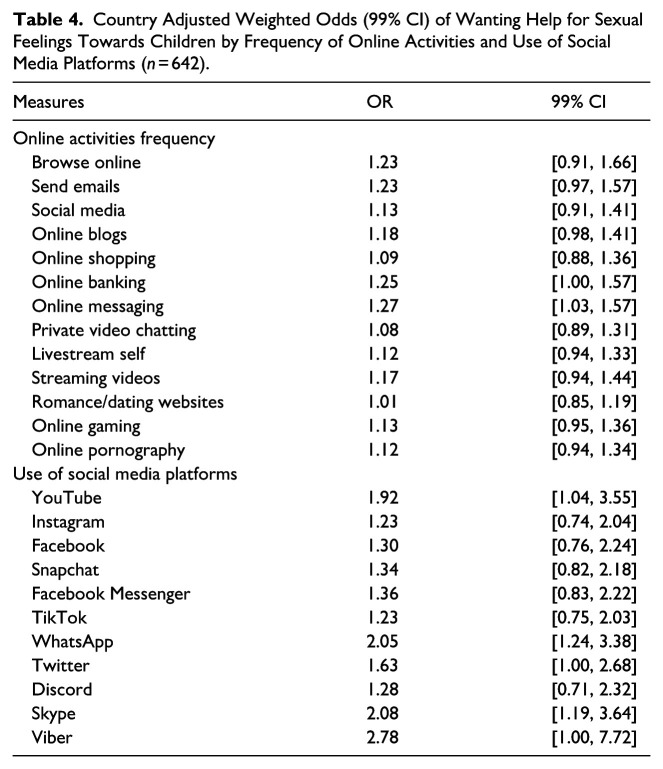 Figure 5
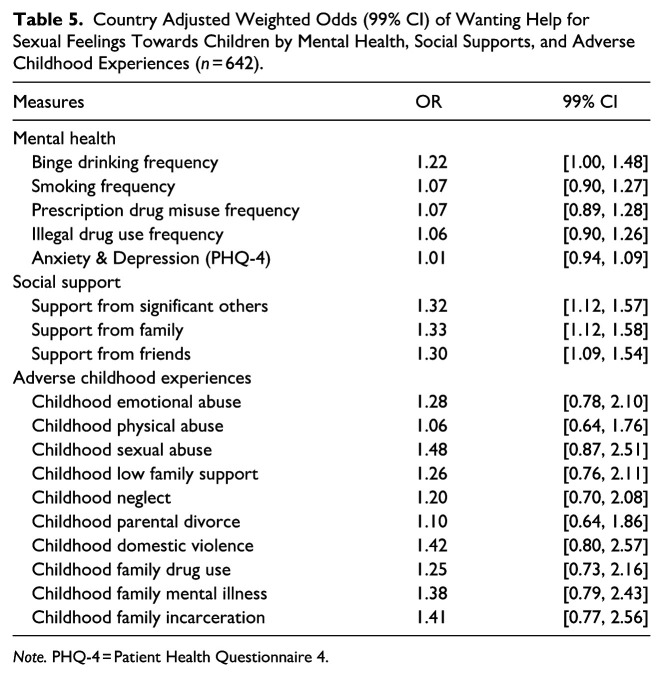 Figure 6
Peer Reviews
No public reviews on file for this paper yet. If you reviewed it on a platform where reviews are public (OpenReview, ICLR, NeurIPS, ICML), you can paste yours below so the community can read it here.
Videos
No videos yet. Explain this paper in a talk, walkthrough, or lecture? Add one.
Taxonomy
TopicsPsychopathy, Forensic Psychiatry, Sexual Offending · Child Abuse and Trauma · Sexuality, Behavior, and Technology