Humanoid Robotic Loading Enhances Mechanotransduction in Tendon Tissue Engineering
Zekun Liu, Jinrong Lin, Tania Choreno Machain, Muhammad Hanif Nadhif, Yuyang Wei, Nicole Dvorak, Dylan Yeo, Yu Kiu Victor Chan, Alona Kharchenko, Rafael Hostettler, Antoine Jerusalem, Sarah Waters, Sarah Snelling, Pierre-Alexis Mouthuy

TL;DR
A humanoid robotic bioreactor mimics shoulder movements to improve tendon tissue engineering by enhancing cell alignment and mechanotransduction.
Contribution
A novel humanoid robotic bioreactor is introduced to deliver human-like multiaxial loading for tendon tissue engineering.
Findings
Human-like multiaxial loading enhances cell alignment and mechanotransduction pathway activation.
Dynamic loading induces gene and protein expression changes, particularly in the PI3K–Akt signaling pathway.
Transcriptional profiles suggest phenotypic adaptation toward tenogenic programs rather than cytotoxic damage.
Abstract
Mechanical stimulation is essential in tissue engineering and regenerative medicine for proper tissue maturation. However, conventional uniaxial platforms fail to reproduce the multiaxial loading experienced in vivo. In this study, we present a humanoid robotic bioreactor capable of delivering human-like shoulder motions to engineered tendon constructs, enabling controlled multiaxial stimulation with real-time strain monitoring. Human mesenchymal stem cells were cultured on decellularized tendon scaffolds and subjected to adduction–abduction loading at peak strains of approximately 3.5% and 9.5% under external forces of 25 and 50 N, respectively. Strain levels were directly quantified in situ using a flexible sensor integrated within the bioreactor. The transparent bioreactor membrane allowed noninvasive observation while simultaneously applying mechanical stimulation over 14 d, with…
Genes, proteins, chemicals, diseases, species, mutations and cell lines named across the full text — each resolved to its canonical identifier and authoritative record.
Click any figure to enlarge with its caption.
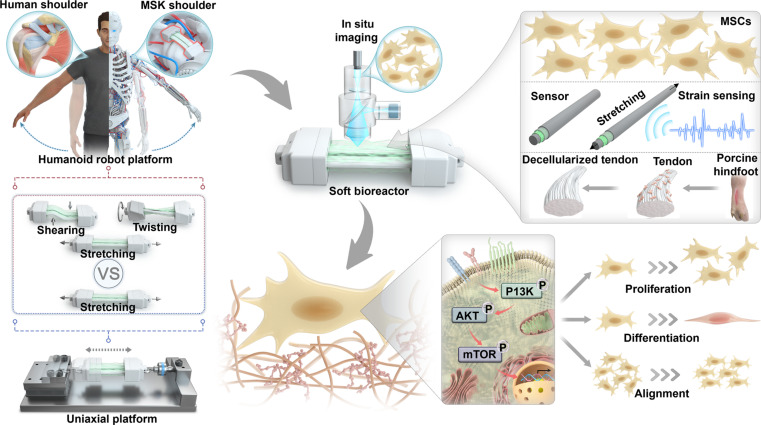 Figure 1
 Figure 2
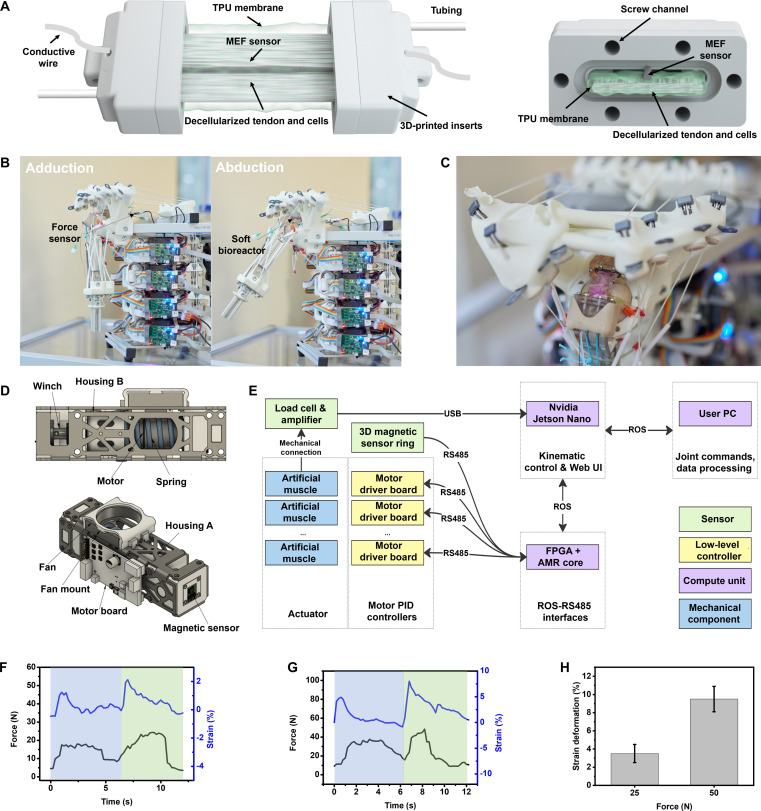 Figure 3
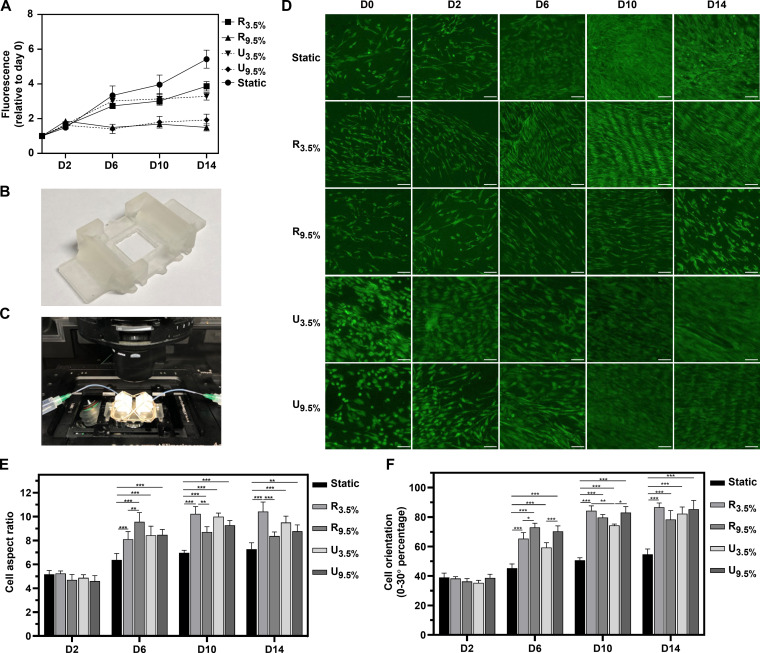 Figure 4
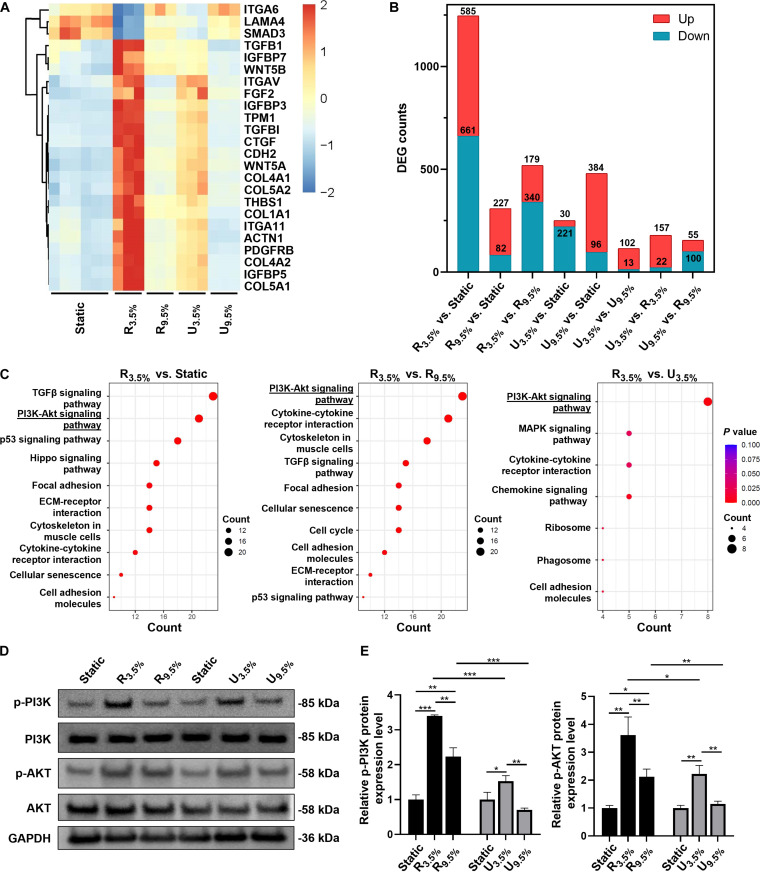 Figure 5
Peer Reviews
No public reviews on file for this paper yet. If you reviewed it on a platform where reviews are public (OpenReview, ICLR, NeurIPS, ICML), you can paste yours below so the community can read it here.
Videos
No videos yet. Explain this paper in a talk, walkthrough, or lecture? Add one.
Taxonomy
TopicsTendon Structure and Treatment · Soft Robotics and Applications · Prosthetics and Rehabilitation Robotics