pan-ASLM: Axially Swept Light Sheet Microscopy for Fast and High-Resolution Imaging of Expanded Samples
Hannahmariam T. Mekbib, Lasse Pærgård Andersen, Shuwen Zhang, Jonathan Gulcicek, Yuan Tian, Jack R. Ross, Mark D. Lessard, Joerg Bewersdorf

TL;DR
This paper introduces pan-ASLM, a new light-sheet microscope for high-resolution imaging of expanded biological samples.
Contribution
The novel contribution is pan-ASLM, a microscope with faster imaging, larger field of view, and better resolution for expanded samples.
Findings
pan-ASLM achieves 640x640 µm² field of view with 586 nm lateral and 428 nm axial resolution.
It offers ~1200× faster imaging speed than standard confocal microscopes.
Validated on HeLa cells and mouse kidney and brain tissue.
Abstract
Expansion microscopy, a super-resolution fluorescence microscopy technique in which samples are expanded up to ~8000 times (after 20-fold expansion) their original volume, places high demands on the microscopes used to image the expanded samples. To reveal nanoscale cellular ultrastructure in meaningful sample volumes, the instruments need to feature a large field of view and working distance. Simultaneously, they need to offer a high three-dimensional resolution to avoid counteracting the resolution improvement achieved by the expansion process. Here, we present pan-ASLM, a high resolution, large field-of-view light-sheet microscope developed for expanded samples, based on the Axially Swept Light Sheet Microscopy (ASLM) technique. pan-ASLM allows imaging over a 640 x 640 µm2 field of view with lateral and axial resolutions of 586 and 428 nm, respectively, and features an image…
Genes, proteins, chemicals, diseases, species, mutations and cell lines named across the full text — each resolved to its canonical identifier and authoritative record.
Click any figure to enlarge with its caption.
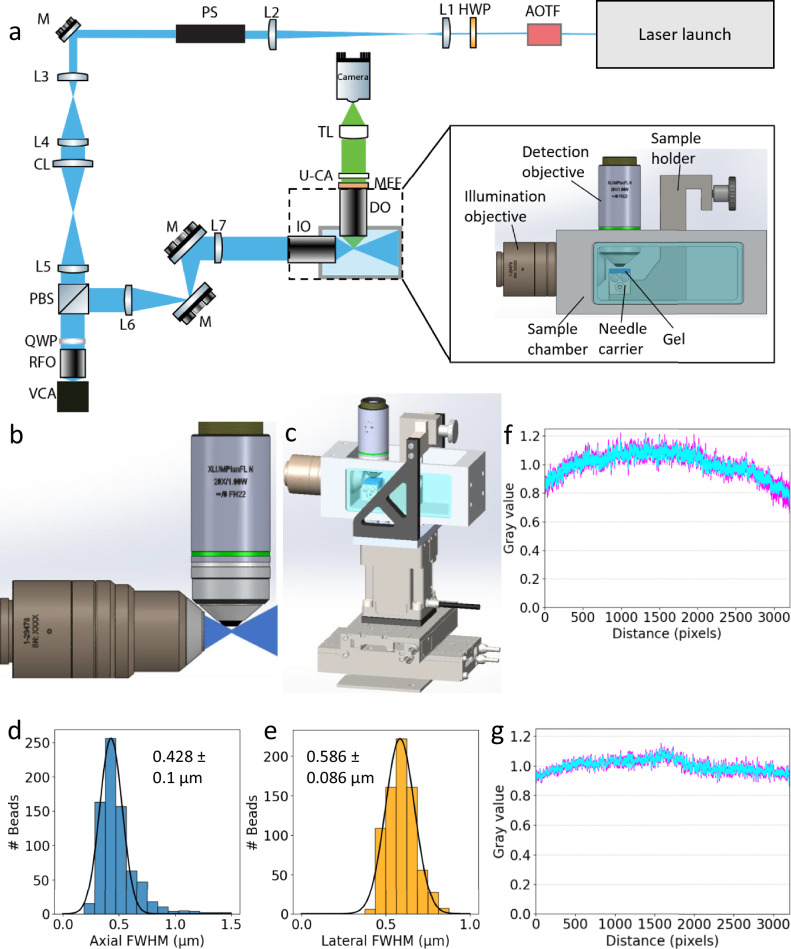 Figure 1
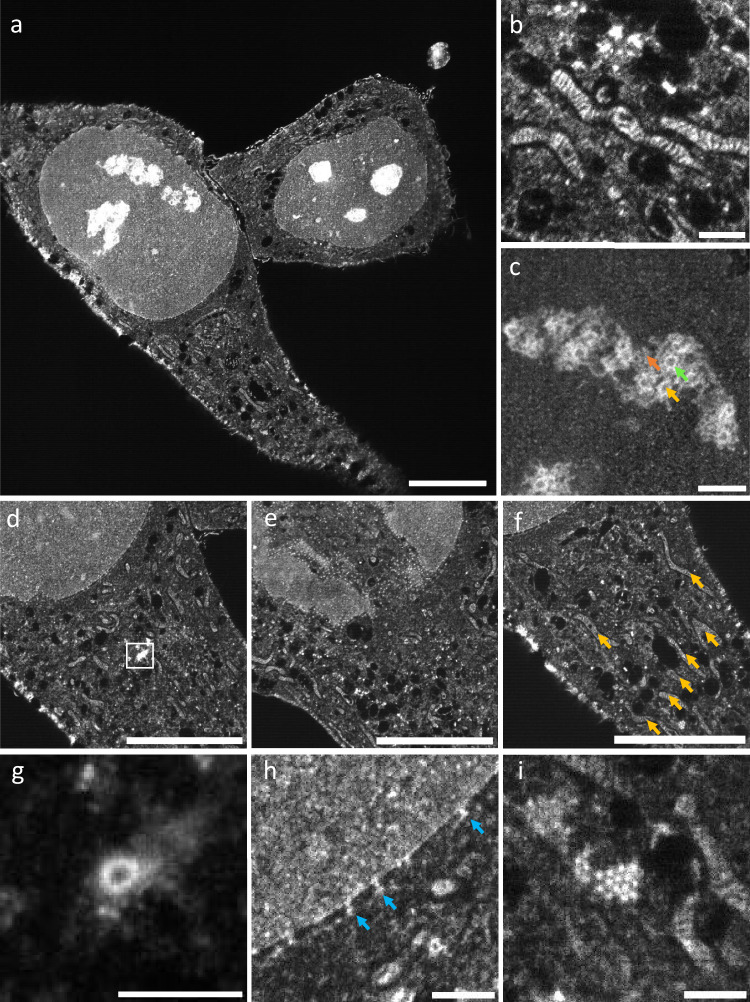 Figure 2
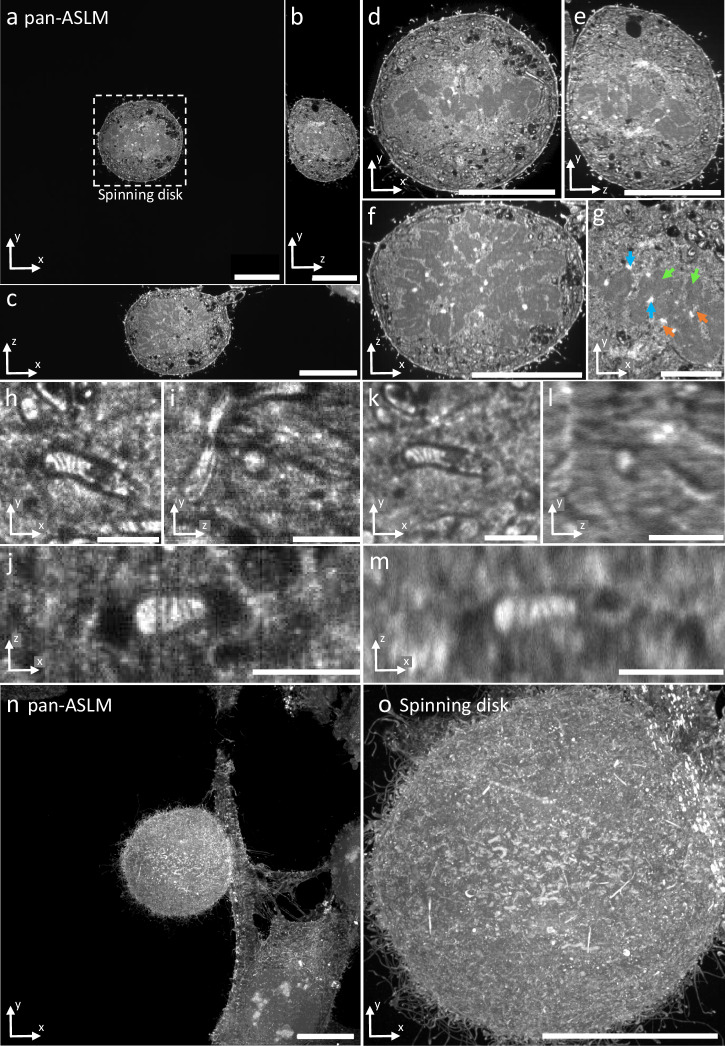 Figure 3
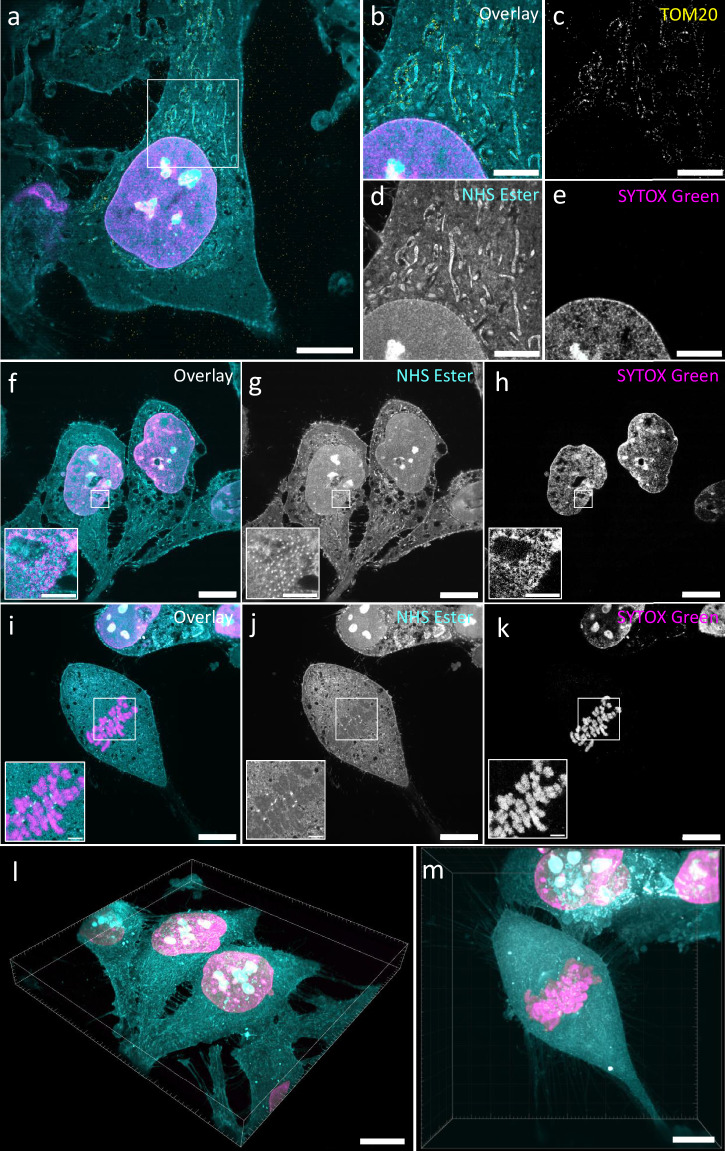 Figure 4
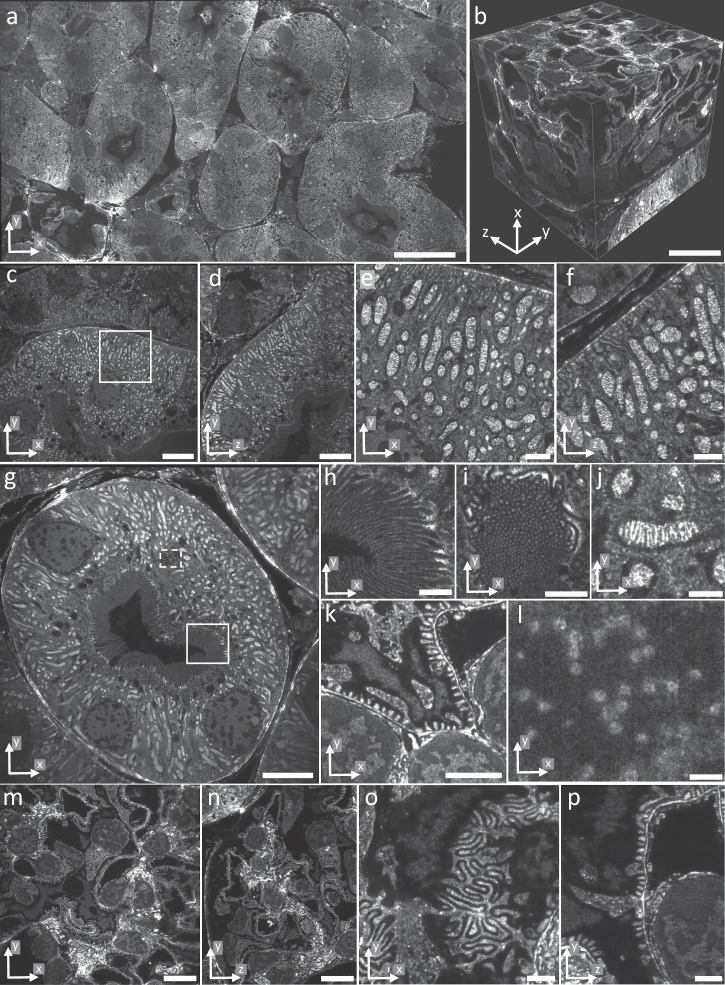 Figure 5
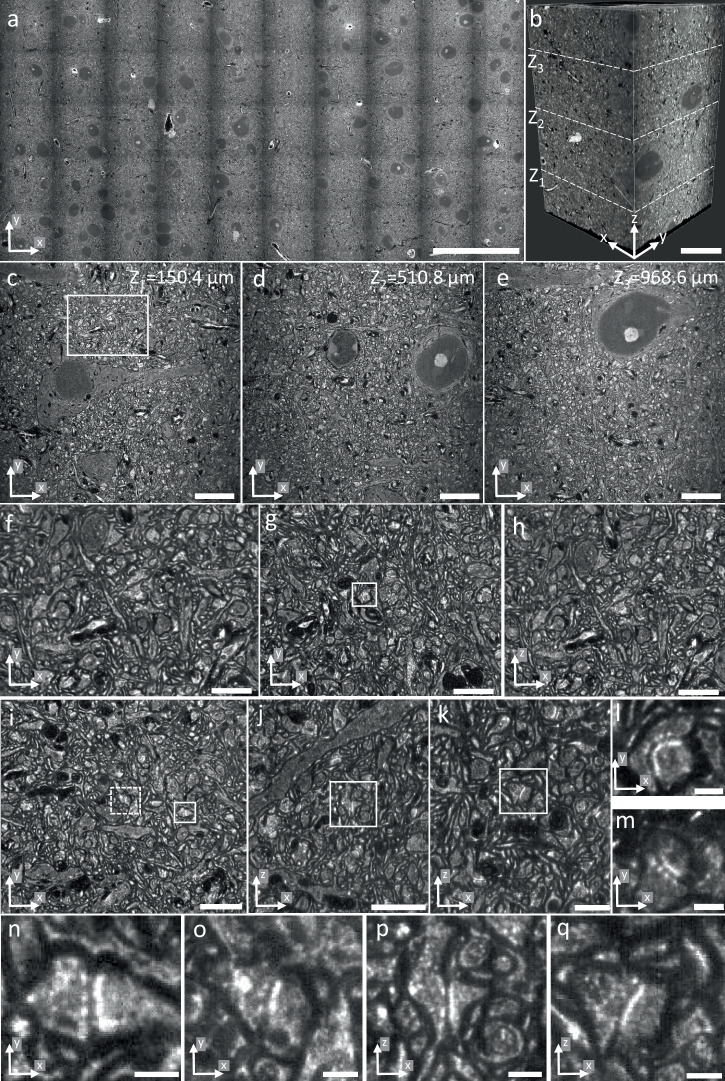 Figure 6
Peer Reviews
No public reviews on file for this paper yet. If you reviewed it on a platform where reviews are public (OpenReview, ICLR, NeurIPS, ICML), you can paste yours below so the community can read it here.
Videos
No videos yet. Explain this paper in a talk, walkthrough, or lecture? Add one.
Taxonomy
TopicsAdvanced Fluorescence Microscopy Techniques · Digital Holography and Microscopy · Random lasers and scattering media