Extended Shine-Dalgarno motifs govern translation initiation in Staphylococcus aureus
Maximilian P. Kohl, Roberto Bahena-Ceron, Béatrice Chane-Woon-Ming, Maria Kompatscher, Matthias D. Erlacher, Charles Barchet, Ottilie von Loeffelholz, Pascale Romby, Bruno P. Klaholz, Stefano Marzi

TL;DR
This paper shows how Staphylococcus aureus uses unique RNA structures to control protein production, which differs from other bacteria and affects biofilm formation.
Contribution
The study reveals extended Shine-Dalgarno motifs in S. aureus that enable species-specific translation initiation and uORF-mediated regulation.
Findings
Extended Shine-Dalgarno motifs in S. aureus enable specific translation initiation incompatible with E. coli ribosomes.
Non-canonical start codons and uORF-mediated regulation modulate biofilm regulator expression in S. aureus.
Codon rarity, ribosome pausing, and arginine availability link nutrient sensing to biofilm formation in S. aureus.
Abstract
Regulation of translation initiation is central to bacterial adaptation, but species-specific mechanisms remain poorly understood. We present high-resolution mapping of translation start sites in Staphylococcus aureus, revealing distinct features of initiation alongside numerous unannotated small ORFs. Our analysis, combined with cryo-EM of a native mRNA-ribosome complex, shows that S. aureus relies on extended, start codon proximal Shine-Dalgarno (SD) interactions, creating specificity against phylogenetically distant bacteria. Several natural S. aureus initiation sites are not correctly decoded by E. coli ribosomes. We identify new and conserved non-canonical start codons, whose regulatory initiation sites contain these characteristic extended SD sequence motifs. Finally, we characterize a novel example of uORF-mediated translational control in S. aureus, demonstrating that…
Genes, proteins, chemicals, diseases, species, mutations and cell lines named across the full text — each resolved to its canonical identifier and authoritative record.
Click any figure to enlarge with its caption.
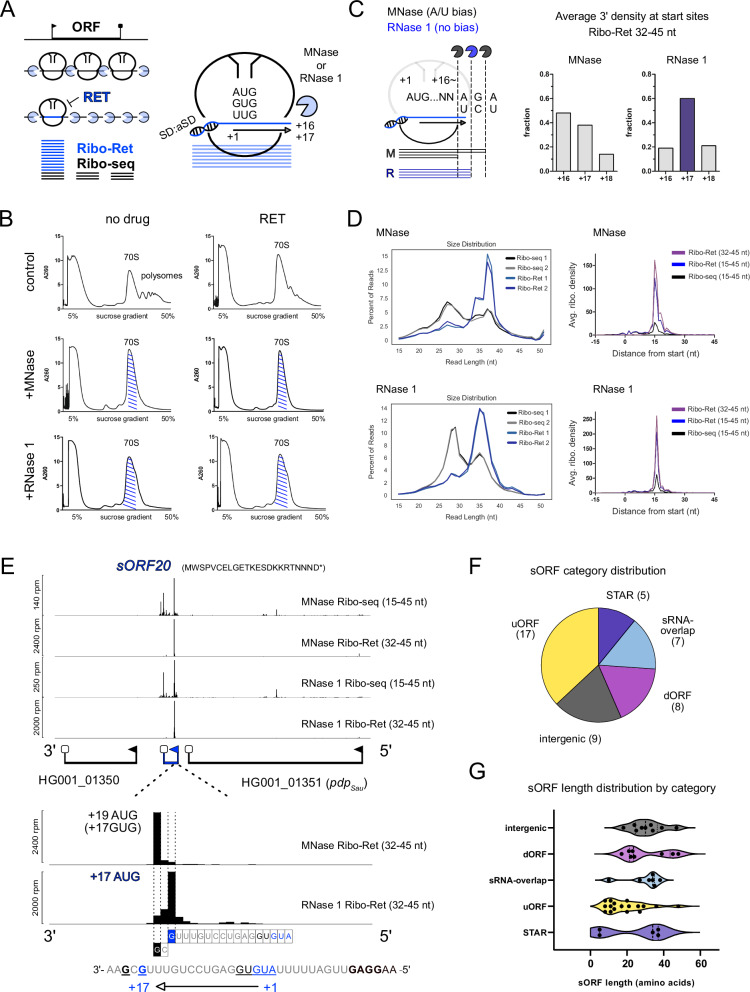 Figure 1
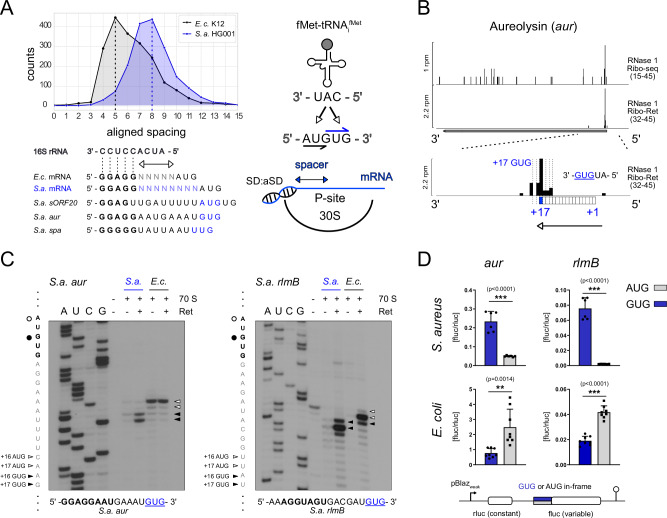 Figure 2
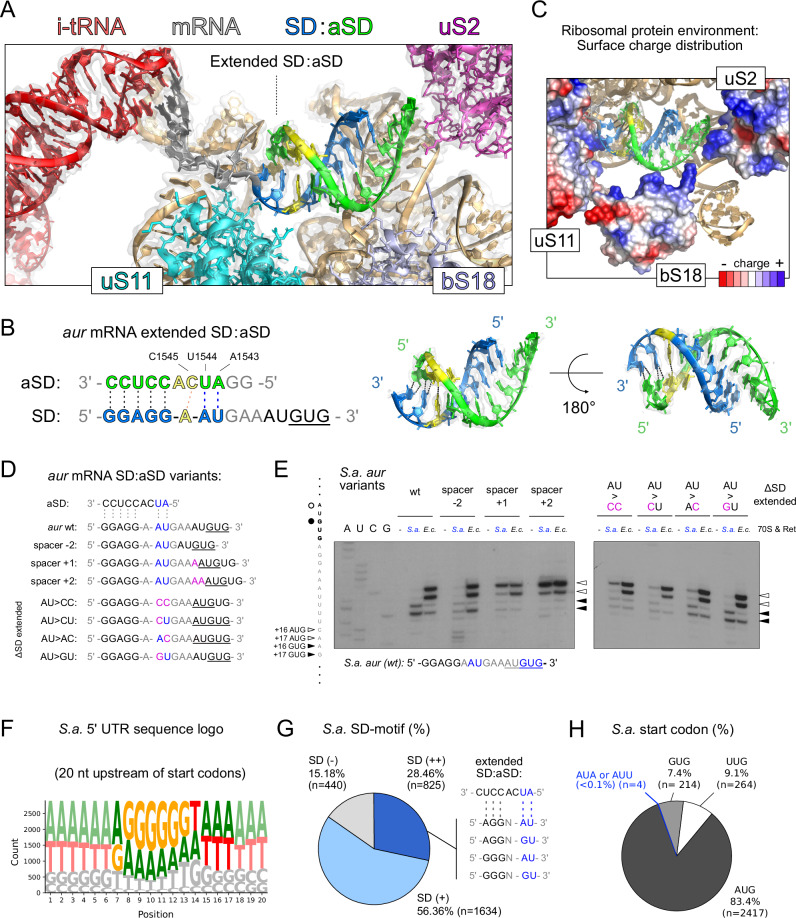 Figure 3
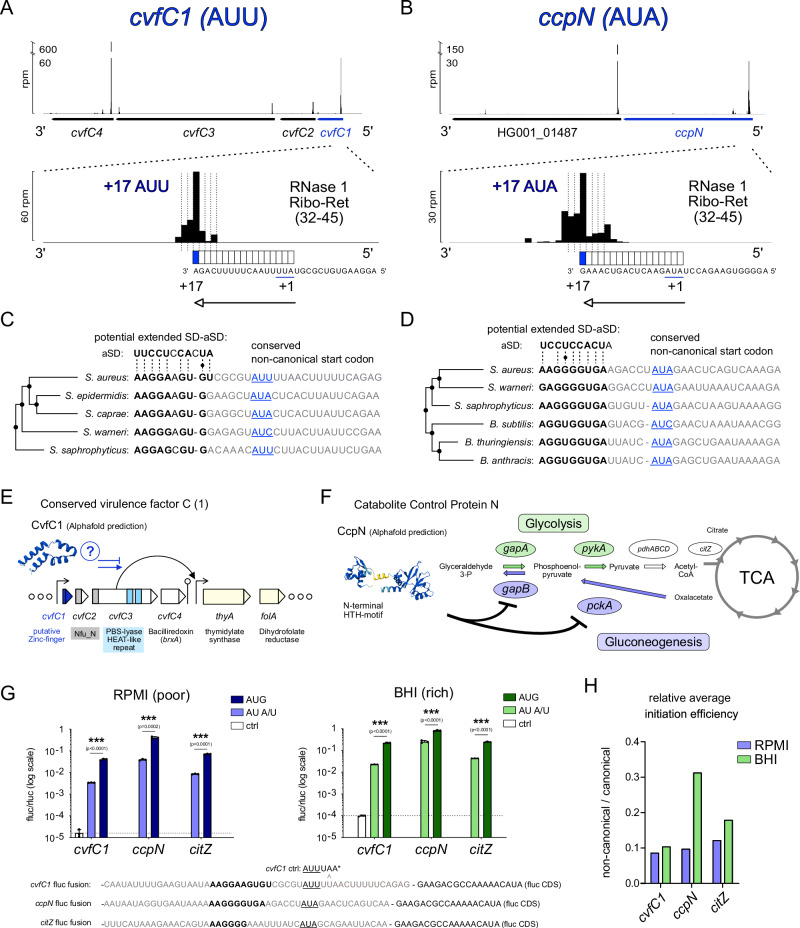 Figure 4
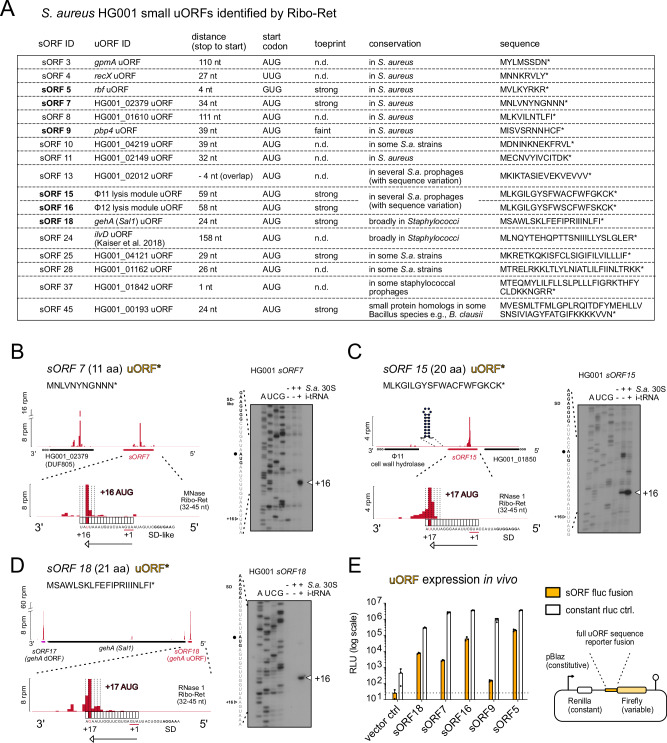 Figure 5
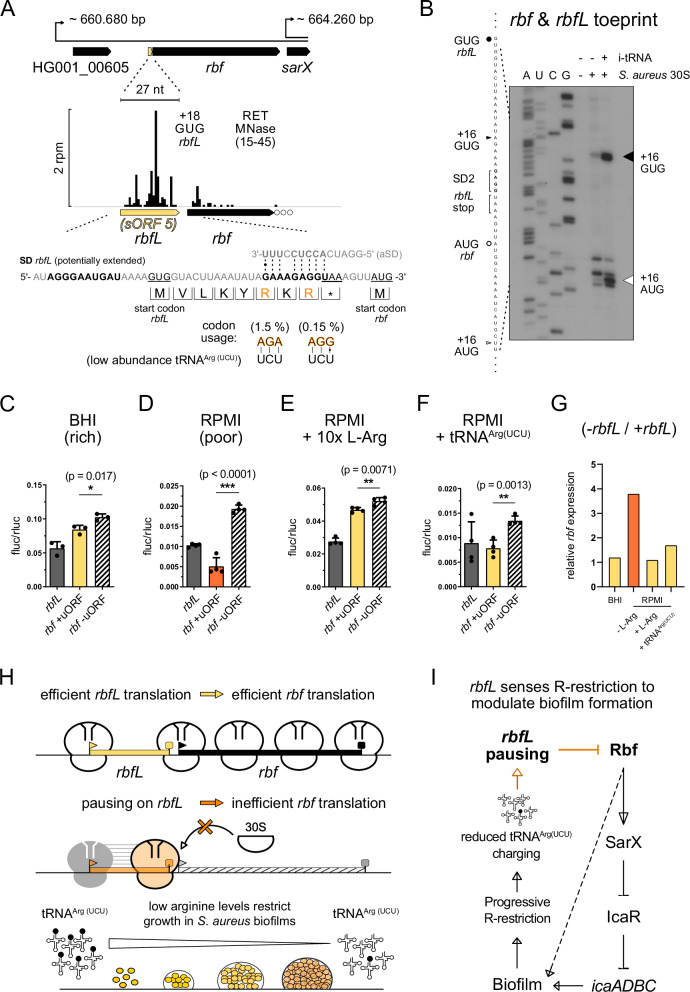 Figure 6
Peer Reviews
No public reviews on file for this paper yet. If you reviewed it on a platform where reviews are public (OpenReview, ICLR, NeurIPS, ICML), you can paste yours below so the community can read it here.
Videos
No videos yet. Explain this paper in a talk, walkthrough, or lecture? Add one.
Taxonomy
TopicsRNA and protein synthesis mechanisms · Bacterial Genetics and Biotechnology · Antimicrobial Resistance in Staphylococcus