Single-pot mechanochemically-enabled fluorine atom closed-loop economy using PFASs as fluorinating agents
Hao Long, Georgina Kirby, Lutz Ackermann

TL;DR
The paper introduces a simple, single-step method to break down harmful 'forever chemicals' and reuse their fluorine atoms in other molecules.
Contribution
A novel mechanochemical defluorination method that enables fluorine recycling from PFASs without high temperatures or harsh reagents.
Findings
The method efficiently transfers fluorine from PFASs to organic molecules in a single pot.
It works on fluorinated polymers like PVDF and PTFE, enabling sustainable breakdown of persistent chemicals.
The process requires minimal purification and scales well to larger quantities.
Abstract
Per- and polyfluoroalkyl substances (PFASs), also known as “forever chemicals”, pose an increasing threat to the environment and human health. Despite recent advancements in PFASs destruction, the recycling processes for such molecules remain limited to methods using high-temperatures or strong reducing agents. Sustainable degradation methods for PFASs, along with the subsequent utilization or recycling of the resulting fluorides, are indeed highly beneficial. In this study, we present a user-friendly, single-pot mechanochemical defluorination approach for fluorine transfer from PFASs to organic molecules. The high efficiency of this mechanochemical system obviates subsequent purification steps, requiring only minimal solvent filtration, even on a decagram scale. Furthermore, this strategy can be extended to the defluorination of everyday fluoroplastic and fluorinated polymers, such as…
Genes, proteins, chemicals, diseases, species, mutations and cell lines named across the full text — each resolved to its canonical identifier and authoritative record.
Click any figure to enlarge with its caption.
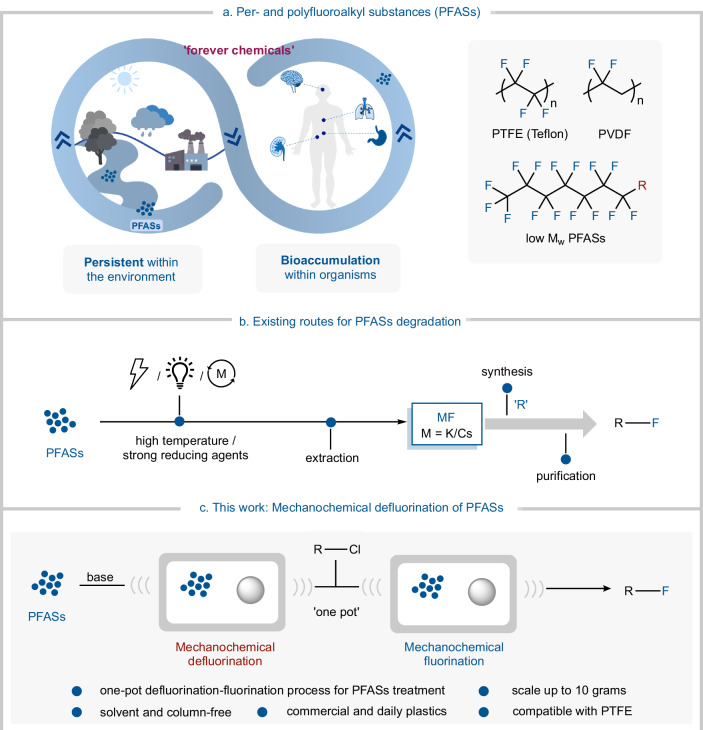 Figure 1
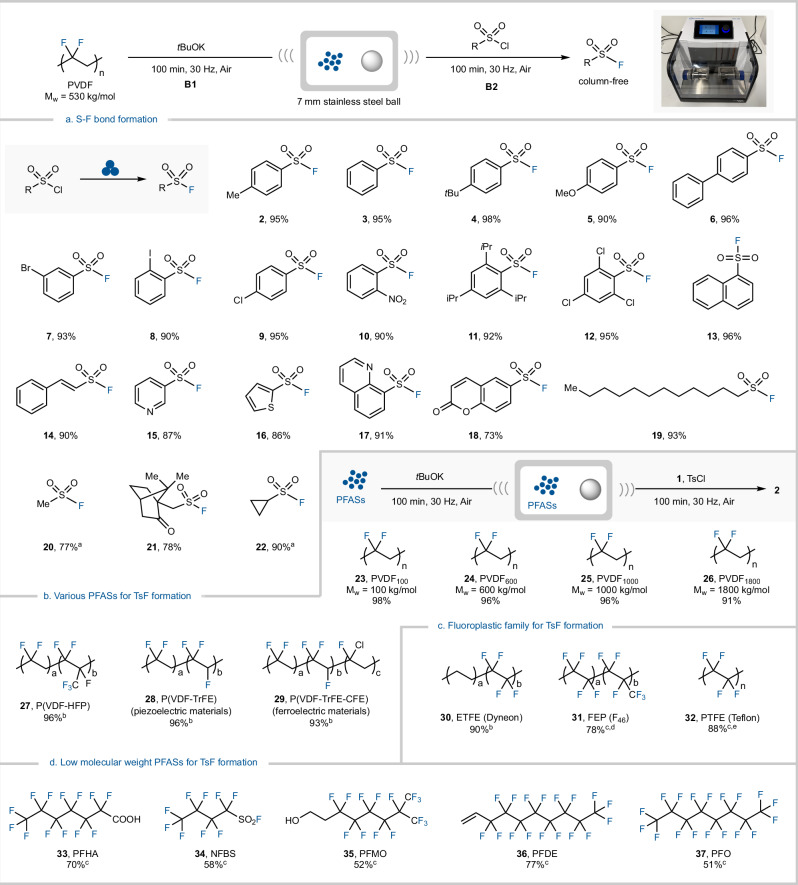 Figure 2
 Figure 3
 Figure 4
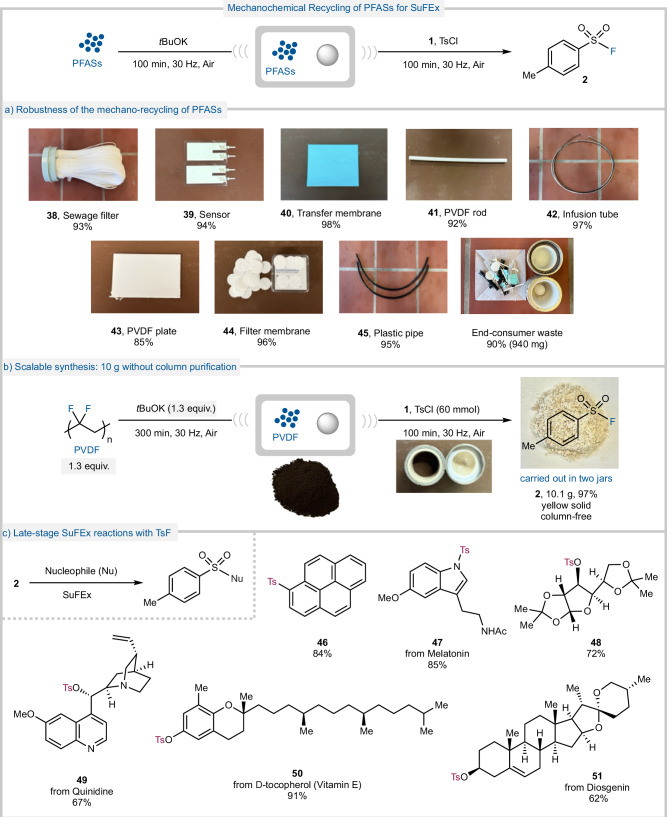 Figure 5
Peer Reviews
No public reviews on file for this paper yet. If you reviewed it on a platform where reviews are public (OpenReview, ICLR, NeurIPS, ICML), you can paste yours below so the community can read it here.
Videos
No videos yet. Explain this paper in a talk, walkthrough, or lecture? Add one.
Taxonomy
TopicsPer- and polyfluoroalkyl substances research · Fluoride Effects and Removal · Fluorine in Organic Chemistry