Toward cardiac electrophysiology digital twins with an efficient open source scalable solver on GPU clusters
Lucas Arantes Berg, Rafael Sachetto Oliveira, Julia Camps, Lucas Marins Ramalho de Lima, Joventino de Oliveira Campos, Zhinuo Jenny Wang, Ruben Doste, Alfonso Bueno-Orovio, Rodrigo Weber dos Santos, Blanca Rodriguez

TL;DR
This paper introduces an open-source GPU-based solver for efficient and accurate cardiac simulations, enabling faster and scalable modeling of heart electrophysiology.
Contribution
The novel contribution is an open-source GPU-based cardiac electrophysiology solver with concurrent simulation dispatch and Purkinje network calibration for enhanced scalability and speed.
Findings
The solver achieves a 10.94× speedup over CPU-based solutions and scales to 512 simulations on 128 compute nodes.
Biventricular mesh simulations with millions of control volumes are completed in under 24 to 303 minutes using a human-based cellular model.
Abstract
Modelling and simulation are essential in biomedicine, and specifically in computational cardiology. Reliable, efficient and accurate solvers are critical. This study presents an open-source, GPU-based cardiac electrophysiology solver for scalable multiscale simulations (monoalg3d), incorporating conduction system calibration and performance optimization. The solver employs the monodomain equation coupled with the Purkinje network, solved via the finite volume method, featuring a GPU-based linear solver and concurrent simulation dispatch with MPI. We demonstrate a \documentclass[12pt]{minimal} \usepackage{amsmath} \usepackage{wasysym} \usepackage{amsfonts} \usepackage{amssymb} \usepackage{amsbsy} \usepackage{mathrsfs} \usepackage{upgreek} \setlength{\oddsidemargin}{-69pt} \begin{document}\end{document} speedup over a CPU-based…
Genes, proteins, chemicals, diseases, species, mutations and cell lines named across the full text — each resolved to its canonical identifier and authoritative record.
Click any figure to enlarge with its caption.
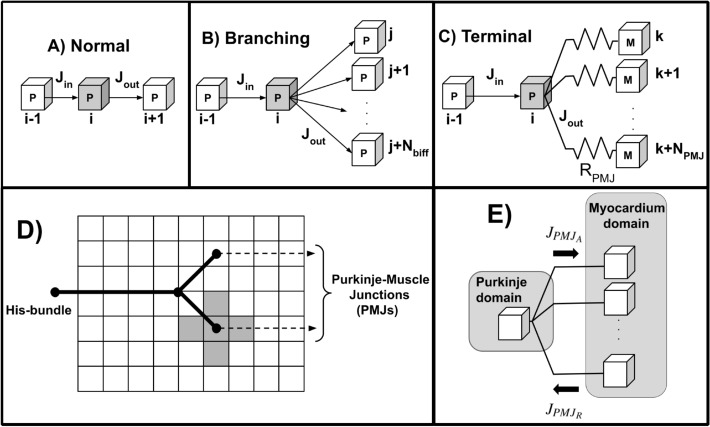 Figure 1
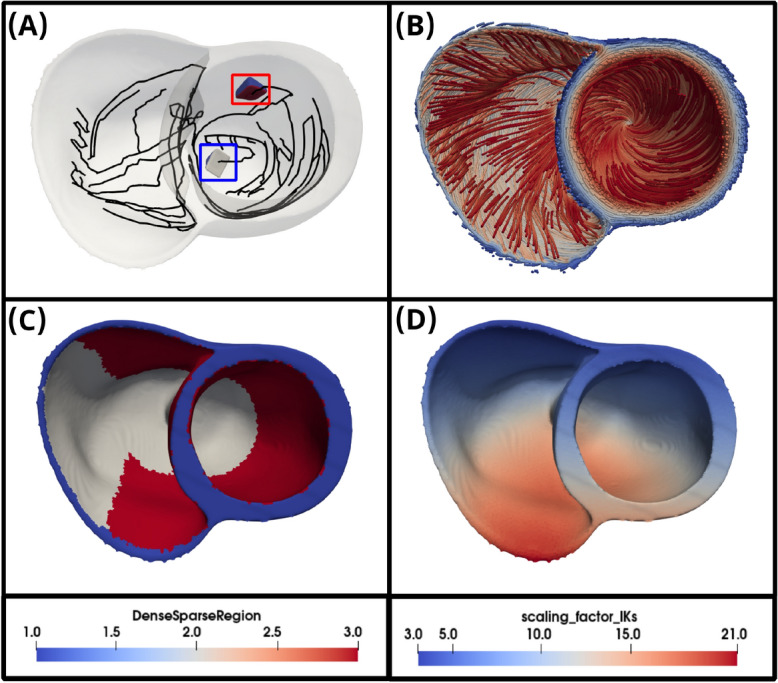 Figure 2
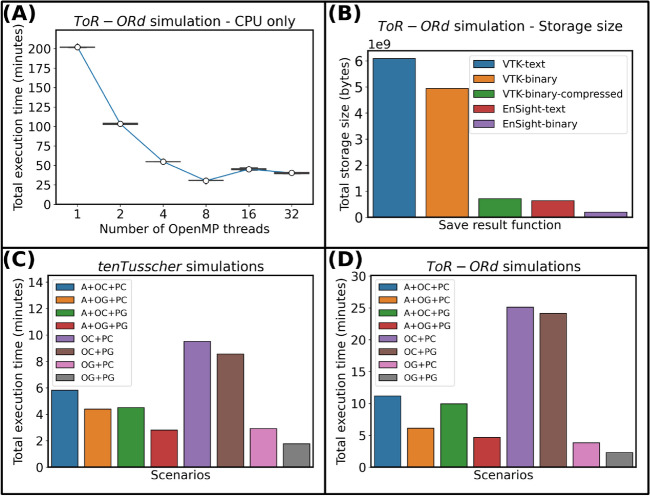 Figure 3
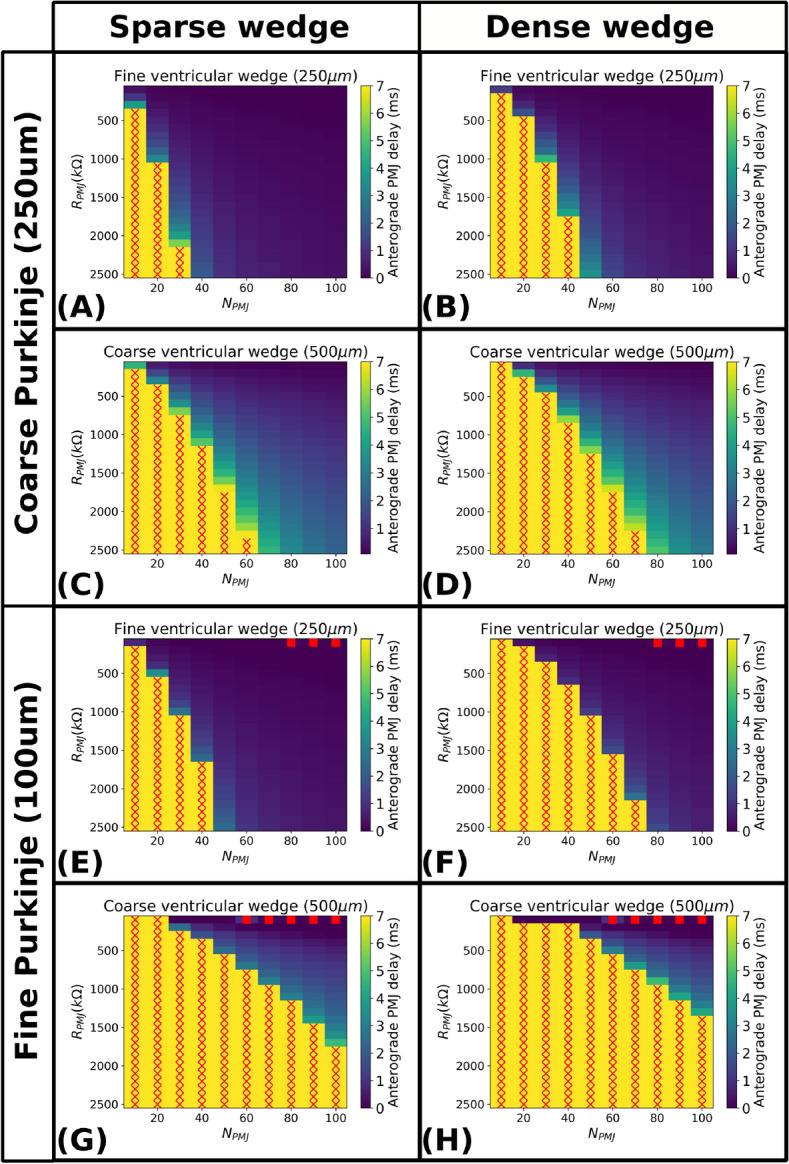 Figure 4
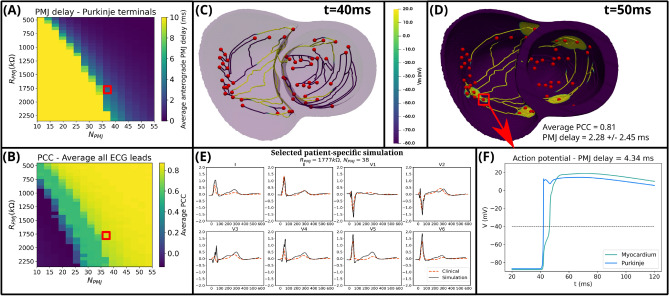 Figure 5
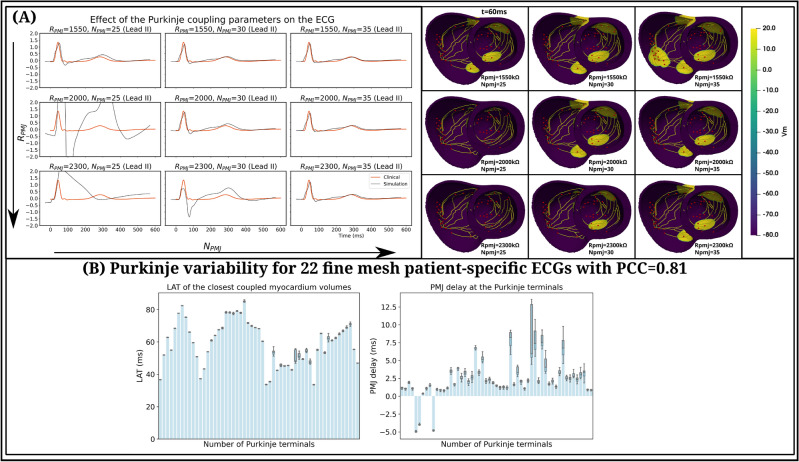 Figure 6
Peer Reviews
No public reviews on file for this paper yet. If you reviewed it on a platform where reviews are public (OpenReview, ICLR, NeurIPS, ICML), you can paste yours below so the community can read it here.
Videos
No videos yet. Explain this paper in a talk, walkthrough, or lecture? Add one.
Taxonomy
TopicsCardiac electrophysiology and arrhythmias · ECG Monitoring and Analysis · Congenital heart defects research