Nanopore sequencing reveals hidden landscape of short L1 transductions in colorectal cancer
Päivi Nummi, Aurora Taira, Janne Ravantti, Tuukka Norri, Niko Välimäki, Anna Lepistö, Laura Renkonen-Sinisalo, Selja Koskensalo, Toni T. Seppälä, Ari Ristimäki, Kyösti Tahkola, Anne Mattila, Jan Böhm, Jukka-Pekka Mecklin, Emma Siili, Annukka Pasanen, Oskari Heikinheimo

TL;DR
Nanopore sequencing reveals new insights into L1 transductions in colorectal cancer, showing their link to source activity and lower DNA methylation.
Contribution
The study identifies previously undetected short L1 transductions and links them to source element activity and methylation patterns in cancer.
Findings
Short L1 transductions are frequently missed by earlier methods, leading to biased views of L1 activity.
Transduction numbers correlate with other L1 insertions, and source L1s vary in transduction length and inversion frequency.
Active L1 elements in cancer samples show lower methylation levels compared to inactive ones.
Abstract
L1s are repetitive sequences capable of copying themselves into new genomic loci. While L1s are typically repressed by DNA methylation in somatic tissues, they can become reactivated in cancer. Although L1 sequences are highly repetitive, ~25% of insertions carry a unique downstream sequence, transduction, that can be used to trace the source L1. Here, we apply nanopore long-read sequencing to 56 colorectal cancer samples to comprehensively detect somatic transductions and to characterize the source L1 activity. We demonstrate that earlier methods systematically miss a large proportion of mostly shorter transductions, leading to an incomplete and biased view of source L1 activity. Our analysis reveals a strong positive correlation between the number of transductions and other L1 insertions within samples and that distinct source L1s exhibit varying transduction lengths and 5’ inversion…
Genes, proteins, chemicals, diseases, species, mutations and cell lines named across the full text — each resolved to its canonical identifier and authoritative record.
Click any figure to enlarge with its caption.
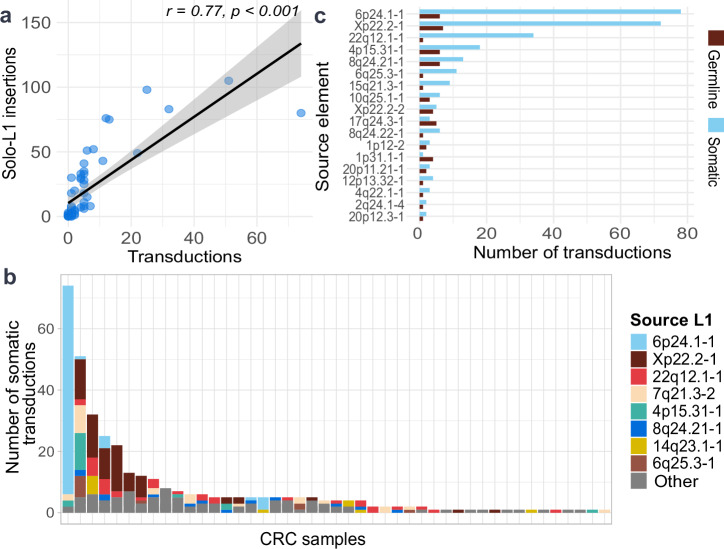 Figure 1
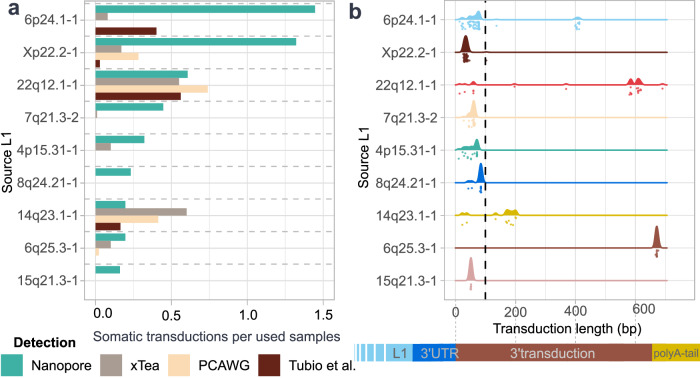 Figure 2
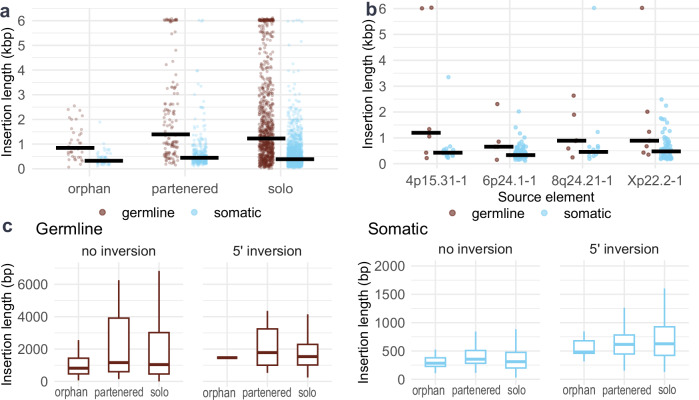 Figure 3
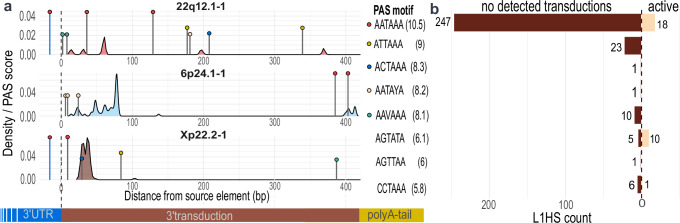 Figure 4
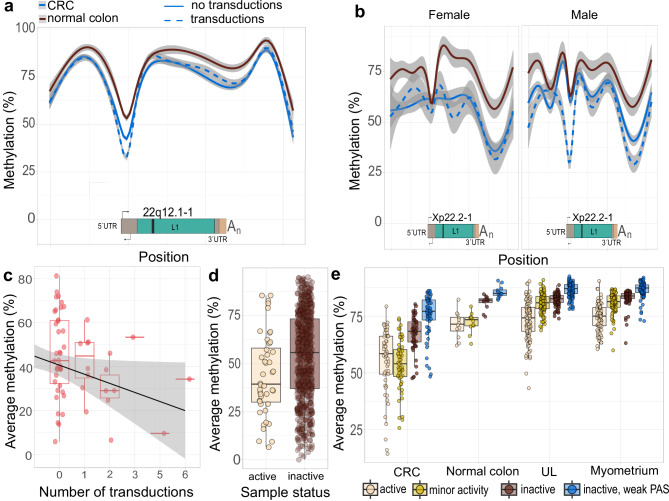 Figure 5
Peer Reviews
No public reviews on file for this paper yet. If you reviewed it on a platform where reviews are public (OpenReview, ICLR, NeurIPS, ICML), you can paste yours below so the community can read it here.
Videos
No videos yet. Explain this paper in a talk, walkthrough, or lecture? Add one.
Taxonomy
TopicsChromosomal and Genetic Variations · Epigenetics and DNA Methylation · Genomics and Phylogenetic Studies