Probiotic Enterococcus faecium (M74) as an alternative to antibiotics for controlling necrotic enteritis in broiler chickens
Ahmed E. A. Mostafa, Rana Ramadan, Ahmed Sittien

TL;DR
This study shows that the probiotic Enterococcus faecium (M74) can effectively reduce necrotic enteritis in chickens, improving growth and gut health as an alternative to antibiotics.
Contribution
The study demonstrates the prophylactic and therapeutic efficacy of a specific E. faecium strain against C. perfringens in broiler chickens.
Findings
E. faecium (M74) reduced C. perfringens and coliform counts by 88% and 84%, respectively.
Prophylactic use improved body weight gain by 31% and feed conversion by 25%.
Villus height increased by 43%, and histopathological lesions decreased by 82%.
Abstract
Necrotic enteritis caused by Clostridium perfringens remains a major challenge in broiler production, particularly under restrictions on antibiotic use. This study evaluated the prophylactic and therapeutic effects of Enterococcus faecium (M74) as a probiotic alternative to antibiotics in broiler chickens experimentally challenged with C. perfringens. Birds were allocated into negative control, positive control, prophylactic, and therapeutic groups, and growth performance, bacterial counts, hematological and biochemical indices, immune responses, intestinal morphometry, and histopathology were assessed. Supplementation with E. faecium (M74) markedly reduced intestinal bacterial load, with C. perfringens and total coliform counts decreased by approximately 88% and 84%, respectively, in the prophylactic group compared with the infected control. Final body weight and body weight gain were…
Genes, proteins, chemicals, diseases, species, mutations and cell lines named across the full text — each resolved to its canonical identifier and authoritative record.
Click any figure to enlarge with its caption.
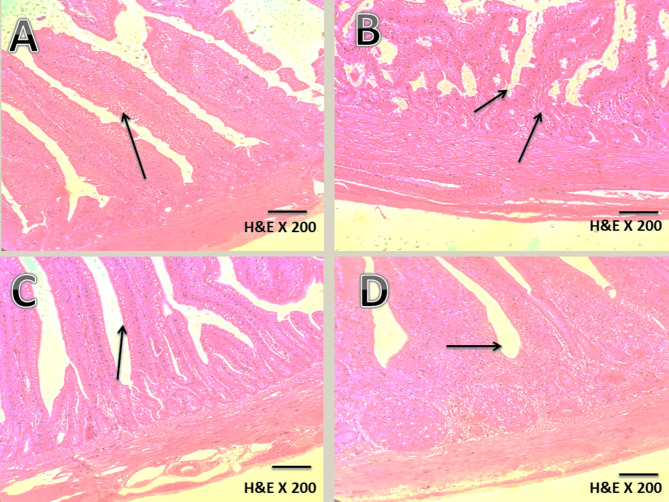 Figure 1
Peer Reviews
No public reviews on file for this paper yet. If you reviewed it on a platform where reviews are public (OpenReview, ICLR, NeurIPS, ICML), you can paste yours below so the community can read it here.
Videos
No videos yet. Explain this paper in a talk, walkthrough, or lecture? Add one.
Taxonomy
TopicsAnimal Nutrition and Physiology · Salmonella and Campylobacter epidemiology · Aquaculture disease management and microbiota