Eco-friendly spectrophotometric approach for the determination of anti-diabetic drugs in fixed-dose formulation together with metformin’s toxic impurity: comprehensive method assessment
Doaa G. Mohamed, Maha M. Abdelrahman, Amal B. Ahmed, Maimana A. Magdy

TL;DR
This paper introduces eco-friendly spectrophotometric methods to detect anti-diabetic drugs and a toxic impurity in pharmaceuticals, offering a sustainable alternative to traditional techniques.
Contribution
The study presents two validated spectrophotometric methods for determining saxagliptin, metformin, and its impurity melamine in a cost-effective and environmentally friendly manner.
Findings
The methods showed linearity for saxagliptin (5–90 µg/mL), metformin (1–40 µg/mL), and melamine (0.5–10 µg/mL).
Validation confirmed accuracy, precision, selectivity, and specificity in accordance with ICH Q2(R1) guidelines.
Green analytical chemistry tools demonstrated the environmental benefits of the proposed methods over conventional chromatography.
Abstract
Environmentally benign and straightforward spectrophotometric methods were developed and validated for the simultaneous determination of saxagliptin (SAX), metformin (MET), and the pharmacopeial impurity of MET, melamine (MEL), in bulk powder and pharmaceutical formulations. These proposed approaches provide reliable, low-cost, and accessible alternatives to conventional chromatographic techniques, which often require complex instrumentation, extended analysis times, and significant solvent consumption. Two complementary spectrophotometric methods were established. Method A, the ratio-difference approach, utilized MEL as a divisor for the quantification of SAX, while SAX served as a divisor for determining MET and MEL. Method B, based on the first derivative of ratio spectra, applied MEL as a divisor under optimized conditions (scaling factor = 10, Δλ = 4 nm). However, MEL could not be…
Genes, proteins, chemicals, diseases, species, mutations and cell lines named across the full text — each resolved to its canonical identifier and authoritative record.
Click any figure to enlarge with its caption.
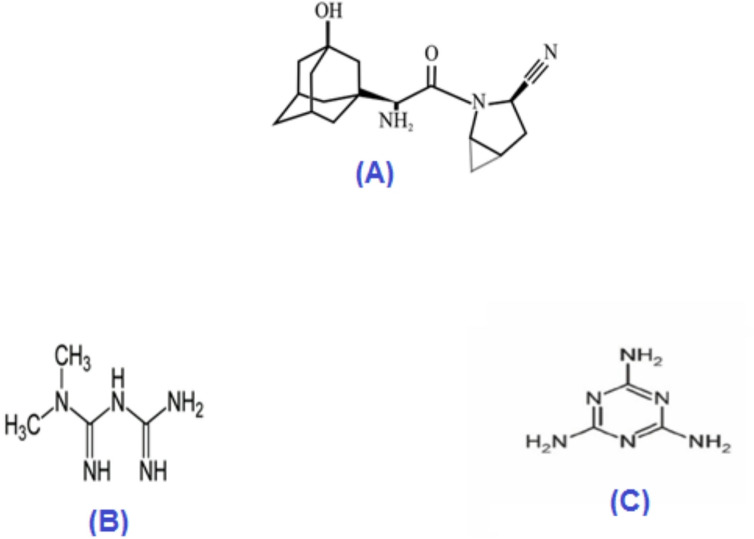 Figure 1
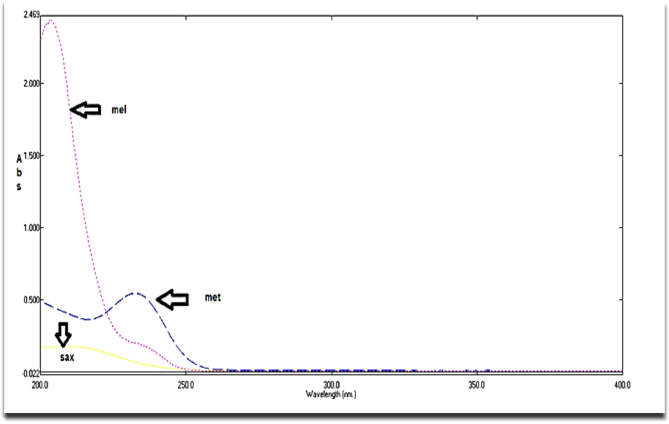 Figure 2
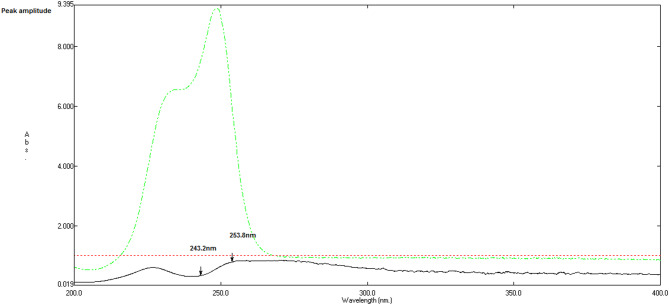 Figure 3
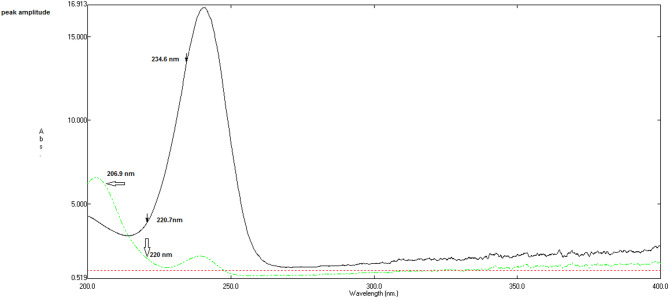 Figure 4
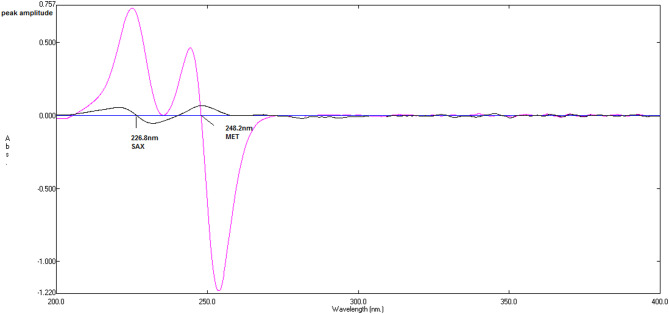 Figure 5
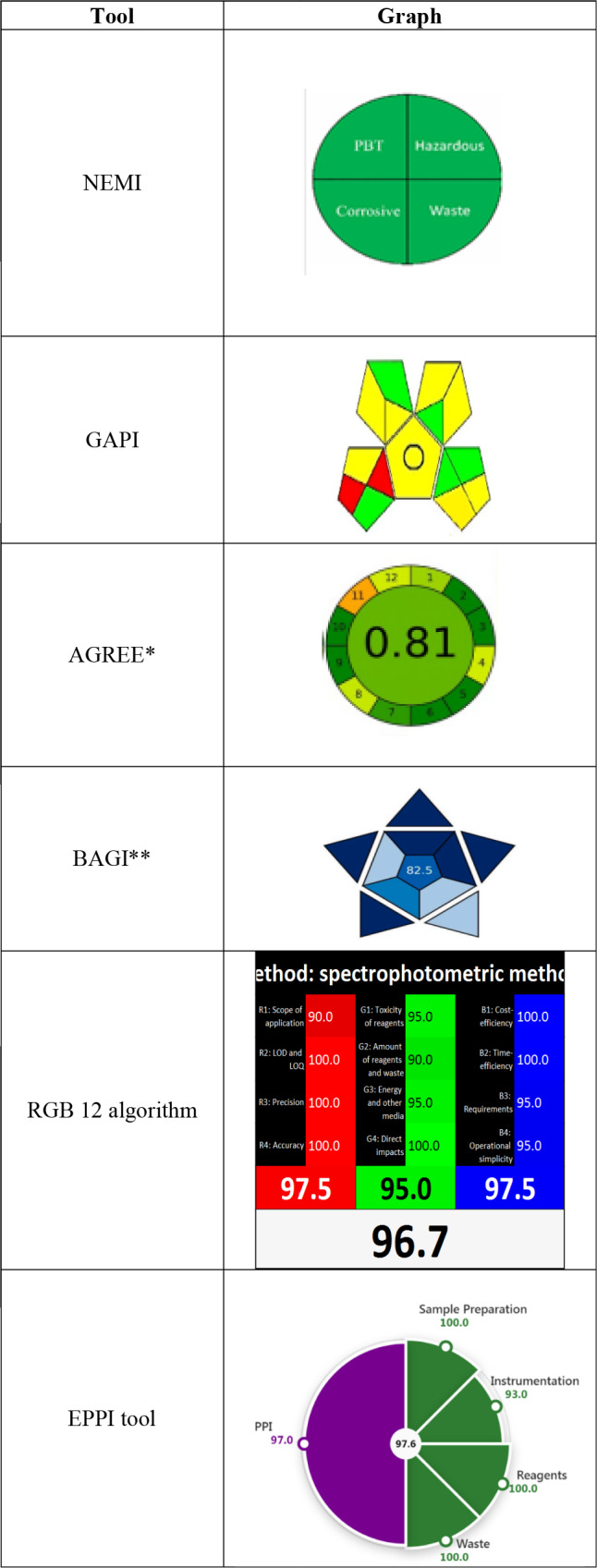 Figure 6
Peer Reviews
No public reviews on file for this paper yet. If you reviewed it on a platform where reviews are public (OpenReview, ICLR, NeurIPS, ICML), you can paste yours below so the community can read it here.
Videos
No videos yet. Explain this paper in a talk, walkthrough, or lecture? Add one.
Taxonomy
TopicsAnalytical Methods in Pharmaceuticals · Pharmacological Effects and Assays · Electrochemical sensors and biosensors