Obesity-associated gene mutations across cancer types: a pan-cancer analysis of TCGA data
Gaetana Porcelli, Rosario Nicola Brancaccio, Sebastiano Di Bella, Caterina D’Accardo, Francesco Orilio, Vincenzo Davide Pantina, Chiara Modica, Francesco Verona, Paola Bianca, Cesare Morgante, Simone Di Franco, Miriam Gaggianesi, Veronica Veschi, Giorgio Stassi, Alice Turdo

TL;DR
This study explores how obesity affects cancer mutations by analyzing data from 14 cancer types, finding that higher BMI is linked to specific gene mutations in bladder cancer.
Contribution
The study identifies obesity-associated gene mutations in bladder cancer and suggests that BMI influences tumor genomic profiles.
Findings
Bladder urothelial cancer (BLCA) showed the strongest association with higher BMI-related mutations.
Ten genes in BLCA were prioritized as significantly associated with BMI, including BRCA2 and SF3B1.
Obese patients exhibited distinct mutational patterns and loss-of-function mechanisms in key genes.
Abstract
Obesity is a recognized risk factor for numerous cancers. Although several biological mechanisms have been proposed to explain obesity-associated carcinogenesis, the extent to which excess adiposity influences tumor genomic profiles remains incompletely understood. In particular, whether obesity-related selective pressures shape cancer-specific mutational landscapes is still underexplored. A pan-cancer analysis of non-synonymous somatic mutations across 14 tumor types using data from The Cancer Genome Atlas (TCGA) has been conducted. Body mass index (BMI) at diagnosis was analyzed as a continuous variable. Associations between gene mutations and BMI were assessed using logistic regression models adjusted for age, sex, and tumor mutational burden, with false discovery rate correction. Genes were prioritized using a two-step ranking strategy based on mutation frequency and regression…
Genes, proteins, chemicals, diseases, species, mutations and cell lines named across the full text — each resolved to its canonical identifier and authoritative record.
Click any figure to enlarge with its caption.
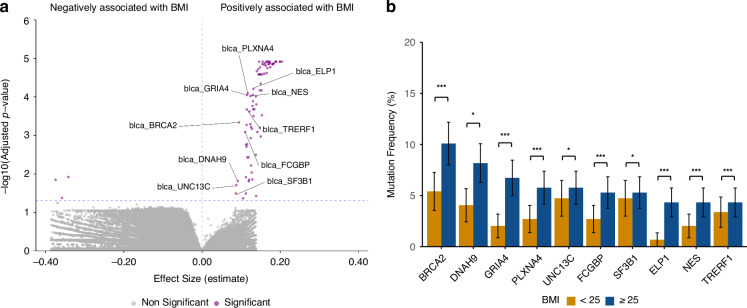 Figure 1
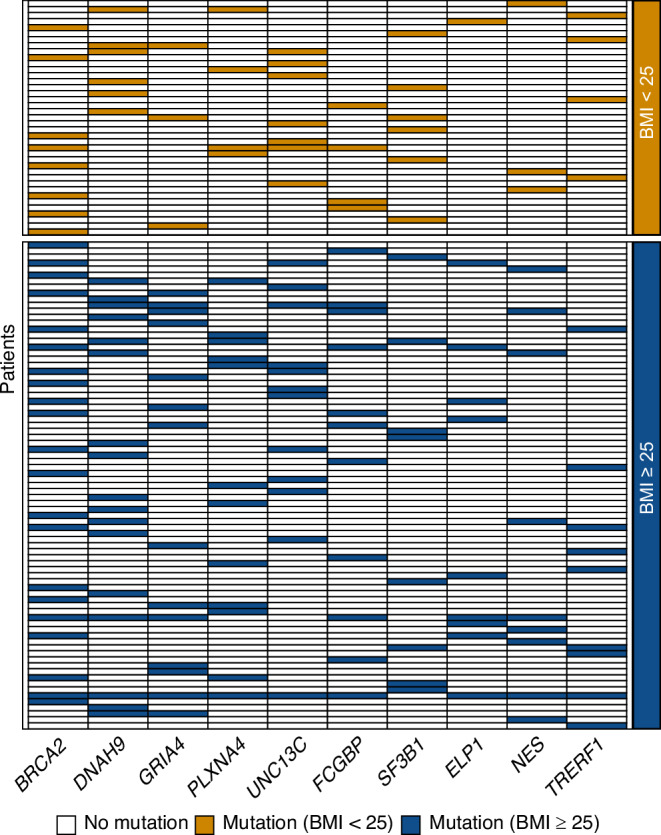 Figure 2
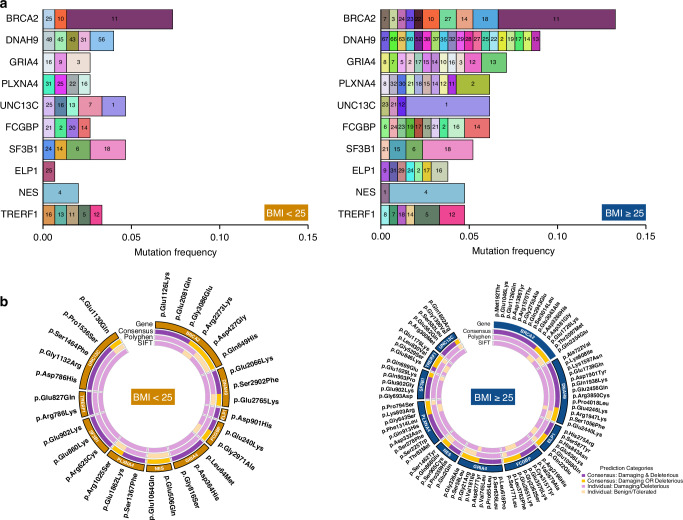 Figure 3
Peer Reviews
No public reviews on file for this paper yet. If you reviewed it on a platform where reviews are public (OpenReview, ICLR, NeurIPS, ICML), you can paste yours below so the community can read it here.
Videos
No videos yet. Explain this paper in a talk, walkthrough, or lecture? Add one.
Taxonomy
TopicsCancer Risks and Factors · Bladder and Urothelial Cancer Treatments · Genetic Associations and Epidemiology