Dielectrocapillarity for exquisite control of fluids
Anna T. Bui, Stephen J. Cox

TL;DR
This paper introduces dielectrocapillarity, a method using electric field gradients to control fluid behavior in nanopores, with applications in energy storage and gas separation.
Contribution
The paper introduces dielectrocapillarity as a novel mechanism for controlling polar fluids using electric field gradients.
Findings
Dielectrophoretic coupling enables tunable control over liquid–gas phase transitions and capillary condensation.
Electric field gradients enhance fluid uptake into nanoporous materials.
Dielectrocapillarity links nanoscale effects to macroscopic dielectrowetting phenomena.
Abstract
Spatially varying electric fields are prevalent throughout nature, such as in nanoporous materials and biological membranes, and technology, e.g, patterned electrodes and van der Waals heterostructures. While uniform fields cause free ions to migrate, for polar fluids they simply reorient the constituent molecules. In contrast, electric field gradients (EFGs) induce a dielectrophoretic force, offering fine control of polar fluids even in the absence of free charges. Despite their vast potential for optimizing fluid behavior, EFGs remain largely unexplored at the microscopic level due to the absence of a rigorous first-principles theory of electrostriction. By integrating state-of-the-art advances in liquid state theory and deep learning, we reveal how EFGs modulate fluid structure and capillarity. We demonstrate that dielectrophoretic coupling enables tunable control over the liquid–gas…
Genes, proteins, chemicals, diseases, species, mutations and cell lines named across the full text — each resolved to its canonical identifier and authoritative record.
Click any figure to enlarge with its caption.
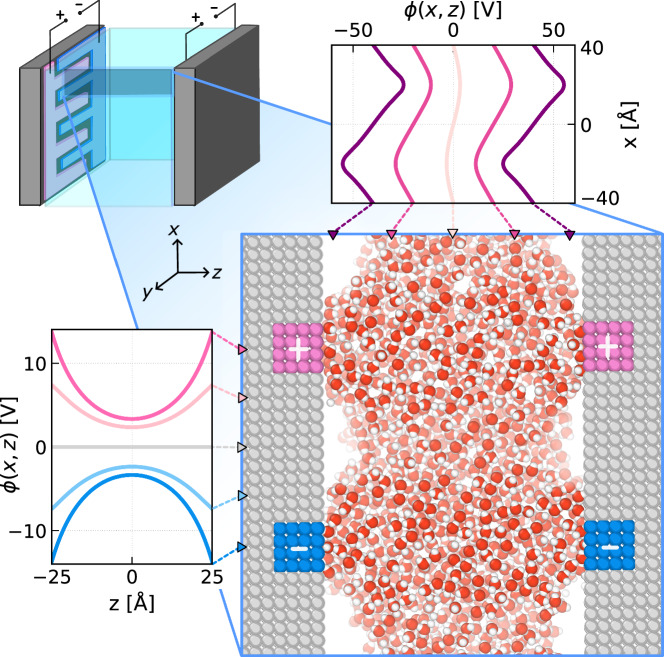 Figure 1
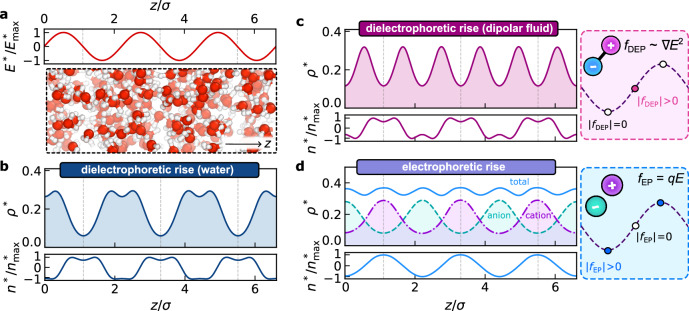 Figure 2
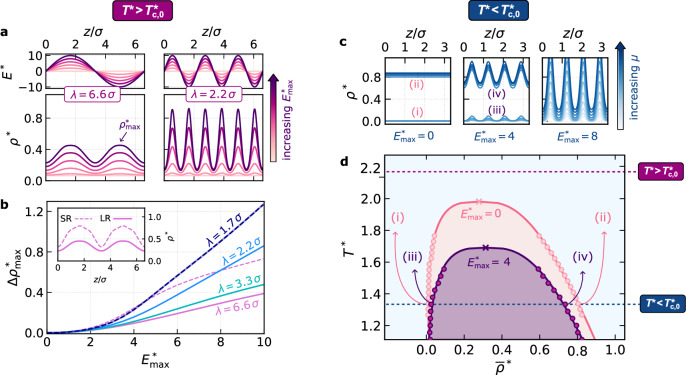 Figure 3
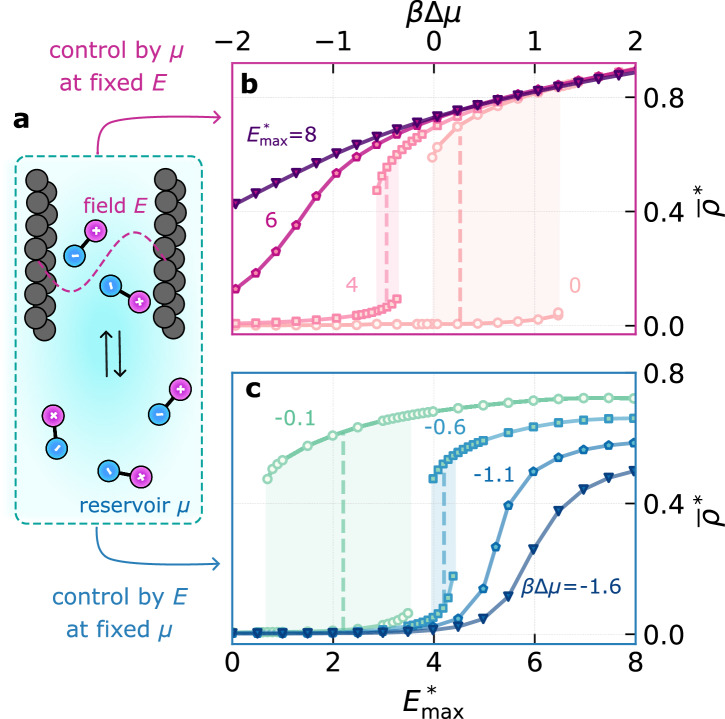 Figure 4
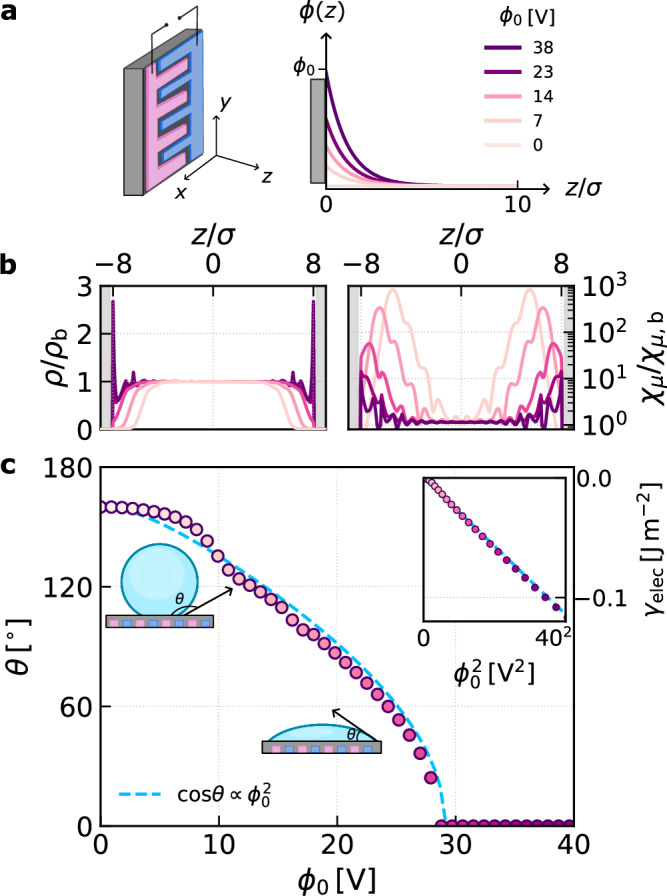 Figure 5
Peer Reviews
No public reviews on file for this paper yet. If you reviewed it on a platform where reviews are public (OpenReview, ICLR, NeurIPS, ICML), you can paste yours below so the community can read it here.
Videos
No videos yet. Explain this paper in a talk, walkthrough, or lecture? Add one.
Taxonomy
TopicsElectrowetting and Microfluidic Technologies · Nanopore and Nanochannel Transport Studies · Microfluidic and Bio-sensing Technologies