Light cone cancellation for variational quantum eigensolver in solving noisy Max-Cut
Xinwei Lee, Xinjian Yan, Ningyi Xie, Yoshiyuki Saito, Leo Kurosawa, Nobuyoshi Asai, Dongsheng Cai, Hoong Chuin Lau

TL;DR
This paper introduces a method called LCC-VQE to reduce noise and resource requirements in quantum computing for solving large Max-Cut problems.
Contribution
The novel application of Light Cone Cancellation (LCC) to VQE reduces qubit and gate requirements while mitigating noise in quantum hardware.
Findings
LCC-VQE achieves higher approximation ratios than standard VQE under noisy conditions.
Single-layer ansatz outperforms multi-layer ansatz in noisy simulations.
LCC-VQE performs competitively with the Goemans-Williamson algorithm in noiseless conditions.
Abstract
Variational Quantum Eigensolver (VQE) is a quantum-classical hybrid algorithm used to estimate the ground energy of a given Hamiltonian. It consists of a parameterized quantum circuit, which the parameters are optimized using a classical optimizer. With the increasing need in solving large-scale problems in real-world applications, solving those large problems with fewer qubits and fewer gates becomes essential, so that we reduce the simulation difficulty and mitigate the effect of noise in real quantum hardware. In this study, we applied the Light Cone Cancellation (LCC) method to reduce the number of qubits and gates required in a two-local ansatz. LCC removes redundant gates that are not required in the calculation of the expectation value for a local observable. This leads to two consequences: 1) the quantum circuit used to create the trial wavefunction of VQE can be broken down…
Genes, proteins, chemicals, diseases, species, mutations and cell lines named across the full text — each resolved to its canonical identifier and authoritative record.
Click any figure to enlarge with its caption.
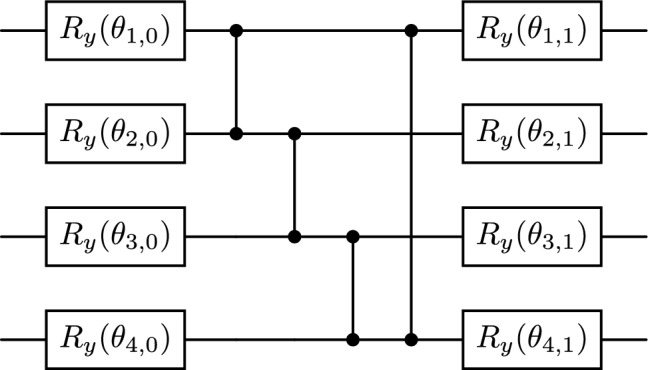 Figure 1
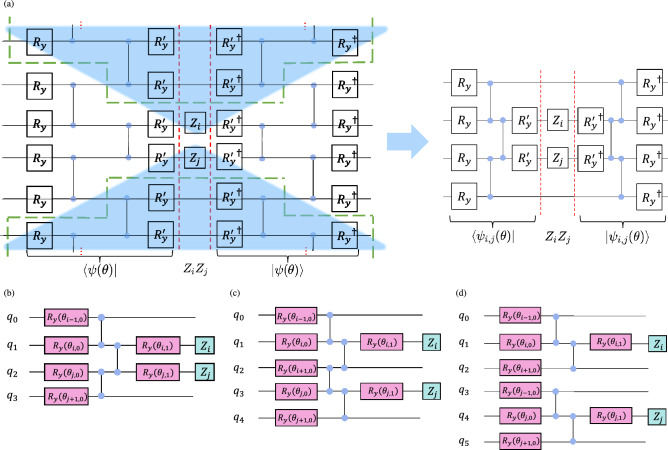 Figure 2
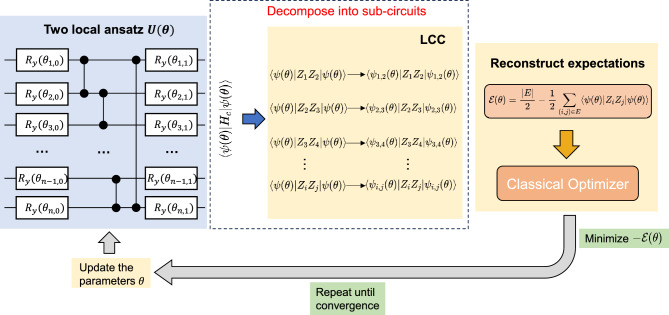 Figure 3
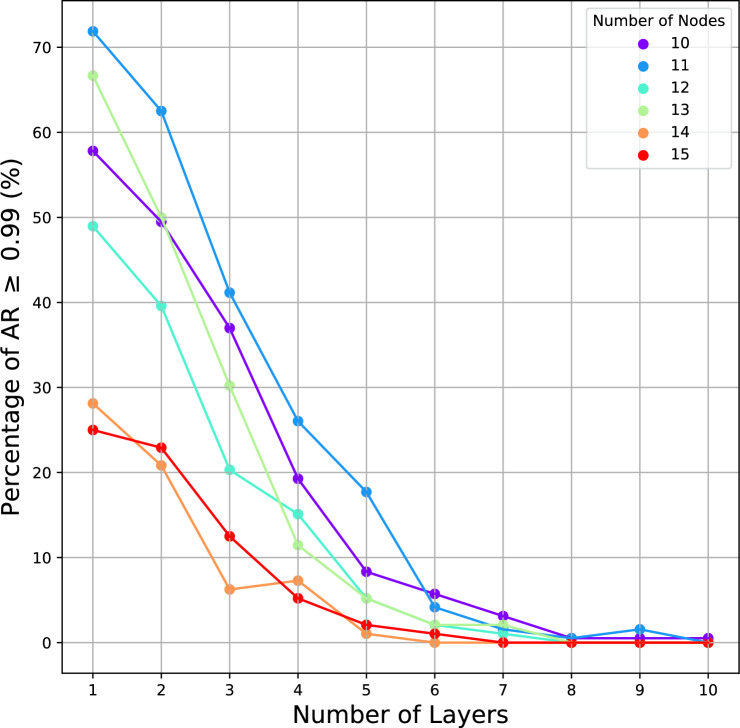 Figure 4
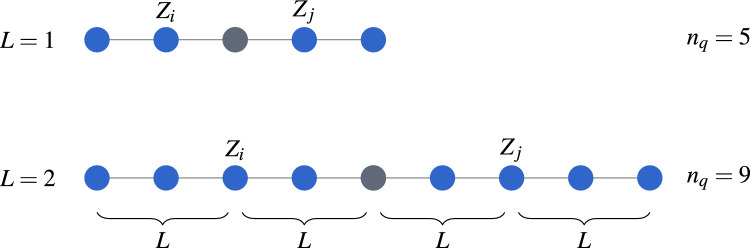 Figure 5
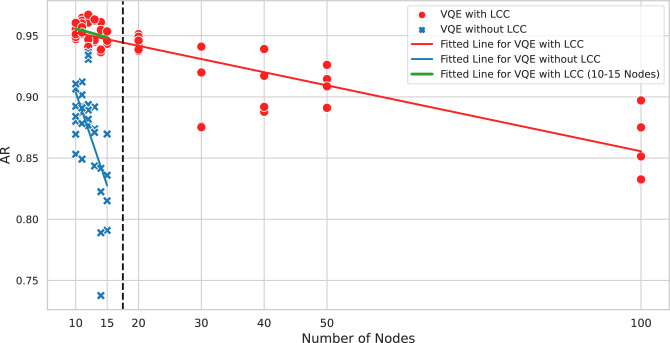 Figure 6
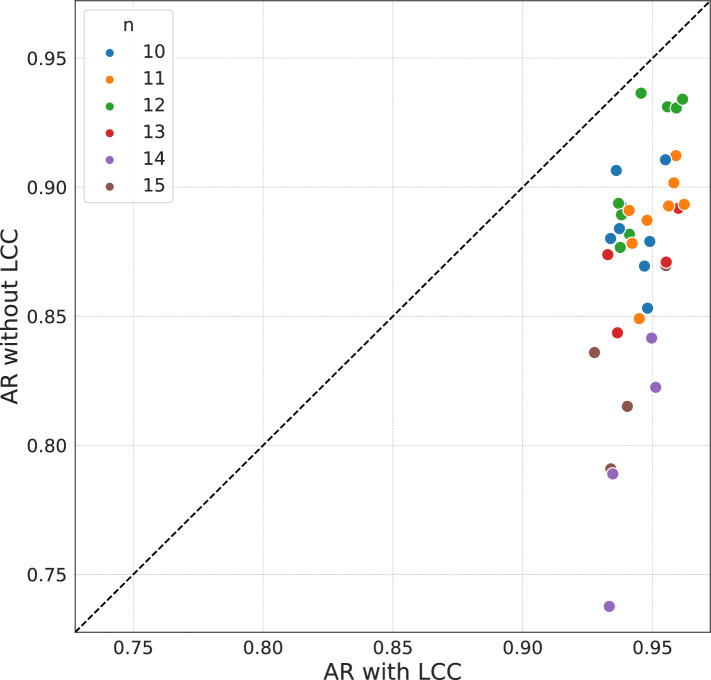 Figure 7
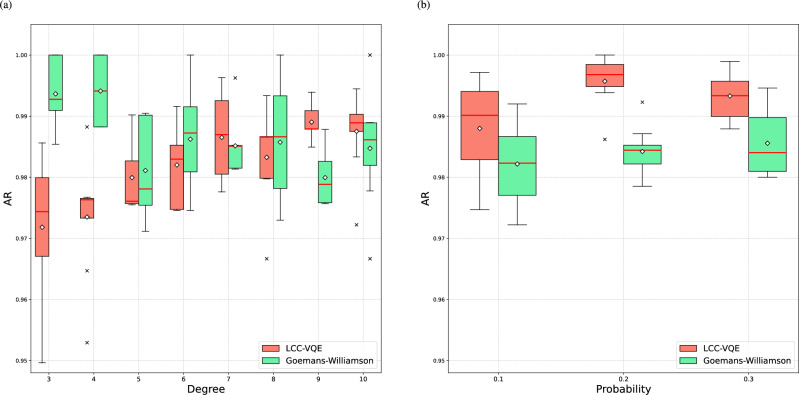 Figure 8
Peer Reviews
No public reviews on file for this paper yet. If you reviewed it on a platform where reviews are public (OpenReview, ICLR, NeurIPS, ICML), you can paste yours below so the community can read it here.
Videos
No videos yet. Explain this paper in a talk, walkthrough, or lecture? Add one.
Taxonomy
TopicsQuantum Computing Algorithms and Architecture · Quantum-Dot Cellular Automata · Quantum Information and Cryptography