Optimal power settings have major impact on procedural efficiency in pulmonary vein isolation guided by robotic magnetic navigation
Rita B. Gagyi, Ioan A. Minciuna, Tamas Geczy, Attila Nemes, Tamas Szili-Torok

TL;DR
Using higher power settings during robotic magnetic navigation-guided ablation for atrial fibrillation improves procedural efficiency without compromising safety.
Contribution
Demonstrates that increasing radiofrequency power in robotic-guided procedures reduces procedure time and fluoroscopy use without safety risks.
Findings
Higher RF power settings progressively reduced procedure duration and fluoroscopy time.
Successful PVI was achieved in all patients with no significant differences in complications.
AF recurrence rates were not significantly different across power groups.
Abstract
Early reports on pulmonary vein isolation (PVI) for atrial fibrillation (AF) guided by robotic magnetic navigation (RMN) show comparable results to manual radiofrequency (RF) or cryoballoon ablation; however, lengthy procedures were reported. This could be due to suboptimal lesion formation caused by a lack of user experience and defined best practices. Operators performed RMN-guided RF ablation with lower power settings, presumably leading to longer procedures. In this study, we aimed to re-evaluate safety and efficiency of RMN-guided PVI for AF based on delivered radiofrequency power. Patients undergoing RMN-guided ablation were screened, and consecutive patients with AF undergoing PVI-only between 2008 and 2023 were retrospectively enrolled. Patients were grouped by the power settings utilized during the PVI procedure (group 1—25-30W, group 2—30-35W, group 3—35-40W, group 4—40-45W,…
Genes, proteins, chemicals, diseases, species, mutations and cell lines named across the full text — each resolved to its canonical identifier and authoritative record.
Click any figure to enlarge with its caption.
 Figure 1
 Figure 2
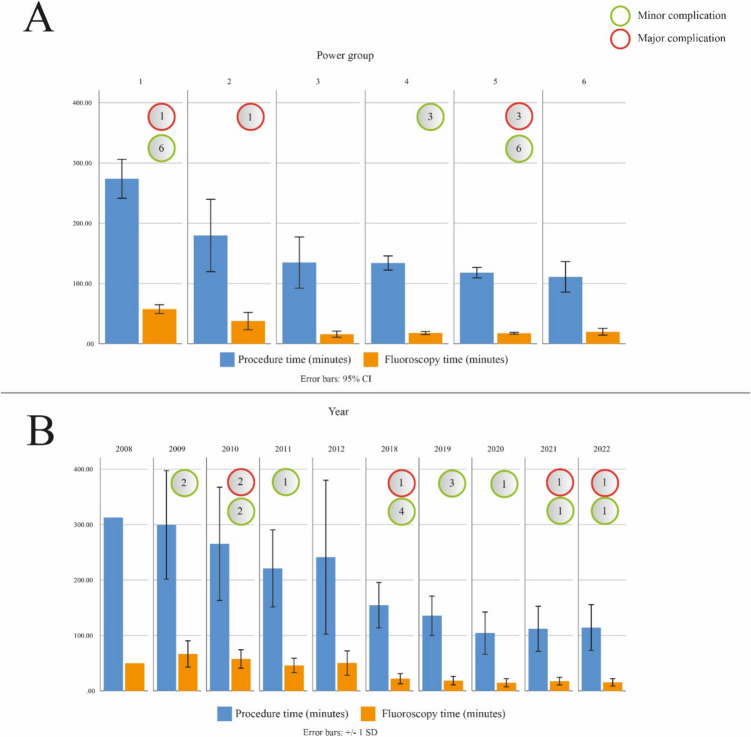 Figure 3
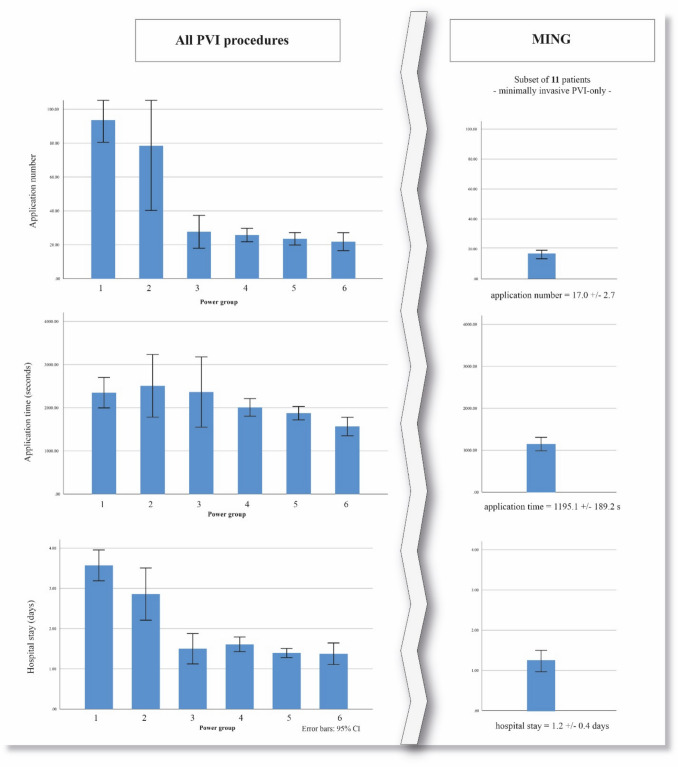 Figure 4
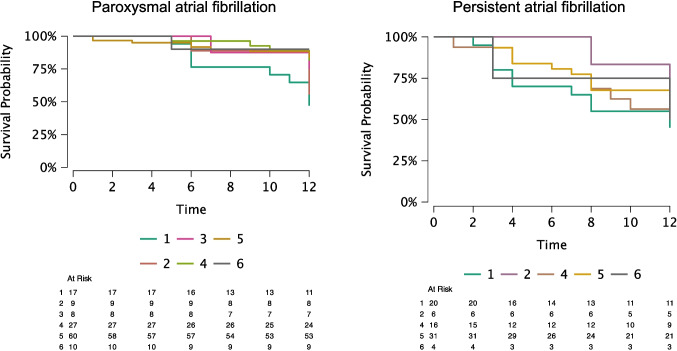 Figure 5
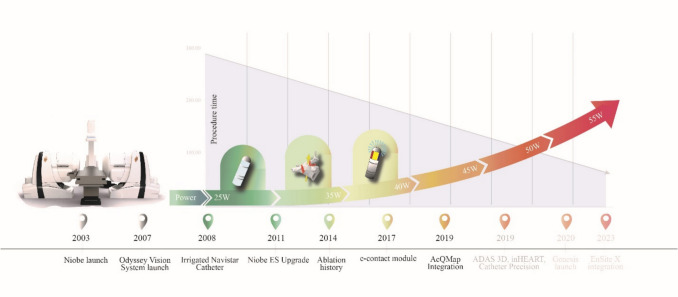 Figure 6
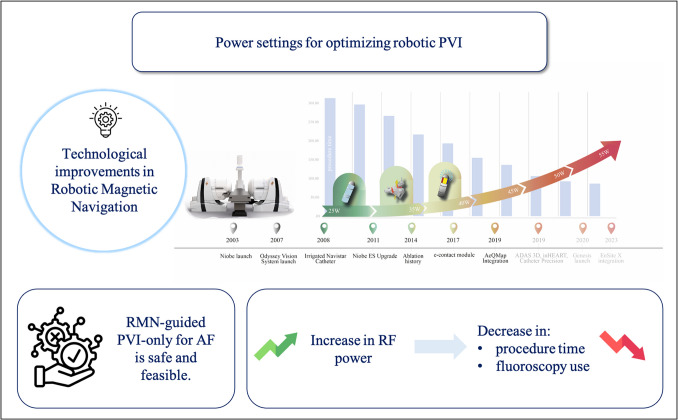 Figure 7
Peer Reviews
No public reviews on file for this paper yet. If you reviewed it on a platform where reviews are public (OpenReview, ICLR, NeurIPS, ICML), you can paste yours below so the community can read it here.
Videos
No videos yet. Explain this paper in a talk, walkthrough, or lecture? Add one.
Taxonomy
TopicsAtrial Fibrillation Management and Outcomes · Cardiac Arrhythmias and Treatments · Cardiac pacing and defibrillation studies